The makeup realm is a vast universe offering countless possibilities, showcasing a diverse array of products meticulously crafted to enhance beauty and refine one’s appearance. Amid this abundance, it becomes crucial to scrutinize and validate the multitude of claims made by makeup products. Whether they pertain to skincare benefits like skin smoothing or the reduction of fine lines, or makeup claims such as long-wear, each term holds a distinctive meaning and serves a unique purpose.
In the makeup field, inclusivity is growing, catering to diverse preferences and needs. Inclusive makeup entails providing a wide range of shades to cater to diverse skin tones and featuring representation in advertising that reflects various ethnicities, ages, genders, and physical attributes. It also involves addressing specific needs such as sensitive skin, vegan or cruelty-free formulations. Embracing inclusivity in the makeup industry not only empowers consumers to express themselves authentically but also fosters acceptance and appreciation for diversity on a broader scale.
In this article, let’s delve into some of the most prevalent makeup claims and unravel their true significance:
- Waterproof: Ideal for occasions involving water contact, these products resist water, making them popular for long-lasting makeup like eyeliners and mascaras.
- Sweat-proof: Formulated to endure sweat, these products are perfect for physical activities, commonly found in long-lasting makeup.
- Transfer-proof: These formulas stay in place without transferring onto clothing or objects, crucial for products like lipstick and foundations.
- Coverage (Full Coverage or Medium Coverage): Indicates whether the foundation offers full coverage, concealing imperfections completely, or medium coverage, disguising flaws while maintaining the skin’s natural texture.
- Matte Finish: Leaves a matte finish on the skin, reducing shine and controlling excess oil for several hours.
- Dewy Finish: Provides a radiant and luminous finish, imparting a healthy and juicy look to the skin.
- Longwear: Ensures long-lasting makeup results without the need for touch-ups throughout the day.
- Hydrating: Formulated with moisturizing ingredients to keep the skin soft, flexible, and hydrated.
- Non-Comedogenic: Won’t clog pores or cause acne, making it suitable for acne-prone skin.
- Pore-minimizing: Reduces the appearance of enlarged pores, creating a smoother and more uniform skin surface.
- Flake-proof: Guarantees that the product will not flake over time.
- Smudge-proof: Ensures the product will not smudge, even in hot or humid conditions, crucial for eyeliners and mascaras.
- Feather-proof: Resists running or fading throughout the day, even in high humidity or during sweating.
- Extreme Volume: Mascaras promising to add volume to lashes, creating a thicker appearance with a fan effect.
- Lengthening: Lengthens lashes, providing a more defined look.
- Curling: Provides a curling effect to lashes, lifting and maintaining their curved shape.
- Clump-free: Ensures the mascara doesn’t leave clumps or accumulations, providing a uniform finish.
- SPF: Some foundations and lipsticks include sun protection factor (SPF) to shield the skin against UV rays.
- Ophthalmologist Tested: Clinically supervised by an ophthalmologist, ensuring the product’s safety for use around the eyes.
- Dermatologically Tested: Product undergoes testing supervised by dermatologists to assess safety and clinical efficacy on the skin.
Claims about skincare products or make up can be evaluated through various means, including the use of imaging equipment such as PRIMOS CR and VISIA. These devices allow for detailed analysis of skin conditions, including texture, pigmentation, and wrinkles, providing quantitative data that can be instrumental in assessing the effectiveness of a product or treatment.
Furthermore, a meticulous photography protocol is essential for capturing high-quality images. This rigorous protocol encompasses various elements such as lighting techniques, camera settings, panelist positioning, composition guidelines, and even internal post-processing procedures. By adhering to a well-defined protocol, brands can ensure consistency and professionalism.
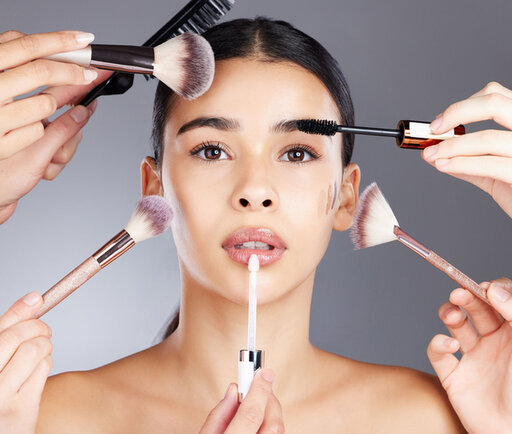
Additionally, clinical assessments by dermatologists or trained technical personnel play a crucial role in evaluating claims. These professionals can conduct thorough examinations of the skin, utilizing reference scales that have been validated for accuracy or even custom-created for specific evaluation projects. Their expertise enables them to provide valuable insights into the efficacy of skincare interventions based on their observations and measurements.
By combining imaging technology with clinical assessments, researchers and practitioners can obtain comprehensive evaluations of skincare products, helping to substantiate claims and inform consumers about their potential benefits.
In conclusion, understanding the nuances of makeup claims is essential for informed consumer choices. The industry’s strides toward inclusivity reflect a commitment to meeting diverse needs. At Zurko, we aim to inform rather than promote, shedding light on the significance of prevalent makeup claims. Evaluating skincare products involves a comprehensive approach, considering factors like texture, pigmentation, and efficacy. Recognizing the variations in product effectiveness based on individual factors is crucial. Our team emphasizes tailored advice to address unique needs, providing valuable insights.
Biotechnology: an innovative and sustainable future for household and...

LactoSporin® An effective postbiotic for youthful skin
A feel-good soothing coriander seeds oil with an innovative wel...

Multisensory congruence of touch and smell and its impact on emotions

Ancient ayurvedic adaptogen ashwagandha – Now trending in modern...

Scalp & Hair Care testing The skinification of hair by Mérieux Nu...

Beauty and the brain: How the nervous system shapes neurocosmetic inno...

The fusion of prehispanic and medieval european herbolarium in modern...