Sustainable and ecologically responsible cosmetic ingredients are one of the biggest trends of the moment. One of the easiest ways your brand can improve its ecological footprint is to use upcycled ingredients: items which would normally be thrown away as waste are instead used for another purpose. If you are new to the concept of upcycled cosmetic ingredients, watch this video for an overview on how upcycling is not only great for the environment, but also great for your cosmetic formulas.
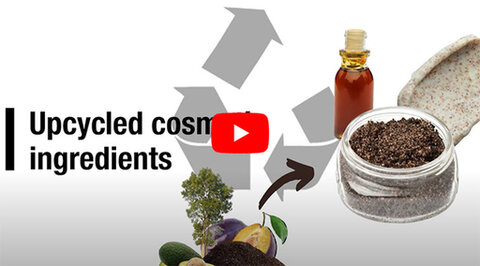
Upcycled cosmetic ingredient choices now go far beyond their origin of coffee grounds as an exfoliant – there are now an increasing number of functional and active ingredients from upcycled sources. Here is a summary of this ever-expanding cosmetic ingredient category.
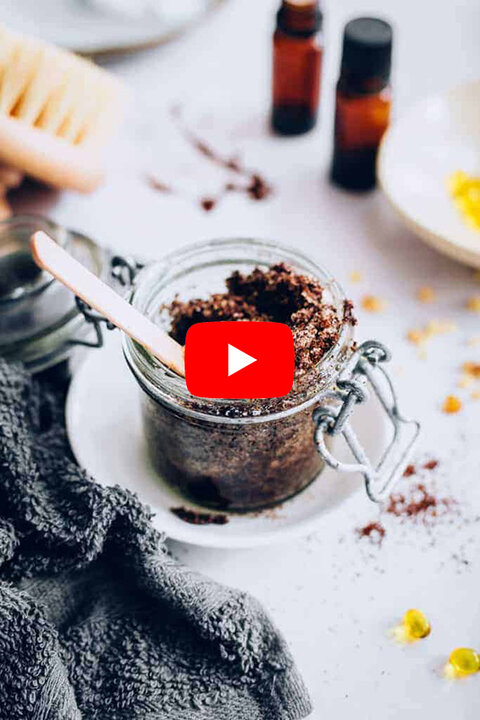
Upcycled cosmetic exfoliants
One of the first and most commonly used methods to incorporate upcycled cosmetic ingredients into finished product formulas is in the form of exfoliants: coffee grounds, shell husks and even dried flowers and plant parts. One of the leaders in this field is Lessonia, with a range of seeds, plant parts and flowers dried and crushed to a variety of sizes for varying exfoliant and visual effects. See examples of Lessonia’s exfoliant range in this video: Using upcycled exfoliants in cosmetic products video.
Upcycled active ingredients
There is now a range of active ingredients with proven efficacy data developed from various food and medical by-products. For example, the flesh of various fruits are used in the food industry while the husks, seeds or other parts are typically thrown away. Upcycled cosmetic extracts use these ‘waste’ components to harness the nutrient benefits for skin benefits. Examples of antioxidant and nutrient rich upcycled cosmetic ingredients include:
- The Innovation Company’s Nordic Beauty range;
- Biolie’s Litch’Out – a lychee pericarp extract for hydration, Cicamaize – from corn cob for skin repair and Sylver – from beech seeds for antiaging;
- SLVR’Coffee from Mibelle AG Biochemistry uses coffee silverskins for moisturising and soothing benefits with the bonus of skin protection;
- An early offering by Lucas Meyer was IBR-TCLC, from tomato seeds rich in polyphenols; and Regenight, a by product of tea tree essential oil production for overnight skin rejuvenation;
- Effipulp by Laboratoires Expanscience – a byproduct of avocado oil production with plumping and detoxifying benefits.
Upcycled functional ingredients
There are several functional ingredients also available from upcycled food and fibre production, such as:
- Biolie Beech seed oil as a by-product of beech seed roasting;
- Biolie Apricot kernel oil as a by-product of apricot flesh harvesting;
- Biolie Hemp seed oil as a by-product of hemp fibre production;
- Biolie MangoBoost from discarded mango seeds as a preservative booster;
- Sun Chemical Raspberry seed oil from jams;
- Hydrogenated olive oil saponifiables (BergaCare FG Olive Squalane, from Berg + Schmidt GmbH & Co. KG) from olive oil production;
- Natural Plant Products LLC FibreDesign Sensation from citrus peel fibres for emulsion stabilising;
- Ecohance Care PS3 from Evonik Personal Care, using waste from olive oil production to create an effective o/w emulsifier.
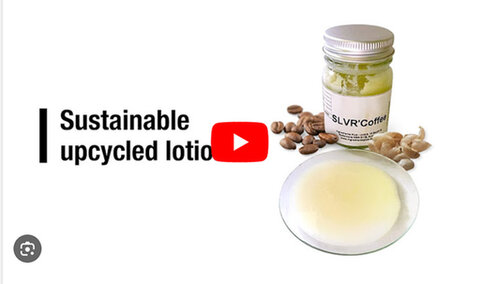
These are just some of the many emerging functional ingredient options to enhance your upcycled cosmetic formulation functionality and stability. Watch this video for ideas of how to make upcycled cosmetic formulas easily.
Co-production counts as upcycling too
Upcycling means using materials that would normally be discarded as waste for commercial purposes instead – so it includes ingredients that are ‘co-produced’ as well. The most common examples of this includes undersized cucumbers (Cumb’O), zucchinis (Pep’o) and ‘ugly’ pears (Pyr’o) that would normally be considered unsuitable for sale are instead turned into water replacements for use in cosmetic formulas. All of these water replacements are provided by Biolie, a recognised leader in making great upcycled cosmetic ingredients from what would otherwise be considered waste.
Upcycled cosmetic formulas are popular with consumers
Upcycling is an easy message for consumers to understand. It also shows your brand is committed to sustainability and its eco-conscience. As part of the ongoing trend of eco-responsibility, see how your brand can incorporate one or more upcycled ingredients into your future developments. Here is a snapshot of ideas but there are loads more being released each year and every exhibition. Speak with your cosmetic ingredient suppliers and join the eco-revolution today.
Biotechnology: an innovative and sustainable future for household and...

LactoSporin® An effective postbiotic for youthful skin
A feel-good soothing coriander seeds oil with an innovative wel...

Multisensory congruence of touch and smell and its impact on emotions

Ancient ayurvedic adaptogen ashwagandha – Now trending in modern...
Exploring 20 common makeup claims in beauty products

Scalp & Hair Care testing The skinification of hair by Mérieux Nu...

Beauty and the brain: How the nervous system shapes neurocosmetic inno...