THE RISE OF NATURAL INGREDIENTS
Products made with natural ingredients and naturally derived compounds have proliferated the home care, personal care, and cosmetics markets in recent years as leading players have developed entire product lines dedicated to specific claims such as “natural,” “vegan,” or “clean.” Why? Many reasons: plant extracts contain a naturally high concentration of antioxidants and antimicrobial or colloidal compounds with consumer-desired properties that have become popularized by global supply chains, e-commerce, and health-conscious social media influencers, growing demand for natural formulations, and the desire for transparent, trustworthy sustainable claims. In tandem, technological advancements have enabled research to verify certain claims around the benefits of incorporating natural ingredients into a daily routine and improved extraction and sourcing of compounds in larger volumes at competitive price points. However, as technological advancements and the demand for natural ingredients continue to increase, concerns have surfaced regarding the traceability and ethical sourcing practices within these complex global supply chains.
UNDERSTANDING THE CHALLENGES
Despite an industry shift towards ethical sourcing practices to meet the demands of an environmentally-conscious consumer base and inter-continental supply chains, complex challenges persist across the raw materials and ingredient sourcing supply chain. Consumer product companies are under immense pressure from a variety of stakeholders to offer transparency and visibility into their supply chains, and a lack of proper oversight of increasingly complex raw materials and ingredient supply chains could easily undermine a strong brand reputation (1). The challenge here is clear, the information downstream companies and consumers need to make informed decisions is not always available and often does not exist (2).
Consumer awareness around ethical sourcing is evident in purchasing trends, as consumers are choosing to buy local; purchase goods when seasonally available; and even spend more to buy products labeled with specific ingredient exclusions, environmental declarations, and/or ethical claims (3, 4). In response to these trends, regulatory bodies and other stakeholders have developed frameworks to meet consumers’ transparency needs independently, resulting in an unharmonized set of standards. These discrepancies and gaps are often unintentional consequences stemming from sociopolitical and cultural practices and standards that vary between regions, regulatory bodies, and corporations.
Discrepancies in regulation are also challenging industry efforts to standardize ethical sourcing frameworks for natural ingredients and the compliance mechanisms behind them. Naturally derived and sustainably sourced ingredient and product labeling is not often regulated by governmental bodies; however, the proliferation of “natural” and “clean” labeling has spurred the US FDA to act and define terms commonly used in labeling to advertise a natural product or sustainably sourced ingredient for the benefit and protection of the consumer. It is important to note these are merely guidelines and not requirements, as the US FDA does not regulate compounds in this manner. Additionally, outside of the North American market, there are various interpretations of terms like “natural” and different methods for confirming an ingredient’s natural status (5).
EXAMINING DEFICITS IN EXISTING COMPLIANCE MECHANISMS
Safeguarding traceability in sourcing and procuring ingredients for the beauty and personal care industries is a complex systems challenge that requires a comprehensive approach involving auditing, transparency, and significant investment and controls. Currently these industries rely heavily on natural ingredients, many of which are sourced from regions with minimal enforcement of labor and environmental regulations, increasing the risk of human rights abuses and unsustainable practices going undetected (6).
Auditing and transparency are crucial components in establishing traceability. Independent, third-party audits can verify compliance with ethical and environmental standards throughout the supply chain. However, as highlighted in a report by the Ethical Trading Initiative (ETI), audits alone are insufficient; robust traceability systems are necessary to ensure transparency from raw material sourcing to the final product (7).
Regulatory bodies craft industry-specific and often regionally-specific auditing and transparency guidelines with the procurement supply chain in mind, again challenging standardization of compliance across industry. Even when the United States enacts policies to incentivize American-made and American-sourced materials, the standardization of guidelines for beauty and personal care commercial market remains out of reach .
To counter this deficit, stakeholders are looking to companies operating in the public sector that are more likely to have publicly available ethical sourcing strategies to benchmark against, as well as industry observers and consultants to provide paid services to develop tailored, industry-specific frameworks crafted to meet specific goals. These “ethical sourcing/green procurement” frameworks are grounded in several general principles: source local, choose certified eco-friendly and ethical products (working conditions, trade labels), and circularity (thinking about material and product lifecycle from inception to disposal) (8, 9, 10).

EXPLORING EMERGING MECHANISMS
As highlighted in a report by the World Bank Group, in recent years, blockchain technology has emerged as a potential way to create an immutable and comprehensive record of transactions, enabling stakeholders to track the movement of goods and verify their origins (11). Companies like IBM and Provenance have also developed blockchain-based platforms specifically designed for supply chain traceability (12, 13).
However, implementing these traceability systems requires significant investment from companies, as the costs associated with establishing traceability can be substantial, especially for small and medium-sized enterprises. Beyond traceability, guaranteeing that ingredient sources are renewable, circular, and absent of human rights violations is a mounting concern for the beauty and personal care industries and their consumers. The Rainforest Alliance emphasizes the importance of working closely with suppliers to promote and maintain oversight into sustainable sourcing practices, such as regenerative agriculture and fair labor practices (14).
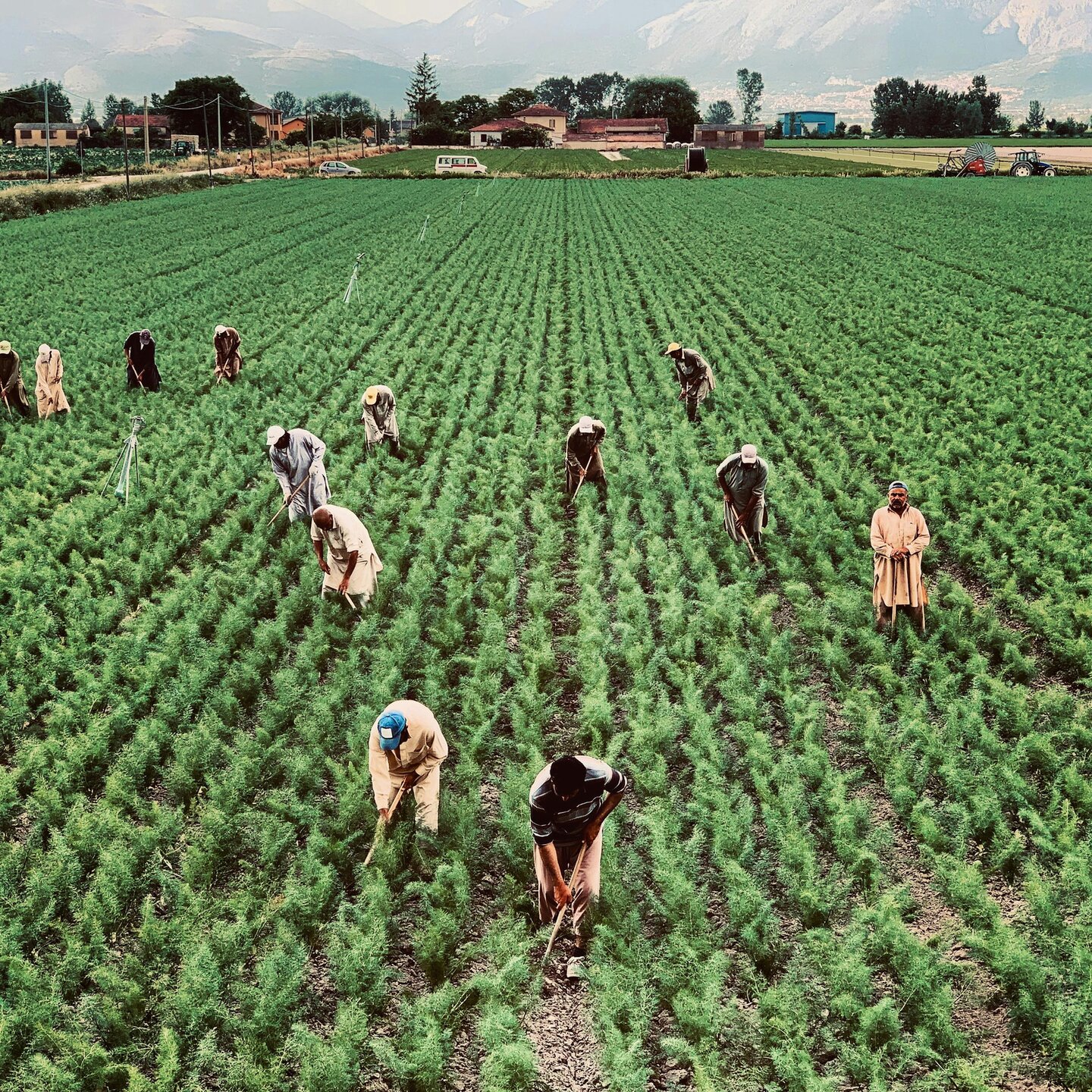
Multi-stakeholder and other collaborative industry initiatives and regulatory frameworks can play an imperative role in driving positive change and bridging regulatory gaps. Organizations like the Sustainable Beauty Coalition and Sedex (Supplier Ethical Data Exchange) serve to facilitate knowledge sharing and the development of best practices among industry players (15, 16). Alternatively, governments have begun to establish legal requirements and enforcement mechanisms to hold companies accountable for their sourcing practices. This is demonstrated by the UK’s Modern Slavery Act and the EU’s proposed corporate due diligence legislation (17, 18), as well as the US and EU’s green procurement sourcing tools that enable government contractors and vendors to use a common language and searchable database to identify compliant partners and sources in acquisitions.
The UN is also leading the way in the development of ethical sourcing frameworks that address challenges in procurement and easily identify ways for interested parties to become compliant through initiatives including: the UN Global Compact’s “Supply Chain Sustainability: A Practical Guide for Continuous Improvement,” which provides a comprehensive framework and tools for companies to consider and improve the sustainability and ethical performance of their supply chains (19), and the UN Guiding Principles on Business and Human Rights, which frame the responsibilities of businesses to respect human rights in their operations and supply chains (20). These principles have been widely adopted by companies, governments, and other stakeholders as a foundational framework for addressing human rights risks in global supply chains.
These different mechanisms co-developed by diverse industry stakeholders are the key to creating harmonized frameworks, establishing common standards, facilitating knowledge sharing, and providing practical tools for companies to assess and improve their ethical sourcing practices.
CONCLUSION
Consumer demand for increased transparency, coupled with the patchwork regulatory system and lack of effective compliant mechanisms, has created a complex challenge for consumers, retailers, brand owners, suppliers, and other stakeholders alike. As with most complex systems challenges, there is no “quick-fix” to addressing transparency in our supply chains, however, there are steps we can all take in our respective corners of the industry to streamline efforts:
- Embrace transparency and traceability
– Consider implementing robust traceability systems, such as blockchain technology, to create an immutable and transparent record of the entire supply chain, from raw material sourcing to the final product. Invest in independent third-party audits and certifications to verify compliance with ethical and environmental standards.
- Collaborate and share knowledge
-Engage in collaborative industry initiatives and associations to share best practices, establish common standards and alignment across stakeholders, and leverage collective expertise. Participate in capacity-building programs and knowledge-sharing platforms to support ethical sourcing practices, especially for small and medium-sized enterprises.
- Advocate for harmonized regulatory frameworks
– Support the development of harmonized regulatory frameworks and guidelines for ethical sourcing of natural ingredients, such as those proposed by the UN Global Compact and the UN Guiding Principles on Business and Human Rights. Engage with policymakers and industry bodies to advocate for clear definitions, standards, and enforcement mechanisms.
- Foster supplier partnerships
– Work closely with suppliers to promote sustainable sourcing practices, such as regenerative agriculture and fair labor practices. Invest in capacity-building and training programs for suppliers to ensure compliance with ethical and environmental standards.
- Prioritize circularity and renewable sources
– Prioritize the sourcing of natural ingredients from renewable and circular sources, minimizing environmental impact and promoting sustainability throughout the product lifecycle. Explore innovative solutions for upcycling, recycling, and responsible disposal of materials.
Again, there is no “quick-fix” to crack the code on ethical sourcing of natural ingredients, with its associated transparency complexities. However, this is a unique opportunity in time where consumers seek to influence the beauty industry consumer-driven advocacy, transparency and collaboration across the board can improve ethical sourcing practices over time. Brands can support consumers and advocacy organization by investing in traceability, collaboration, and working to develop simple definitions and frameworks, we can consistently take steps to solve this systems challenge.
References and notes
- Bateman A, Bonanni L. What Supply Chain Transparency Really Means. Vol. Supply Chain Management, Harvard Business Review. 2019. Available from: https://hbr.org/2019/08/what-supply-chain-transparency-really-means
- Schneider T, Vary L, Tan S. Complex supply chains are still a major barrier to ending deforestation. World Resources Institute. 2024. Available from: https://www.wri.org/insights/supply-chain-transparency-deforestation
- Reichheld A. Research: Consumers’ sustainability demands are rising. Harvard Business Review. 2023. Available from: https://hbr.org/2023/09/research-consumers-sustainability-demands-are-rising
- Agnieszka Dudziak, Monika Stoma, and Emilia Osmólska* Dominika Głąbska, Academic Editor and Dominika Guzek, Academic Editor. Analysis of Consumer Behaviour in the Context of the Place of Purchasing Food Products with Particular Emphasis on Local Products. Int J Environ Res Public Health. 2023 Feb; 20(3). Available from: https://www.ncbi.nlm.nih.gov/pmc/articles/PMC9915062/
- How is “natural” regulated in the US?. 2024. Available from: https://cosmeticsbusiness.com/how-is-natural-regulated-in-the-us—165850
- Palm oil: Global Brands profiting from Child and Forced Labour. Amnesty International. 2021. Available from: https://www.amnesty.org/en/latest/news/2016/11/palm-oil-global-brands-profiting-from-child-and-forced-labour/
- Audits and beyond. Ethical Trading Initiative. 2018. Available from: https://www.ethicaltrade.org/audits-and-beyond
- Conscious Beauty | Ulta Beauty. 2024 . Available from: https://www.ulta.com/discover/conscious-beauty
- Sustainability and cosmetics industry: A pledge for scientific and holistic approaches – tks | publisher, event organizer, media agency. TKS Publisher. 2023. Available from: https://www.teknoscienze.com/tks_article/sustainability-and-cosmetics-industry-a-pledge-for-scientific-and-holistic-approaches/
- A Framework for Sustainable Procurement and Supply Chain Management – Global Supply Chain Institute | Haslam College of Business. Global Supply Chain Institute | Haslam College of Business. Available from: https://supplychainmanagement.utk.edu/research/white-papers/2021-10-unlocking-value-through-sustainable-procurement/
- Ayan B, Güner E, Son-Turan S. Blockchain technology and sustainability in supply chains and a closer look at different industries: A mixed method approach. Logistics. 2022 Dec 8;6(4):85. doi:10.3390/logistics6040085. Available from: https://www.mdpi.com/2305-6290/6/4/85
- Blockchain for supply chain – IBM Blockchain. Available from: https://www.ibm.com/blockchain-supply-chain
- Blockchain: The solution for transparency in product supply chains: Provenance. 2015. Available from: https://www.provenance.org/news-insights/blockchain-the-solution-for-transparency-in-product-supply-chains
- Our new certification program – what to expect. Rainforest Alliance. 2022. Available from: https://www.rainforest-alliance.org/business/certification/our-new-certification-program-what-to-expect/
- Sustainable beauty coalition. British Beauty Council. 2024. Available from: https://britishbeautycouncil.com/sustainable-beauty-coalition/
- Sustainable Supply Chain Solutions. Sedex. 2024. Available from: https://www.sedex.com/
- Modern Slavery Act 2015 London: TSO. Available from: https://www.legislation.gov.uk/ukpga/2015/30/contents
- Corporate due diligence rules agreed to safeguard human rights and environment. European Parliament. 2023. Available from: https://www.europarl.europa.eu/news/en/press-room/20231205IPR15689/corporate-due-diligence-rules-agreed-to-safeguard-human-rights-and-environment
- Supply Chain Sustainability: A Practical Guide for Continuous Improvement, Second Edition. Business for Social Responsibility. United Nations Global Compact; 2015. Available from: https://unglobalcompact.org/library/205
- Guiding Principles on Business and Human Rights. United Nations Human Rights. Office of the High Commissioner. 2011. Available from: https://www.ohchr.org/sites/default/files/documents/publications/guidingprinciplesbusinesshr_en.pdf

Natural cosmetics: Trends and requirements for a sustainable future

H3i 2024: Detergents – navigating ecological transition, opportu...
Personalized skin care, an update

Amazonian Oils Blend calms sensitive skin while rebalancing skin micro...
Mind, body, beauty – decoding the holistic beauty revolution