Cranberry, from the superfruit to potent anti-aging biopeptides
The cranberry is a small red fruit native to North America. Native Americans have always appreciated its tangy taste and used it in traditional medicine (1). Beginning in the mid-19th century, the cranberry slowly but surely became a health food of our time and is now considered to be a genuine superfruit. This popularity boom has resulted in large increases in cranberry cultivation in North America. Quebec is currently the second producer in the world. The acidity of soils and the cold climate make this province ideal for its culture.
For the development of one of its natural anti-aging active ingredients (Vaccinium macrocarpon (Cranberry) Fruit Extract), SILAB decided to beneficially use the biopeptides contained in cranberries. For this supply, a family-owned company in Quebec was selected, which has been cultivating cranberries for more than 20 years. Thanks to the industrial know-how of this partner, added value is conferred to the fruit and its co-products at each step of the process. The first step is the extraction of the juice from cranberries. Residual seeds and pulp are then recovered and cold pressed to extract the oil. This second extraction yields an oil-free press cake (figure 1). The concentration of plant proteins in this co-product makes it a valuable resource.
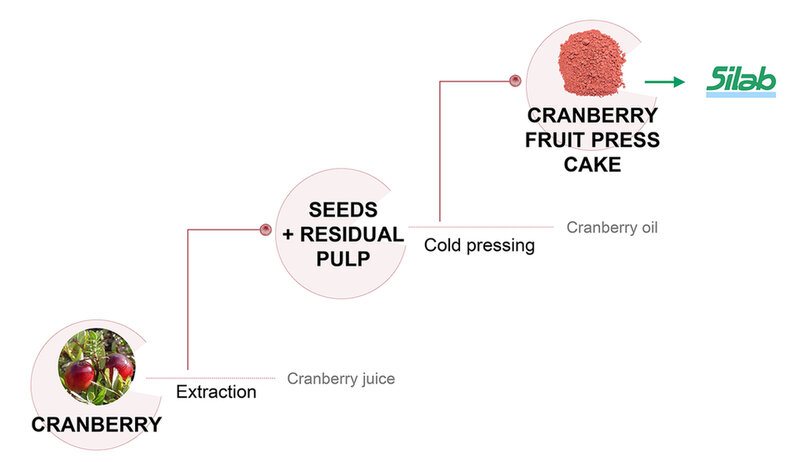
Figure 1. Process for obtaining cranberry press cake, a co-product beneficially used to develop the Vaccinium macrocarpon (Cranberry) Fruit Extract.
This co-product was then transformed through a specific process. The sequential action of two proteases allowed the optimized extraction of biopeptides of interest from the cranberry fruit press cake. A purification step followed and led to the obtention of the Vaccinium macrocarpon (Cranberry) Fruit Extract. This active ingredient is a fraction purified to 95% in natural biopeptides with high anti-aging potential (2).
Coconut, a highly sensory fruit for regenerating effects
The coconut tree is also called “Tree of Life” in tropical countries where its biological properties explain its many medicinal and traditional uses. This tree is emblematic of tropical dreamscapes and exotic fragrances. Its fruits are protected by a thick envelope of brown fibers, which are harvested using an ancestral process to yield coco fiber, widely used for weaving and preparing a variety of objects. Coconuts are also appreciated for their nutritional richness, as well as for the fresh and unusual aroma.
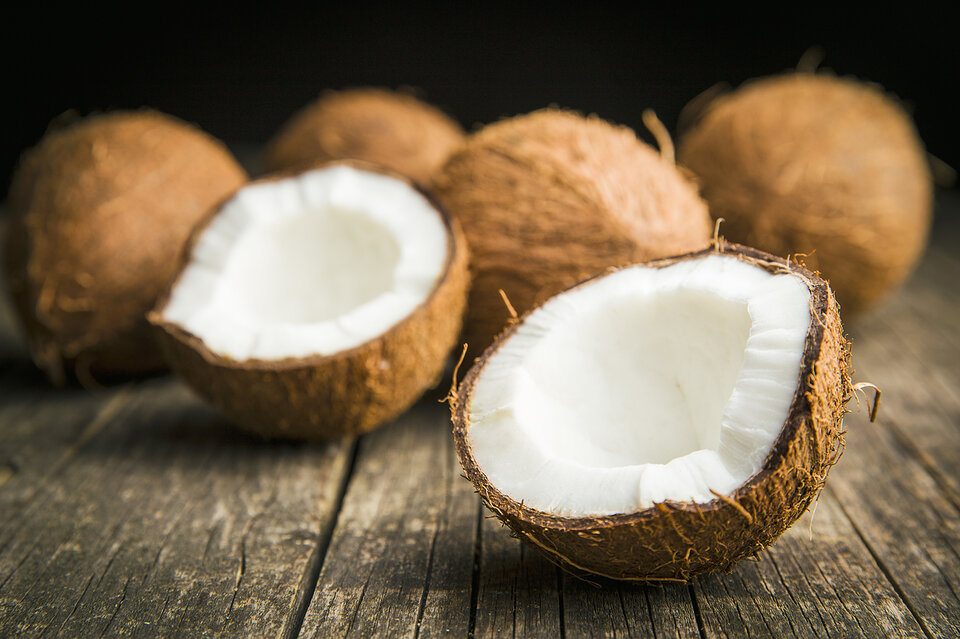
Figure 2. Coconuts.
Coconuts contain an opalescent and slightly sweet liquid, known for its moisturizing and antioxidant properties. Their white and intoxicating flesh contains many inorganic compounds, vitamins and lipids. It is a valuable resource, providing a variety of products used in cooking for their flavors that are as pleasant as they are characteristic (figure 2). An initial step of moderate drying of the fresh flesh allows in a second time the extraction of virgin coconut oil by cold pressing. This process preserves the aromas and the active molecules of the fruit. This oil softens the skin and imparts a delicate fragrance that stands out from all others. The co-product from these processes is coconut flour. This perfumed flour is a concentrate of many very interesting molecules that SILAB chose to use in one of its regenerating natural active ingredients embracing the concept of sensoriality of the skin (Water and Butylene glycol and Cocos nucifera (Coconut) Fruit Extract).
A specific process and a metabolomic study were conducted to support this novel concept (3). These steps enabled the extraction and identification of molecules that specifically target taste and olfactory sensory receptors in the epidermis (nonioside D and butyl 4-O-alpha-D-glucopyranosyl-beta-D-glucopyranoside).
In order to confirm the choice of this natural raw material, analyses were carried out to determine the molecular profile of coconut oil and water. The results showed that the active molecules extracted in the Water and Butylene glycol and Cocos nucifera (Coconut) Fruit Extract are not or in a very few quantities in samples of coconut oil and water which also are devoid of biological activity. Coconut flour is therefore an incomparable raw material whose sensory properties mark the concept developed by SILAB.
Jojoba, the plant jewel of the desert for firming benefits
Jojoba (figure 3) is a shrub whose seeds contain a wax that is totally unique in the plant world, resulting in its nickname Desert Gold. This species thrives in deserts where it demonstrates remarkable longevity, despite excessive sunlight and extremely arid conditions. It can in fact live for 100 years, due to multiple morphological adaptations, in particular its highly well adapted root structure, which helps it optimize water absorption both on the surface and deep down.
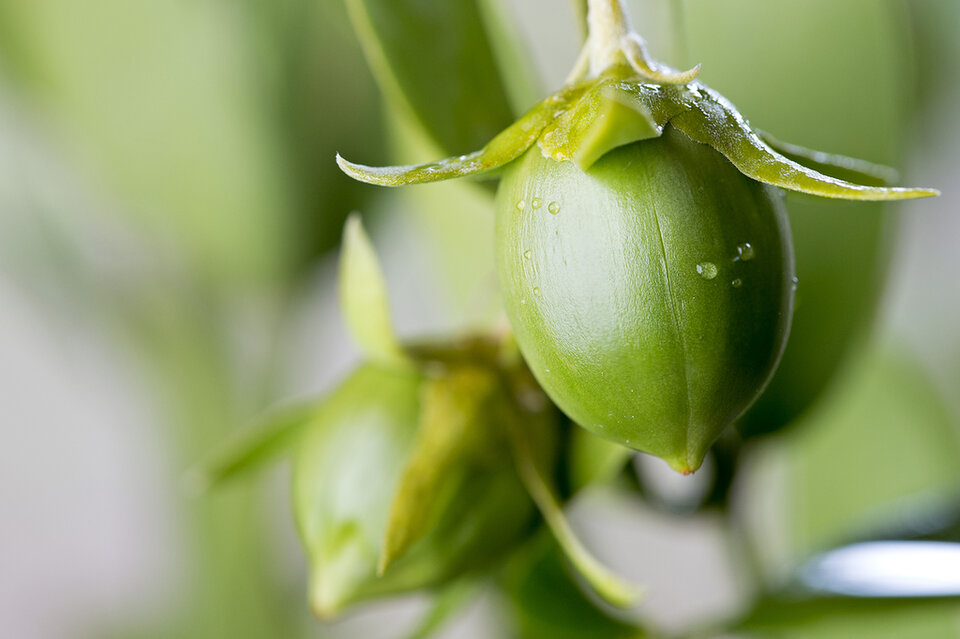
Figure 3. Jojoba.
Jojoba’s ability to maintain its physiological integrity over time was the source of inspiration for the development of SILAB’s firming natural active ingredient for the neck and décolleté. The seed cake, which is the co-product coming from cold extraction of jojoba seeds, was used as raw material.
Thanks to the development of a specific process, the properties of this co-product have been enhanced by extracting galacto-oligosaccharides (galactotrioses and methylgalactinol) with biological efficacy on the skin matrisome (4) (5). These molecules of interest within the jojoba oil cake cannot be obtained through a mere aqueous extraction and require a targeted enzymatic process. This latter is based on the rigorous selection of a carbohydrase-type enzyme whose activity is adapted to the extraction of galactotrioses naturally present in the raw material. These molecules are inherent to the jojoba oil cake since their presence is reduced in the leaves and none in its oil.
CONCLUSION
Transforming co-products into natural active ingredients favors the development of environmentally friendly cosmetic innovations. This upcycling approach triggers positive effects on the environment by transforming undervalued resources into finished products with elevated added value. The maxim “nothing is lost, nothing is created, everything is transformed”, attributed to Lavoisier, takes on its full meaning.
References and notes
- Côté, J.; Caillet, S.; Doyon, G.; Sylvain, J-F; Lacroix, M. (2010) Bioactive compounds in cranberries and their biological properties. In: Critical reviews in food science and nutrition, vol. 50, n° 7, p. 666–679.
- [2] Breugnot, J.; Rouaud-Tinguely, P.; Gilardeau, S.; Rondeau, D.; Bordes, S.; Aymard, E.; Closs, B.; (2023) Utilizing deep learning for dermal matrix quality assessment on in vivo line-field confocal optical coherence tomography images. In: Skin Research Technology, vol. 29, n° 1, e13221
- Verzeaux, L.; Richer, S.; Viguier, J.; Gofflo, S.; Boudier, D.; Aymard, E.; Closs B.; (2019) Structure-function relationship between a natural cosmetic active ingredient and the olfactory receptor OR2AT4. In: International Journal of Cosmetic Science, vol. 42, n) 2, p. 194-199.
- Verzeaux, L.; Chauprade, C.; Soulié, C.; Richer, S.; Marchand, L.; Aymard, E.; Closs, B.; (2020) A unique eco-designed process for an innovative natural active ingredients. In: SOFW Journal, vol. 146, n° 1-2.
- Verzeaux, L.; Chauprade, C.; Soulié, C.; Richer, S.; Marchand, L.; Aymard, E.; Closs, B.; (2023) L’éco-conception d’un ingrédient actif cosmétique : l’exemple du jojoba. In: Actualité chimique, vol. 484-485, p. 83-90.
The shifting landscape of cosmetic claims in 2024: Key themes, challen...

Our journey to sustainable beauty

Hair skinification: an innovative perspective in scalp care

THE WORLD OF FRAGRANCES: Types, Impact, and Durability Evaluation

Exploring the adaptogenic potential of cordyceps sinensis to promote s...

Biodiversity and the nature-positive economy: A fragrance industry cha...

Common Ingredients, Impressive Synergy: Enhancing Rapid Kill with Sodi...

Sun protection: Cosmed clarifies the challenges ahead