
Adapted version of (Designing Wellness Mind-Body Interventions using neuroscience, artificial intelligence and the power of touch: measurements in real time to ensure skin and emotion transformation), with permission from the original authors (1).
Introduction
Mental wellness is a fundamental pillar of overall health and well-being (2). This article explores how neuroscience, the power of touch, and artificial intelligence can come together in the cosmetics industry to create treatments that not only enhance well-being but also deliver scientifically validated results.
Stress can negatively impact the skin, worsening existing conditions or causing further damage (3,4). However, targeted interventions have been shown to improve skin health, alleviate stress, and promote relaxation (5,6,7,8). Healthy skin, in turn, enhances self-esteem and appearance satisfaction (9,10), while sensory experiences, such as touch and smell, offer psychological pleasure (11).
To better understand these connections, we employed a combination of advanced tools and techniques. Saliva, a non-invasive and practical sample, allowed us to measure biomarkers related to emotional states (oxytocin) and stress (cortisol, alpha-amylase) (12,13). Electrophysiological methods, such as EEG and ECG, further supported emotional state evaluation (14).
This study investigated the effects of professional Spa treatments, including facial skincare, face and body massages (6,15,16,17), on participants’ well-being, emotions, and skin condition. We assessed outcomes using both subjective measures (self-assessments) and objective metrics, including EEG, ECG, GSR, biomarkers, skin imaging (VISIA®) (18), and an AI-based algorithm to quantify well-being before and after treatment.
Materials and Methods
Proof-of-Concept:
A multimodal, open-label study with 20 participants tested 12 Wellness Mind-Body Interventions (WMBI), including skincare, aromatherapy, and touch (19,20,21). EEG, ECG, and GSR signals were recorded before, during, and after each intervention using Enobio® (8-channel, 7 EEG-1ECG) (22) at 500 Hz sampling and Shimmer® device for GSR acquisition. A 2-minute baseline was collected with participants lying on a treatment bed with closed eyes to estimate their initial emotional state. Emotional analysis used the circumplex model dimensions of valence (pleasantness) and arousal (activity) (23,24). For example, high valence/low arousal indicates relaxation, while high arousal/low valence suggests nervousness. Features derived from electrophysiological signals were processed using the WEEmo® algorithm to quantify emotional states based on valence and arousal.
Study:
Thirty volunteers participated with informed consent.
Subjective Measures:
- Well-being: A 17-question Spanish Ryff test (25) was used, rated on a 0–5 scale (0 = Strongly Disagree, 5 = Strongly Agree).
- Stress Perception: An 11-question Spanish test rated on a 1–3 scale (1 = Nothing, 3 = High).
- Skin Evaluation post-session: An 11-question Spanish test rated on a 1–4 scale (1 = Strongly Disagree, 4 = Strongly Agree).
- Emotional State: An adapted Affective Slider (26) in JotForm (27) assessed arousal and valence using two sliders on a 0–100 scale (0 = lowest, 100 = highest). Questions evaluated arousal/activation/sleepiness and valence/pleasantness.
Electrophysiological Measures: EEG data were acquired using Enobio® (19 channels: P7, P4, Cz, Pz, P3, P8, O1, O2, T8, F8, C3, F4, Fp2, Fz, C4, F3, Fp1, T7, F7) (28) with CMS/DLR electrodes on the right mastoid and an ECG electrode on the left wrist, sampling rate at 500 Hz. A six-minute protocol alternated 30-second resting-state eyes-open/eyes-closed sessions, guided by Spanish audio and visual cues on a black screen. The sequence, programmed in Scilab (29), synchronised EEG markers with visual/audio instructions via Lab Streaming Layer (LSL) (30) for real-time data and trigger streaming.
Protocol: Participants completed a crossover study with two sessions, each involving a treatment or control condition. Sessions occurred in the same environment, day, time, room, and with the same aesthetician, with randomized session order across participants.
Session Conditions:
- Treatment: Dim lighting, 22°C ± 1.5°C, bed warmer, music, and skincare applied by hand.
- Control (No-Treatment): Dim lighting, 22°C ± 1.5°C.
Procedure:
- Pre-Session: Participants completed the Ryff test, VISIA® skin imaging, a stress test, and saliva collection. EEG/ECG setup followed, with a six-minute alternating eyes-open/closed recording.
- Session: Participants received a 50-minute treatment or rested for 50 minutes on the treatment table.
- Post-Session: A second saliva sample, adapted Affective Slider test, EEG/ECG recording, VISIA® imaging (31), and questionnaires (Ryff, stress, skin evaluation) were completed, with a final saliva sample collected.
This protocol ensured consistent measures of well-being, skin condition, and emotional state.
Analysis:
Affective Slider Analysis: Pre- and post-condition responses were rescaled between -1 and 1 to fit Russell’s Circumplex model of affect (23).
Ryff Test Analysis: The 17 Ryff test questions were grouped into four dimensions: Autonomy, Self-Acceptance, Environmental Mastery, and Life Purpose. Responses (0–5 scale) were grouped within these dimensions and averaged to compute a unique value per dimension.
ECG Analysis: The ECG signal was processed with a 0.5 Hz high-pass Butterworth filter and a 50 Hz notch filter to remove noise and power line interference. Signals were segmented into 30-second epochs for eyes-closed and eyes-open conditions. Epochs exceeding 1 mV amplitude were removed as artefacts. Heart rate, linked to arousal (32), was calculated by detecting R-peaks within QRS complexes. The average interval between normal beats (NN intervals) was computed for each session.
EEG Analysis: Raw EEG data (1–45 Hz) was filtered, epoched, and segmented into 4-second epochs with 2-second shifts. Artefacts exceeding 100 µV were removed. Frequency band powers (delta: 1–4 Hz, theta: 4–8 Hz, alpha: 8–13 Hz, beta: 13–30 Hz, gamma: 30–45 Hz) were extracted. Following this, valence and arousal features were computed for each sub-epoch and averaged for each condition and event (33), using the proprietary EmoWave® pipeline.
- Arousal (23,24): Calculated from frontal theta, alpha, and beta power (34,35,36,37).
- Valence (23,24): Derived from gamma and alpha asymmetry (34,36,37,38,39).
The percentage change between the pre- and post-condition of the arousal and valence measures for each participant were rescaled pre- and post-condition values (-1 to 1) were projected onto Russell’s Circumplex model. Relaxation, happiness, harmony, satisfaction, and activation were computed as vector projections, with a final well-being marker (WEEmo®) calculated as their linear combination.
Stress Biomarkers Analysis: Saliva samples were collected pre-session, immediate post-session, and 30 minutes post-session to evaluate biomarkers with delayed expression. Participants provided saliva via passive drool into polypropylene tubes for 1 minute, avoiding smoking, eating, drinking, or brushing teeth for 30 minutes prior. Samples were stored on dry ice and later at -80°C in the laboratory (Interlab-UMU, Murcia, Spain).
- Cortisol: Measured using an automated immunoassay system (IMMULITE, Siemens Healthcare Diagnostics) (12).
- Salivary Alpha-Amylase (sAA): Assessed via a kinetic spectrophotometric assay with a commercial kit following the International Federation of Clinical Chemistry and Laboratory Medicine method (12,13), using ethylidene-G7PNP as the substrate.
- Oxytocin: Measured with an Alpha-Lisa assay using a monoclonal antibody against antioxytocin.
All assays demonstrated intra- and inter-assay coefficients of variation (CVs) below 10%, with linear regression coefficients near 1 after serial dilutions.
Skin-Condition Analysis:
- Objective Evaluation: Skin was assessed before and after sessions using the VISIA® skin analysis system (18). Images provided percentile scores comparing participants’ skin features (e.g., wrinkles, pores, redness) to a database of individuals of similar age and skin type. Higher scores indicated better skin condition, with 50% representing the average. Pre- and post-session percentile differences for treatment and control sessions were analyzed using a paired Student’s t-test, with p-values < 0.005 considered statistically significant.
- Subjective Evaluation: Participants completed 11-question test rating skin condition aspects such as luminosity, lifting effect, hydration, and overall appearance. Each question was scored on a 1–4 scale (1 = lowest satisfaction, 4 = highest).
Statistical Analysis:
A 2 × 2 Repeated Measures ANOVA analyzed electrophysiological features, Affective Slider responses, and Ryff test answers, with session (treatment, control) and condition (pre, post) as within-subject factors. Significant effects were followed by pairwise comparisons, with p-values adjusted using the Benjamini & Hochberg correction (40).
- Pairwise comparisons between conditions (pre vs. post) and sessions (treatment vs. control) were conducted using the Wilcoxon nonparametric test.
- Outliers exceeding 1.5 IQR were removed based on Tukey’s rule (41).
For biomarkers (cortisol, oxytocin, alpha-amylase), a logarithmic transformation ensured normal distribution. A mixed linear model was applied, considering session and saliva collection time (before, after, 30 minutes after) as fixed factors and individuals as random factors.
The Spearman correlation coefficient examined the relationship between salivary biomarkers and subjective stress survey results. A significance level of 0.05 was applied.
Results
Proof-of-Concept:
Figures 1A-B illustrate the average valence and arousal outcomes from the proof-of-concept study.
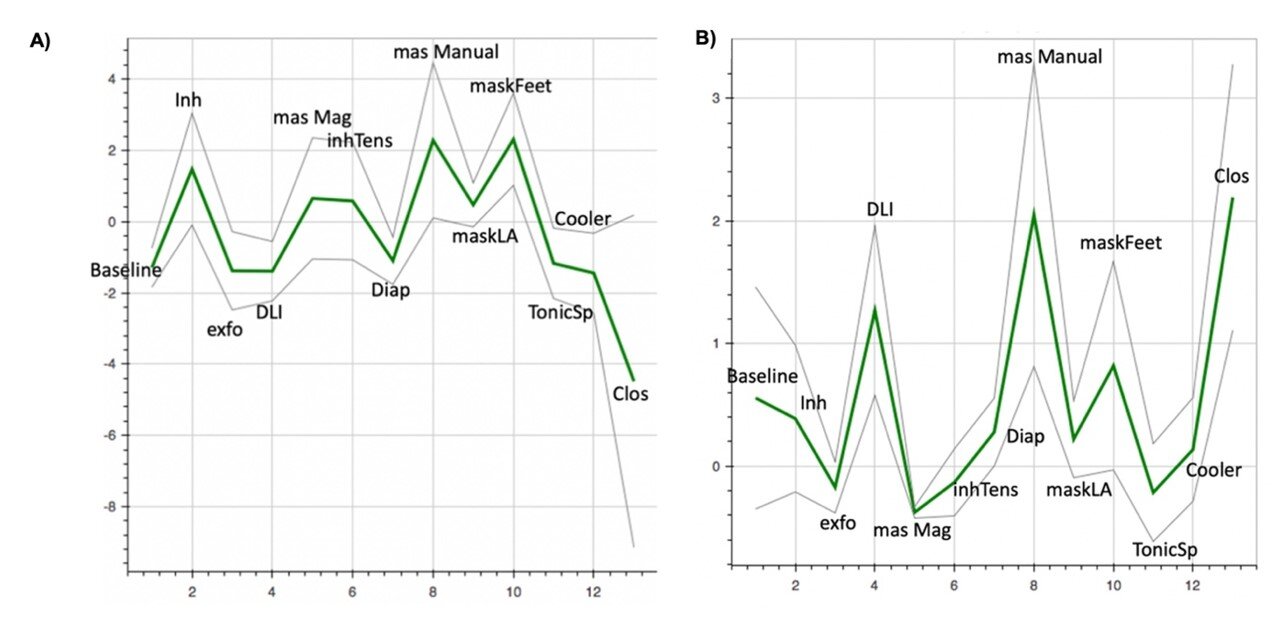
Figure 1. A) Arousal and B) Valence. The green lines depict the grand averages across all participants, while the grey lines represent the standard error of the mean.
While most steps showed high valence, indicating participants enjoyed them, two steps—exfoliation and cold toner spray—resulted in discomfort, characterized by low valence (pleasantness) and high arousal. Despite these two exceptions, baseline (pre) and post-intervention measurements demonstrated that participants felt significantly more relaxed (low arousal, high valence) after completing the Wellness Mind-Body Intervention (WMBI) series.
This study achieved two objectives:
- Demonstrating the WMBI’s effectiveness in promoting relaxation (low arousal, high valence).
- Optimizing the treatment by identifying and reducing unpleasant steps for the subsequent crossover study.
Study:
Affective Slider’s Answers: Participants reported reduced arousal post-condition in both sessions, with a greater decrease after treatment (-55.51%) compared to control (-25.81%). ANOVA showed a significant condition effect (F(1) = 21.23; p < 0.0001; η² = 0.16) and a near-significant session*condition interaction (F(1) = 3.48; p = 0.07; η² = 0.01). Pairwise tests revealed significant pre-post differences for control (p = 0.0018) and treatment (p = 0.0004), but no significant difference in percentage change between sessions (p = 0.12).
Valence increased significantly post-treatment (56.18% vs. 11.32% in control). ANOVA indicated significant effects of session (F(1) = 40.78; p < 0.0001; η² = 0.26), condition (F(1) = 63.2; p < 0.0001; η² = 0.24), and session*condition interaction (F(1) = 25.29; p < 0.0001; η² = 0.15). Pairwise tests showed significant pre-post differences for treatment (p = 0.002) and between control and treatment groups in percentage change (p = 0.002).
Ryff Test Responses: Participants showed increased self-acceptance levels after treatment, unlike in the control session (Figure 2). A significant condition*session interaction for self-acceptance was found (F(2) = 7.82; p < 0.001; η² = 0.03). Pairwise tests showed significant pre-post differences only for the treatment group (p = 0.0011) and between post and 24-hour post conditions (p = 0.009). Additionally, significant differences in the percentage of change (post – pre) were observed between control and treatment sessions (p = 0.006).
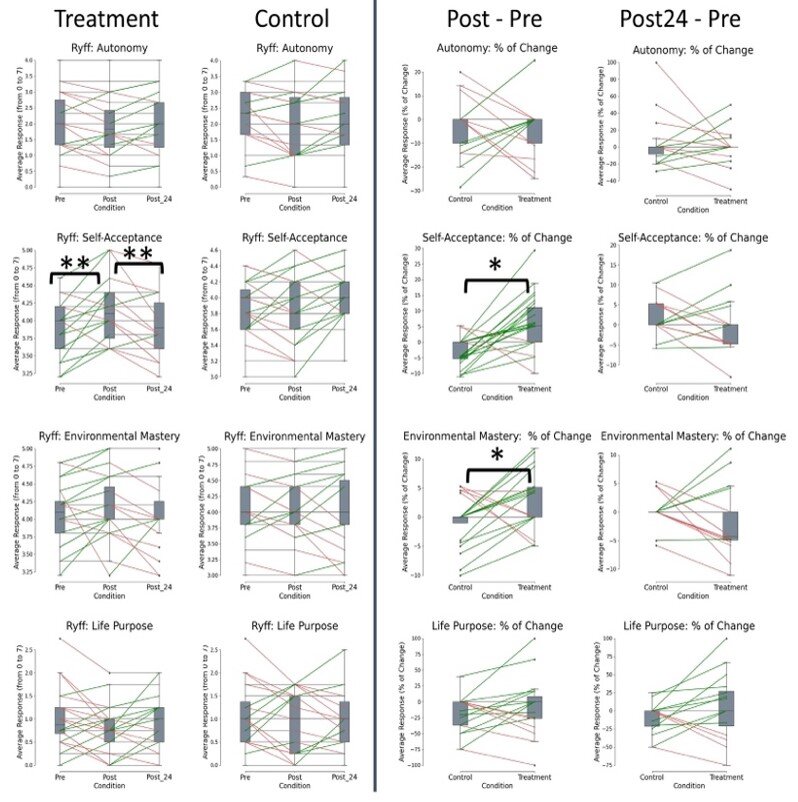
Figure 2. Average of Participant’s responses to the four dimensions of Ryff Scale (Autonomy, Self-Acceptance, Environmental Mastery, and Life Purpose).
ECG Analysis: Participants showed reduced heart rates post-session, reflected by longer N-N intervals (Figure 3 A-B). A significant condition effect was observed (F(1) = 7.71; p = 0.01; η² = 0.01). Pairwise tests revealed significant pre-post differences for both control (p = 0.002) and treatment sessions (p = 0.006). Heart rate levels were lower during treatment than control sessions, indicated by a significant session effect (F(1) = 5.18; p = 0.03; η² = 0.01). However, no significant differences were found in the percentage of change (post – pre) between the two sessions.
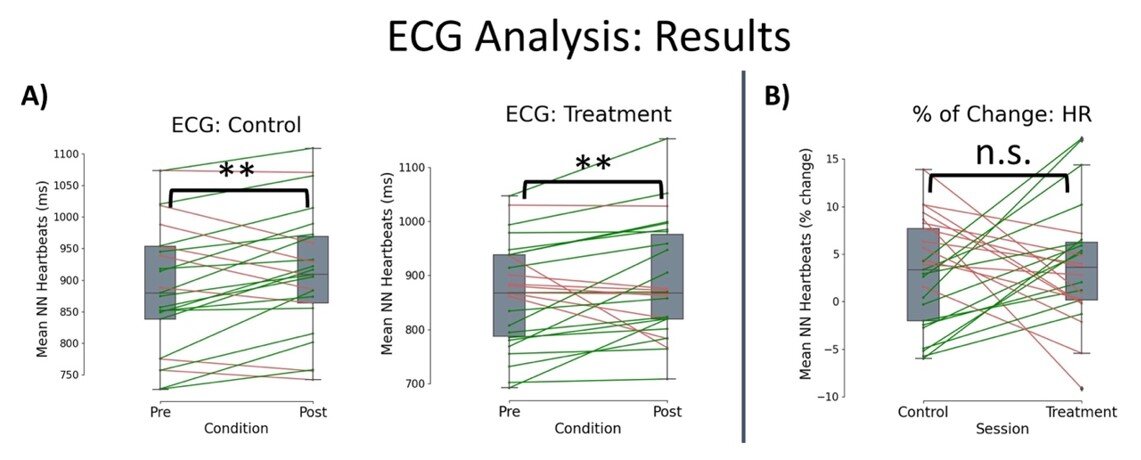
Figure 3. A-B. Results ECG Analysis.
EEG Analysis: Topographies of each frequency band (treatment and control, eyes-open and eyes-closed) display the percentage of change (post – pre) per session (Figure 4). As expected, alpha power (8–13 Hz) increased, especially in parieto-occipital electrodes during the eyes-closed condition.
For the treatment session during eyes-open conditions, alpha power increased, whereas in the control condition, there was a slight increase in theta power and a reduction in alpha, beta, and gamma power in frontal electrodes. A similar pattern was observed for the eyes-closed control condition.
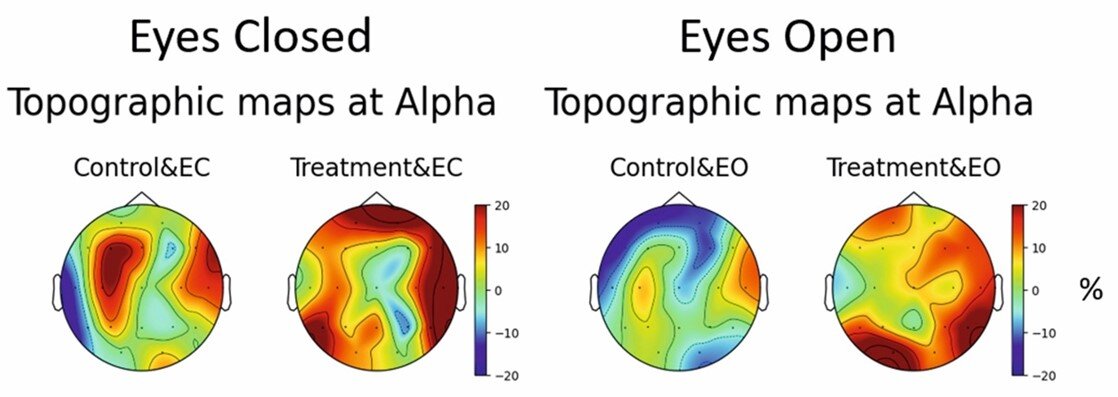
Figure 4. Percentage of Change (%) in Alpha power of Post – Pre-Conditions for Eyes Closed and Eyes Open Conditions. Comparison between Control and Treatment.
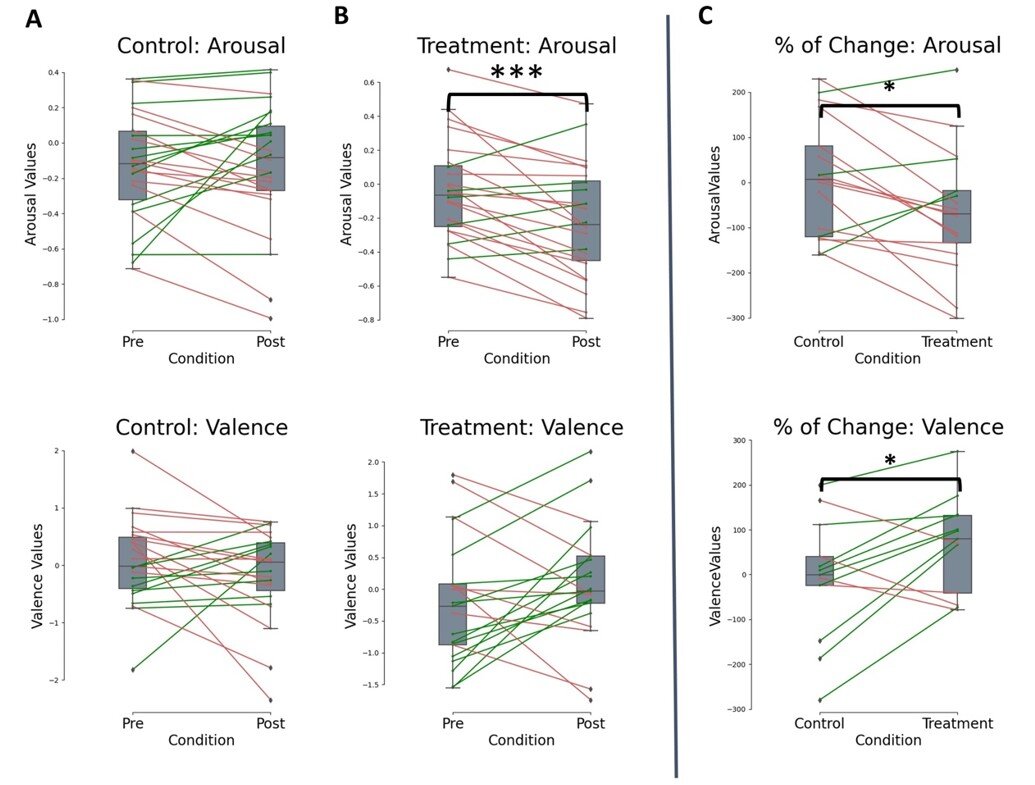
Figure 5. Arousal and Valence features extracted from EEG and ECG.
Comparison of Subjective and Objective Measures: Subjective Affective Slider responses were consistent with EEG/ECG activity (Figure 6), showing similar differences between treatment and control. After the control session, participants reported less activity but higher valence, while EEG/ECG indicated reduced valence and unchanged arousal.
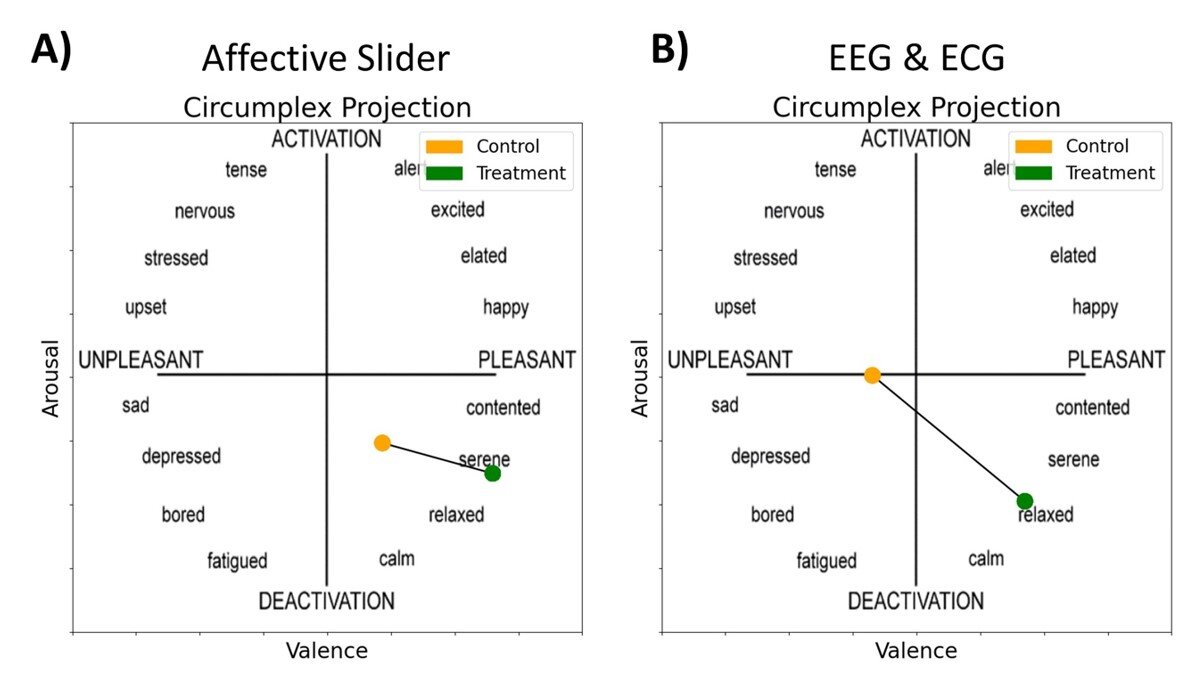
Figure 6. Circumplex projection of participants’ arousal and valence levels. The center of the circumplex corresponds to the Pre-condition and the points to the Post. A. Subjective’s answers of participants using the Affective Slider. B. Objective Valence and Arousal features extracted from ECG and EEG on the same participants. Control condition appears as the orange point. Treatment condition appears as the green point.
Relaxation and Well-Being: Relaxation levels increased exclusively after the treatment session (Figure 7 A), with a significant difference in percentage change between sessions (p = 0.03) revealed by a Wilcoxon test. WEEmo® well-being levels significantly increased after treatment (+67.87%) and dropped after the control session (-72.51%) (Figure 7 B). A Wilcoxon test showed significant differences in percentage change between treatment and control sessions (p = 0.04).
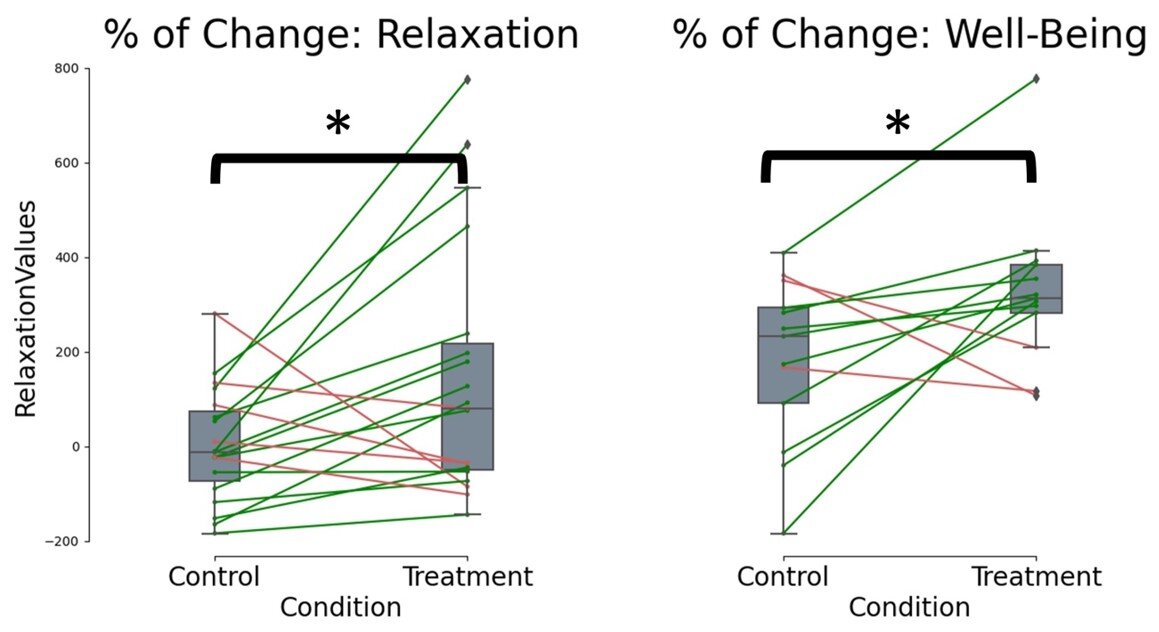
Figure 7. Relaxation and Well-Being features extracted from EEG and ECG. A) Percentage of change (Post – Pre) of the Relaxation feature. B) Percentage of change (Post – Pre) of the WEEmo® well-being feature.
Skin Analysis: Skin condition improvements were evaluated for 30 volunteers using percentile score differences for wrinkles and pores before and after both sessions.
- Pore Condition: A significant improvement (p < 0.0001) was observed during the treatment session, with a +42.9% increase over the control session (Figure 8A).
- Wrinkle Condition: No significant improvement was observed, with only a +10% increase during the treatment session (Figure 8 B).
- Subjective Evaluation: Volunteers reported full agreement (score 4) on skin improvement after treatment, compared to non-agreement (score 1) following the control session (Figure 8 C).
- Representative Case: Figure 8 D shows an example of wrinkle score improvement from a representative volunteer following the treatment session.
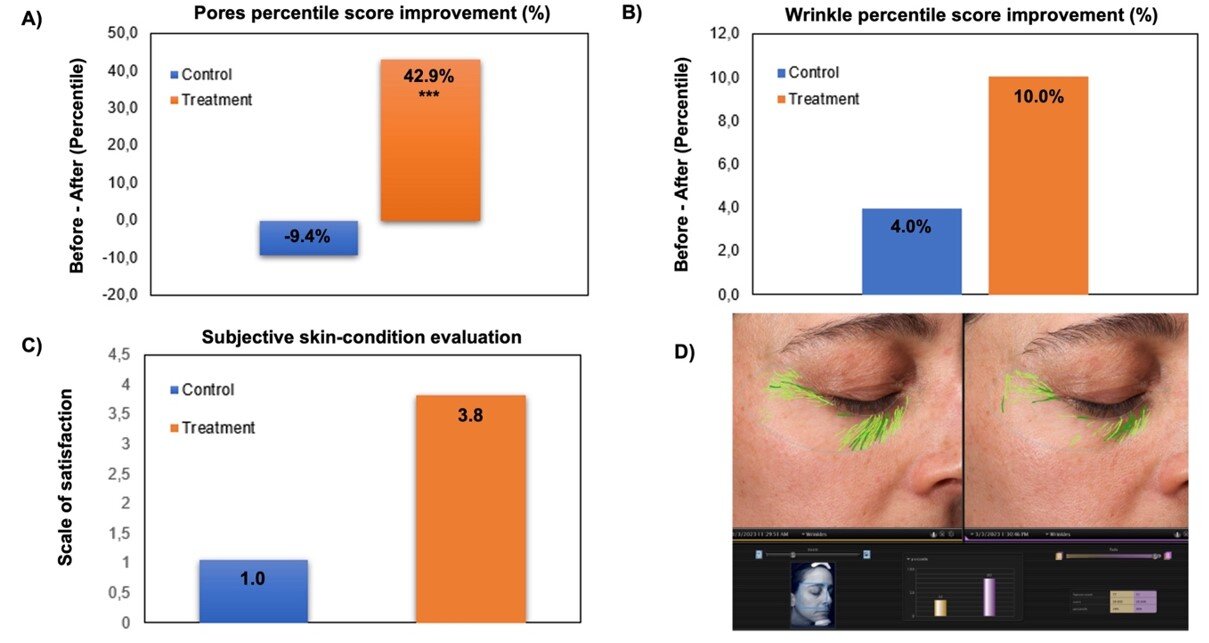
Figure 8: A) Evaluation of percentile score improvement on pores before and after control and Treatment session, ***, p-value <0.001; B) Evaluation of percentile score improvement on wrinkles before and after Control and Treatment session; C) Subjective skin-condition evaluation. Scale of satisfaction from 1 to 4 (1= total non-agreement of satisfaction on the skin condition improvement to 4= total agreement level of satisfaction on the skin condition improvement; D) VISIA® Analysis results on wrinkle percentile score improvement of a representative volunteer.
Biomarkers Analysis:
Group Analysis (Figure 9 A-C):
- Oxytocin: No significant changes between groups (p = 0.429), intakes (p = 0.823), or group*intake interaction (p = 0.680).
- Cortisol: No significant variations between groups (p = 0.324), intakes (p = 0.823), or group*intake interaction (p = 0.157).
- Alpha-Amylase: No significant intergroup differences (p = 0.870), intakes (p = 0.117), or group*intake interaction (p = 0.241).
Correlation with Stress Survey (Figure 9 D):
- A significant negative correlation was observed between salivary oxytocin levels and subjective stress survey results [39, 40] (Spearman’s coefficient = -0.217, p = 0.019).
- No significant correlation was found for cortisol (p = 0.876) or alpha-amylase (p = 0.090).
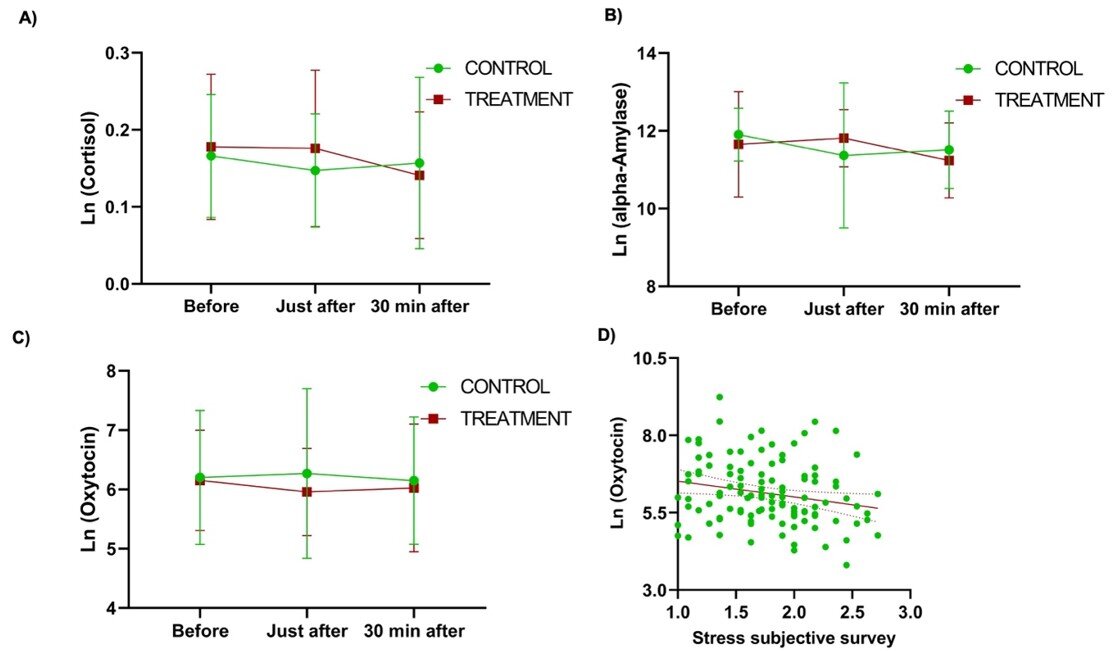
Figure 9. A) Salivary cortisol levels B) Salivary alpha-amylase and C) Salivary oxytocin levels in the treatment and control groups in saliva samples obtained before, just after session and 30 minutes after. The average values obtained after the natural logarithmic transformation of data are displayed. The error bars show the standard deviation of the data. D) Dispersion plot constructed between the salivary oxytocin levels recorded at each intake (natural logarithmic transformed) and mean result obtained in the subjective stress survey.
Individual Data Highlights:
- Oxytocin: Increased post-treatment and 30 minutes after for participants 6, 10, 13, 18, 26, and 27; no increase after control.
- Cortisol: Decreased post-treatment for participants 18 and 20; no decrease after control.
- Alpha-Amylase: Decreased post-treatment for participants 16 and 29; no decrease after control.
Discussion
The WMBI intervention, including signature skincare and manoeuvres, significantly increased valence, well-being, and relaxation while reducing arousal, supported by subjective assessments (Affective Slider, Ryff test) and objective measures (EEG, ECG). Participants reported higher valence and lower arousal after treatment, with the Ryff test showing increases in Self-Acceptance and Environmental Mastery, though these reverted after 24 hours, indicating the test’s sensitivity to short-term changes. Objective measures aligned with subjective findings: valence increased only after treatment, and relaxation improved significantly, while heart rate decreased in both sessions. Arousal levels decreased after treatment but not after control, reinforcing treatment effectiveness.
Salivary biomarkers (cortisol, oxytocin, alpha-amylase) showed no significant overall changes, likely due to high intra-subject variability. However, oxytocin negatively correlated with stress levels, consistent with its role as a positive well-being biomarker (19).
Skin analysis revealed significant pore improvement and slight wrinkle enhancement post-treatment, with subjective evaluations showing perceived improvements in lifting, luminosity, and wrinkle reduction only after treatment.
These findings suggest WMBI treatments enhance relaxation, self-esteem, and environmental mastery (42,43,44,45), potentially boosting mental health and resilience. Such interventions may act as stress buffers and empower individuals, fostering long-term well-being (2, 46).
Conclusion
Optimising WMBI-Spa treatments based on steps that enhance relaxation and pleasure can significantly improve well-being outcome. Our results demonstrated clear differences in the chosen test parameters under treatment as compared to no treatment conditions. Spa treatment (47) increased relaxation, alpha waves, well-being, skin pore reduction, self-acceptance, and environmental mastery. Some improvements correlated with decreased stress biomarkers and WMBI scores. Participants also reported enhanced self-care and beauty perceptions.
Overall, the treatment improved mood, positive self-perception, and goal-attainment abilities, highlighting its potential to enhance well-being both in clinical settings and beyond.
Acknowledgments
The authors extend their gratitude to Elsa Vilà, Milva Ariza, and Elena Gómez for performing the WMBI and controlling the experience in the treatment room. Special thanks also to Sofía González and Karan Chugani who assisted during the study data collection and results analysis. Furthermore, we express our appreciation to all the participants who took part in this study, as well as to Anna Mosquera for her diligent document review.

The future of skincare is bright – and consumers are, too
Waterless Beauty: Hype or Sustainable Revolution?
C3 Reduct®: A Reductive Metabolite of Curcumin for Oral Hygiene
Consumer Perspective: Putting Consumer Experience at the Heart of Wate...
Advancements in skin microbiome that are redefining cosmetics

Adapting Skincare for Climate Change
Understanding cosmetic claims for hair care products: What you need to...