Introduction
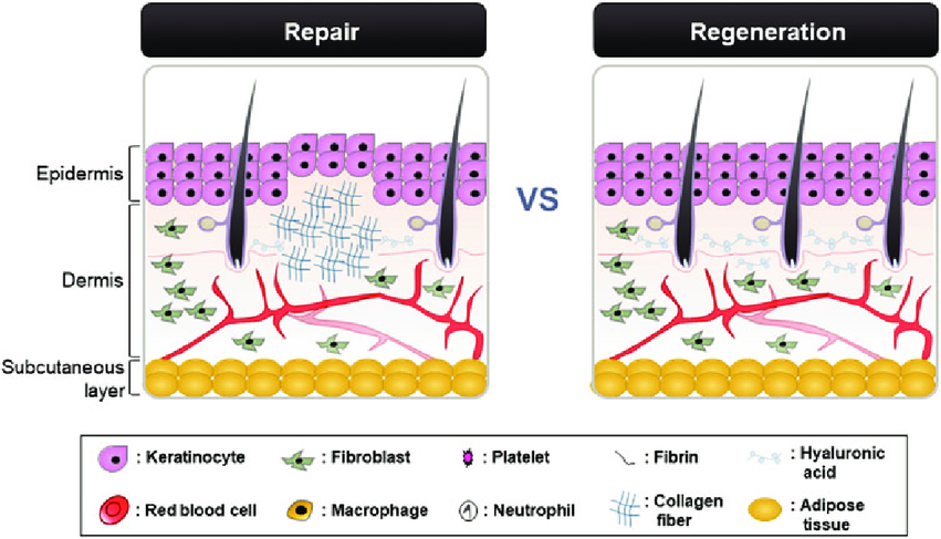
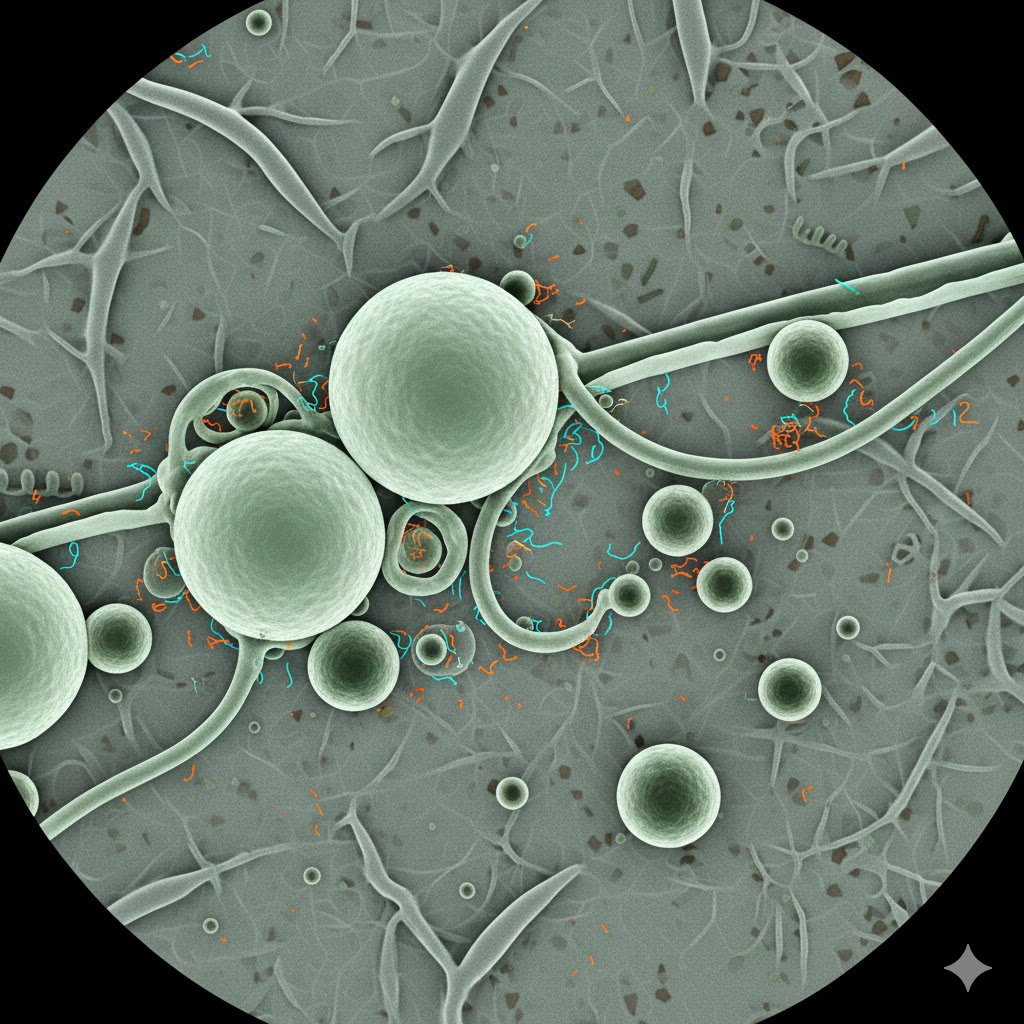
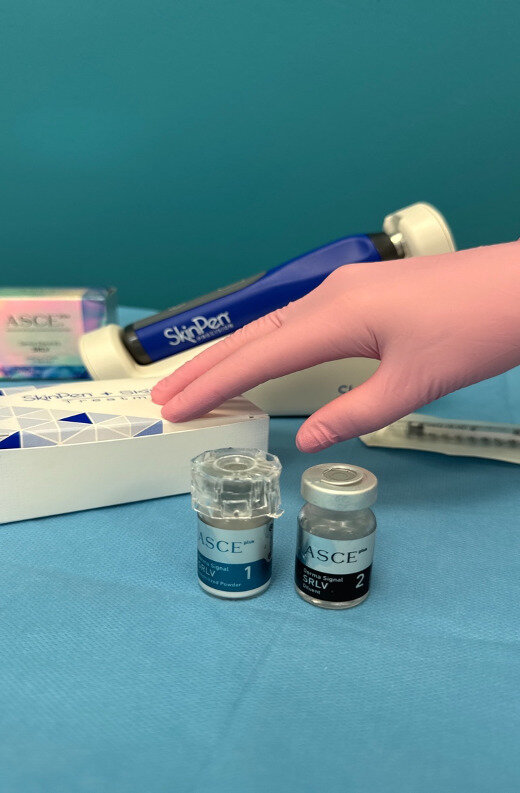
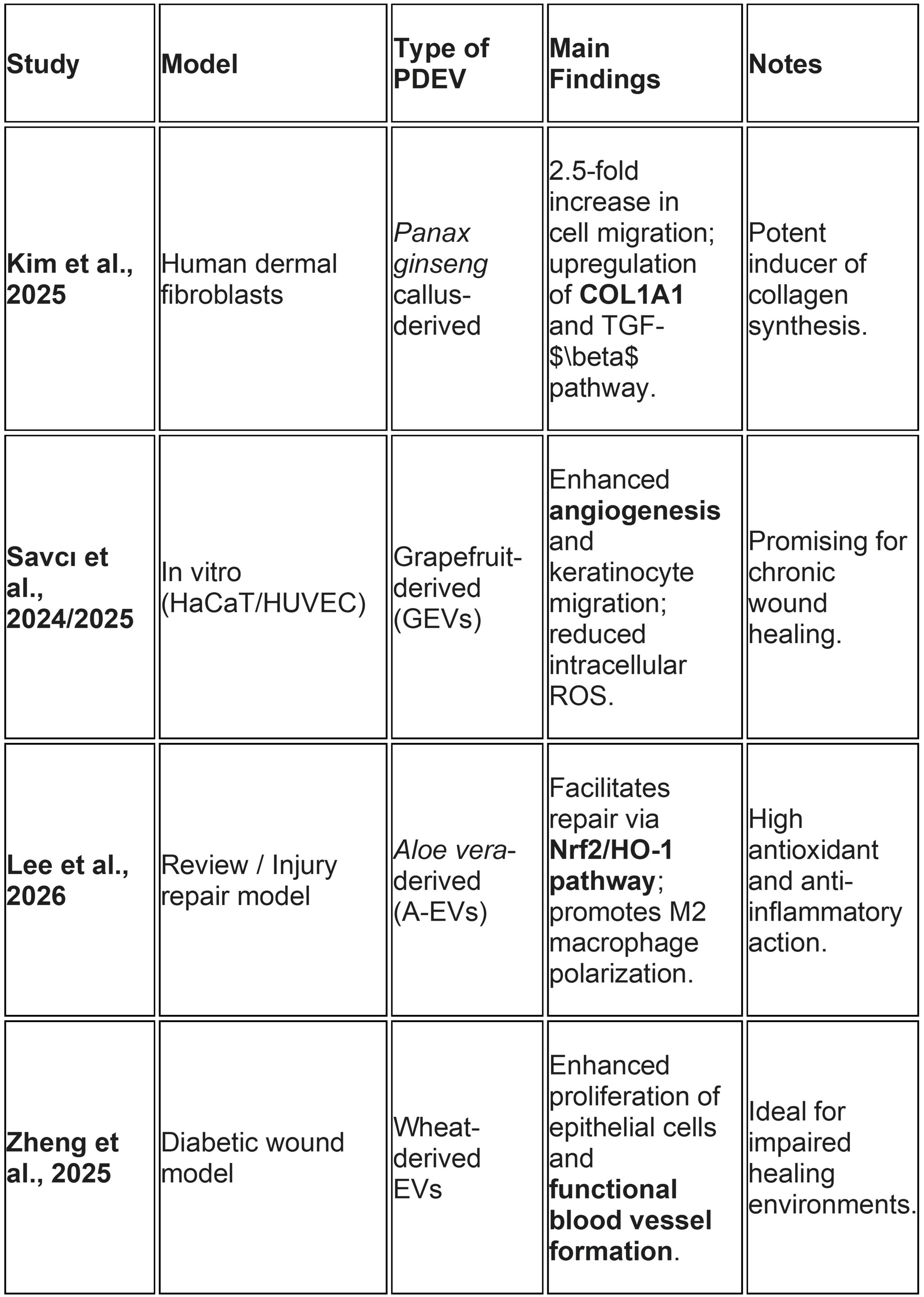
Scar formation following breast surgery remains a relevant clinical and aesthetic challenge that may affect both functional and cosmetic outcomes. Multiple factors contribute to scar quality, including incision type, flap design, tissue tension, implant placement, vascular supply, patient age, BMI, skin phototype, smoking status, genetic predisposition, and prior radiotherapy exposure. Up to 30% of patients may develop clinically relevant scar alterations, particularly individuals with higher phototypes (III–VI), positive family history of hypertrophic or keloid scarring, or comorbid conditions such as diabetes or connective tissue disorders. Current scar management strategies including silicone-based products, pressure therapy, and laser or ablative treatments primarily target superficial remodeling and symptom improvement. However, their direct influence on deeper biological processes such as fibroblast activity, angiogenesis, and extracellular matrix (ECM) organization remains limited. Plant-derived extracellular vesicles (PDEVs) have been described in preclinical literature as potential modulators of inflammatory and regenerative pathways, with reported effects on epithelialization, immune modulation, and ECM remodeling (Figure 1) (1, 2, 3, 4, 5, 10, 11, 12, 13). They have been reported to modulate inflammatory signaling pathways, enhance angiogenic activity, and regulate extracellular matrix remodeling in a structured manner, thereby contributing to improved tissue repair dynamics and accelerated scar maturation. (Table 2) (5, 6, 7, 8, 9, 10). However, clinical evidence in surgical settings remains limited, and their mechanisms of action in humans are still under investigation. This prospective randomized pilot study was designed to explore the preliminary clinical effects and safety profile of PDEVs derived from Rosa Damascena in postoperative scar modulation following breast surgery (Figures 2, 3).
Materials and Methods
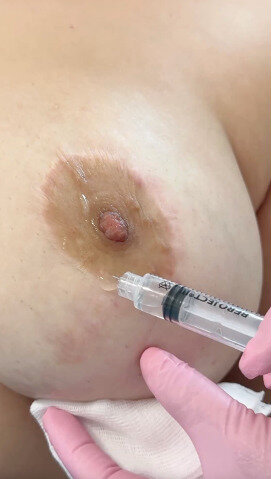
This was a prospective, randomized, controlled pilot study conducted at a private healthcare center, with ongoing follow-up up to 12 months. The 120 enrolled female patients underwent different types of breast surgical procedures, including primary augmentation mammoplasty with implants, mastopexy (with or without augmentation), and oncoplastic remodeling procedures. All procedures were performed according to standardized surgical techniques routinely used in clinical practice, with consistent perioperative management across the study population. The study was designed as exploratory, and no formal powered primary endpoint was predefined due to its pilot nature. Patients were randomized 1:1 to receive either topical PDEV or standard postoperative care using a computer-generated sequence with sealed envelope allocation. Blinded assessment of clinical and photographic outcomes was performed by independent clinicians not involved in treatment allocation. Patients were not blinded due to the nature of the intervention. Inclusion criteria included female sex, age 18–65 years, and BMI <35. Exclusion criteria included pregnancy, breastfeeding, active infection, severe autoimmune disease, or history of incompatible radiotherapy exposure. The PDEV intervention included preoperative topical application 7–10 days before surgery, followed by weekly application for 4 weeks (Figure 4) and monthly applications up to 3 and 6 months (Figure 3). The PDEV used in this study consist of a standardized topical formulation derived from Rosa Damascena, produced through a proprietary platform designed to isolate and enrich extracellular vesicle-like nanoparticles. Although batch-to-batch consistency is ensured by internal quality control procedures, the classification and standardization of plant-derived extracellular vesicles remain an evolving area of research, with ongoing discussion regarding optimal isolation and characterization methodologies. Scar quality was evaluated using the Vancouver Scar Scale (VSS) and Patient and Observer Scar Assessment Scale (POSAS), including thickness, pigmentation, elasticity, vascularization, and patient satisfaction, while tissue elasticity and ECM integrity were assessed by high-frequency ultrasound and elastography. Biological markers of systemic inflammation and tissue remodeling (IL-6, TNF-α, TGF-β1, VEGF-A, collagen I/III ratio, MMP-1, TIMP-1) were measured at predefined time points. It should be noted that systemic biomarkers were used as indirect indicators of biological response and may not fully reflect localized scar microenvironment changes. Descriptive and inferential statistics were applied. Paired t-tests and Mann–Whitney U tests were used where appropriate. Repeated measures ANOVA with Greenhouse–Geisser correction was applied for longitudinal comparisons. A p-value <0.05 was considered statistically significant. Given the pilot design, results should be interpreted as exploratory. While outcome measures were comprehensive and included both clinical scales and instrumental assessments, the study was not powered to detect definitive clinical efficacy. Standard statistical approaches were applied for descriptive and comparative analyses, consistent with the exploratory nature of the study.
Results
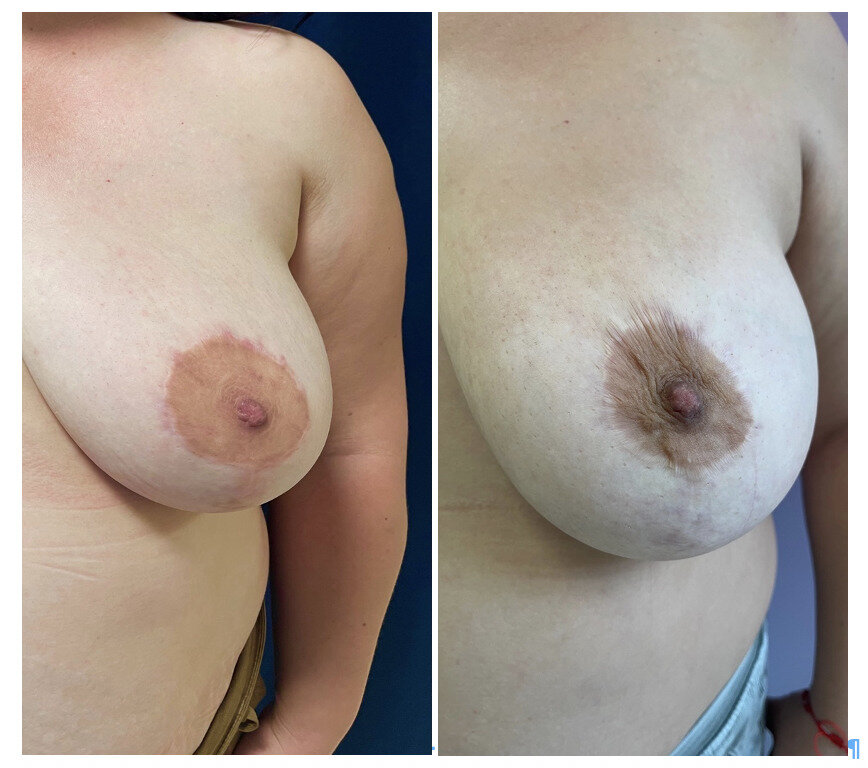
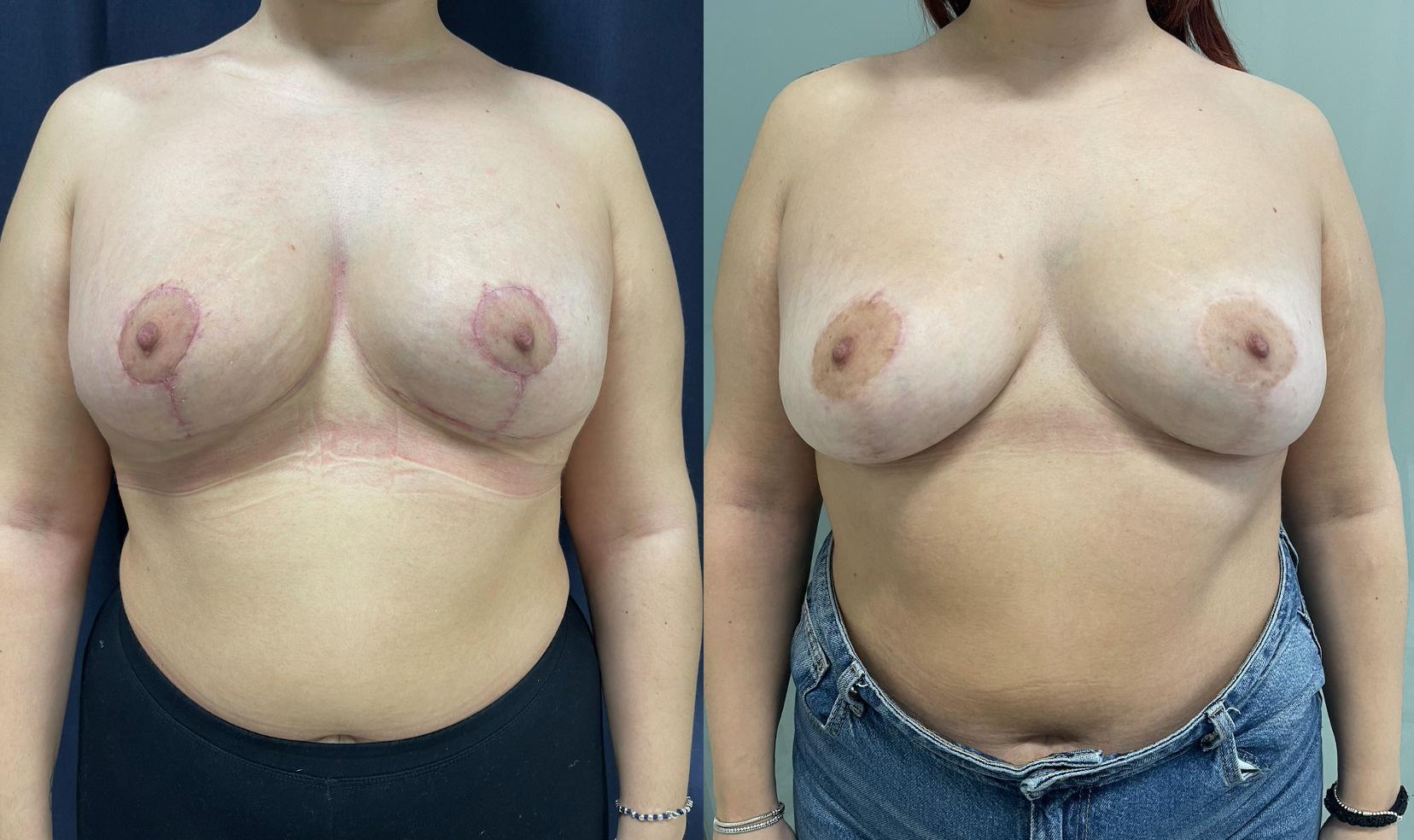
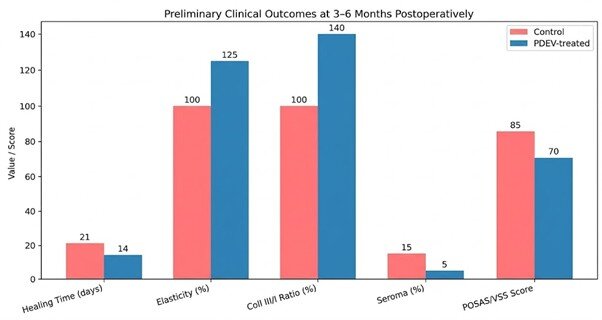
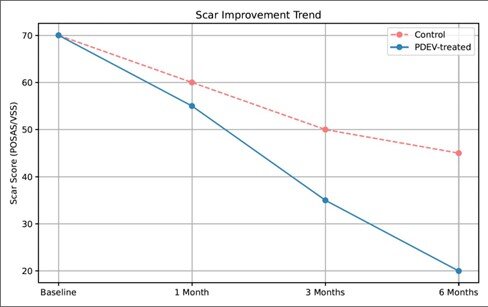
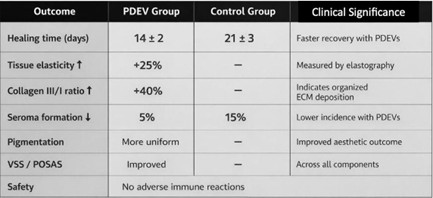
Preliminary results from the ongoing follow-up (3–6 months) suggest trends toward improved wound healing and scar quality in the PDEV-treated group compared to controls. The mean time to clinical wound healing was shorter in the PDEV group (14 ± 2 vs 21 ± 3 days; p<0.01), suggesting a potential acceleration of early postoperative recovery. Elastography demonstrated an approximate 25% increase in tissue elasticity in the treatment group (p<0.05), indicating improved biomechanical properties of the healed tissue. The collagen III/I ratio showed a 40% shift toward a more organized ECM profile (p<0.05); however, these findings should be interpreted cautiously in the absence of histological confirmation. Seroma incidence appeared lower in the PDEV group (5% vs 15%, p<0.05). VSS and POSAS scores demonstrated improvement across multiple parameters, including thickness, pigmentation, and patient-reported satisfaction. Subgroup analysis suggested more pronounced elasticity improvements in mastopexy patients, particularly in periareolar and vertical scar patterns (Figures 5, 6). In augmentation and reconstructive procedures, trends toward reduced fibrosis and improved tissue compliance were observed. No adverse immune-related reactions were reported. Overall tolerability appeared favorable. Given the pilot and ongoing nature of the study, all findings should be interpreted as preliminary signals rather than definitive evidence of efficacy (Graphs 1,2, Table 1, Figures 5, 6).
Discussion
This study provides preliminary clinical observations on the potential role of plant-derived extracellular vesicles in postoperative scar modulation following breast surgery. The observed improvements in scar parameters and tissue elasticity may suggest a potential biological effect of PDEVs on wound healing processes (1, 2, 3, 4, 5, 6) possibly involving modulation of inflammatory response, fibroblast activity, angiogenesis, and extracellular matrix remodeling. However, these mechanisms were not directly investigated in this study and remain speculative. Importantly, systemic inflammatory and remodeling biomarkers were used as indirect indicators and should not be interpreted as direct surrogates of local scar biology. This represents a methodological limitation. Furthermore, the lack of histological analysis limits definitive conclusions regarding extracellular matrix organization and collagen remodeling. Additional limitations include the pilot nature of the study, the absence of a predefined primary endpoint, the heterogeneity of surgical procedures, the limited follow-up duration at the time of analysis, and the monocentric design in a private clinical setting. In particular, the combination of procedural heterogeneity and the lack of a clearly defined primary endpoint may introduce variability in outcome assessment and limit the strength and generalizability of the findings within this exploratory framework. Therefore, the results should be interpreted as hypothesis-generating. If confirmed in larger, controlled, multicenter studies with standardized endpoints and histological validation, PDEVs may represent a promising biologically driven adjunct with the potential to enhance postoperative scar management and optimize tissue healing outcomes (9, 10).
Conclusion
In this prospective randomized pilot study, plant-derived extracellular vesicles were associated with trends toward improved early wound healing and scar quality following breast surgery. However, given the exploratory design, lack of histological confirmation, and ongoing follow-up, these findings should be considered preliminary. Further well-designed multicenter studies with standardized endpoints, longer follow-up, and mechanistic evaluation are necessary to confirm efficacy and clarify the biological role of PDEVs in tissue regeneration.
Conflicts of Interest
This study was conducted in collaboration with ExoCoBio (South Korea) and EnerMedica (Italy), which provided study materials. The sponsors had no role in study design, data collection, data analysis, interpretation, or manuscript preparation. The authors declare no additional financial or commercial conflicts of interest.
References and notes
- Yang An et al. Exosomes from adipose-derived stem cells and application to skin wound healing. Cell Prolif. 2021;54(3): e12993. https://pubmed.ncbi.nlm.nih.gov/33458899/
- Lu Wang et al. Exosomes secreted by human adipose mesenchymal stem cells promote scarless cutaneous repair. Sci Rep. 2017;7:13321. https://pubmed.ncbi.nlm.nih.gov/29042658/
- Yu Fu et al. Human adipose-derived mesenchymal stem cell-derived exosomes induce epithelial remodeling and anti-scar healing revealed by single – cell RNA. 2025; https://pubmed.ncbi.nlm.nih.gov/40660260/
- Cong Li et al. Application of ADSCs and their Exosomes in Scar Prevention. Stem Cell Rev Rep 2023;18(3): 952–967. https://pubmed.ncbi.nlm.nih.gov/34510359/
- Chaolei Xu et al. miR-125b-5p delivered by adipose-derived stem cell exosomes alleviates hypertrophic scarring by suppressing Smad2. Burns & Trauma. 2024; tkad064. https://pubmed.ncbi.nlm.nih.gov/38765787/
- Soo Yeon Park et al. Exosome-mediated advances in plastic surgery: Navigating Therapeutic Potential in Skin Rejuvenation and Wound Healing. Plast Reconstr Surg Glob Open. 2024;12(8): e6021. https://journals.lww.com/prsgo/fulltext/2024/08000/exosome_mediated_advancements_in_plastic_surgery_.2.aspx
- Weiquan Wu et al. Plant-derived exosome-like nanovesicles in chronic wound healing. Int J Nanomedicine. 2024;19:11293–11303. https://www.dovepress.com/plant-derived-exosome-like-nanovesicles-in-chronic-wound-healing-peer-reviewed-fulltext-article-IJN?utm_source=
- Noury Adel et al. Regenerative Potential of Various Plant-Derived Exosome Injections in Laser-Induced Skin Wound Healing in a Rabbit Model. https://pubmed.ncbi.nlm.nih.gov/41277469/
- Defa Huang et al. Plant-derived extracellular vesicles: composition, function and clinical potential. J Transl Med. 2025;23:1065. https://link.springer.com/content/pdf/10.1186/s12967-025-07101-1.pdf
- Kristel Everaars et al. The impact of scars on health-related quality of life after breast surgery: a qualitative exploration . J Cancer Surviv. 2020;15(2):224–233. https://pubmed.ncbi.nlm.nih.gov/32816201/
- Alsaid F, Davila B, He B. Plant-derived extracellular vesicles and nanoparticles: origins, functions, and applications. Front Bioeng Biotechnol. 2026;14:1758558. doi:10.3389/fbioe.2026.1758558. https://pubmed.ncbi.nlm.nih.gov/41768127/
- Zuo Y, Zhang J, Sun B, Wang X, Wang R, Tian S, Miao M. A new perspective on regenerative medicine: plant-derived extracellular vesicles. Biomolecules. 2025;15(8):1095. doi:10.3390/biom1508109. https://pubmed.ncbi.nlm.nih.gov/40867539/
- Kameli N, Dragojlovic-Kerkache A, Savelkoul P, Stassen FR. Plant-derived extracellular vesicles: current findings, challenges, and future applications. Membranes (Basel). 2021;11(6):411. doi:10.3390/membranes1106041. https://pubmed.ncbi.nlm.nih.gov/34072600/
Explore the article in the digital edition
Plant-derived Extracellular Vesicles as emerging biological delivery v...

Korean Cosmetic Ingredients: How Korea Turned Ingredients into Brand P...
The Longevity Shift: How the Pursuit of Healthspan Is Reshaping Beauty...

K-Beauty 2.0: Evolving Through Science, Biotechnology, and Data

Shades of Protection: Rethinking the Future of EU Sunscreen Regulation

Beyond the SPF Number: Why Microbiome Compatibility Must Become the Ne...

Consumer Perspective: What Indie Brands Get Right About Consumer Psych...

Sustainability in Personal Care