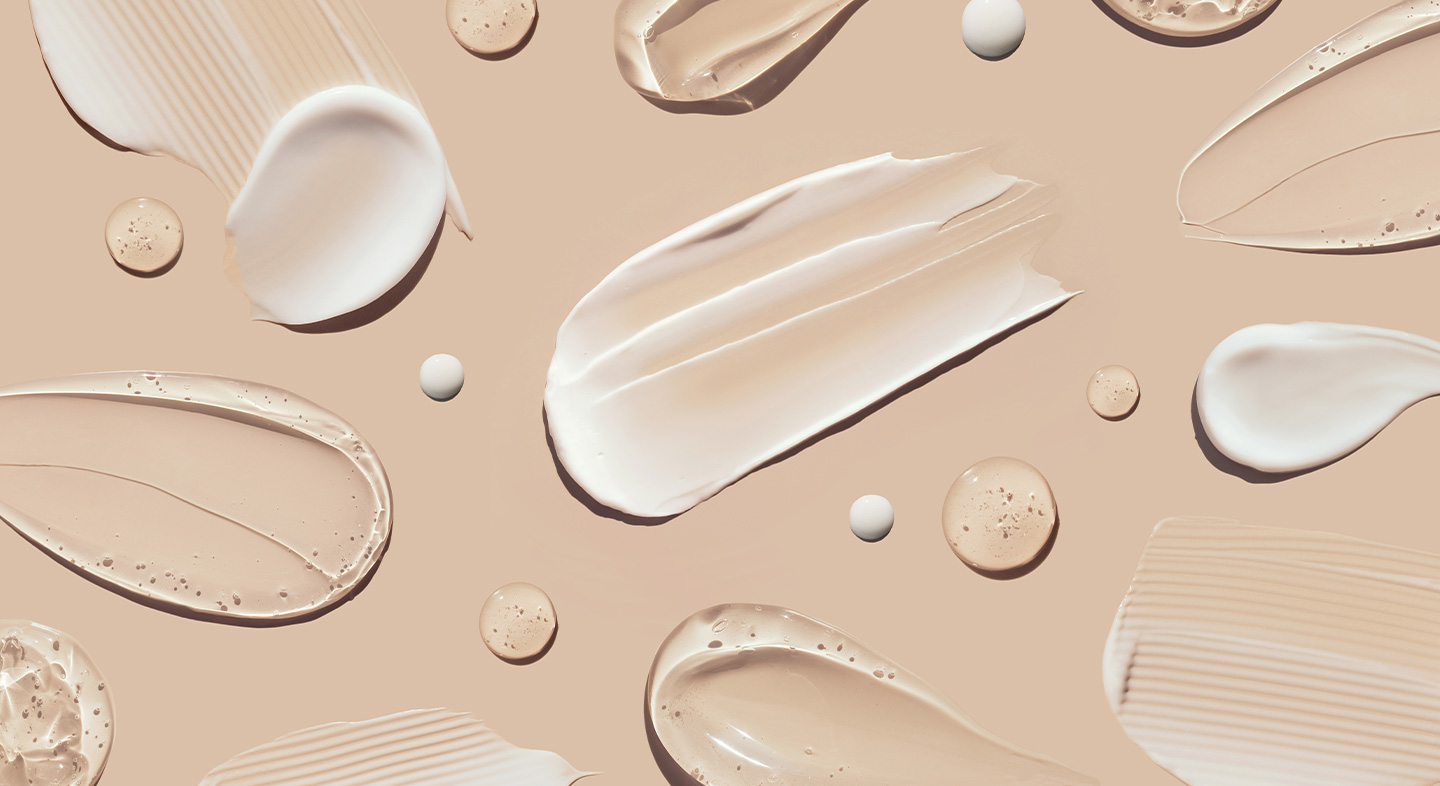
Textures play an important role in cosmetics, contributing to improving sensory characteristics of a product and the user’s experience.
They can be seen as the appearance, or consistency of a formulation, therefore they can influence the acceptance of a product, and consequently its effectiveness.
Studying innovative textures can be crucial to obtain better formulations, aiming at increasing sensory aspects, acceptance and performance.
It is equally important to develop specific tests to evaluate and characterize sensory aspects of formulations to understand consumer preferences.
This scientific review is therefore composed of two parts:
1) Textures: The first study focuses on a new specific polymer used in a sun care formulation. In particular, the polymer properties were studied to obtain efficient sunscreen products with pleasant textures. The second article is about testing two different types of oils used to obtain colloidal hydrogels. Subsequently, the impact of the ingredients on differences in texture was explored. The third study is about the exploitation of new generation of bio-based ingredients in cosmetics. In this case, expert sensory evaluation and instrumental characterization were employed.
2) Sensory testing: The first article reports the results of tests on the cosmetic application of different vegetable oils. In this case, volunteers were also involved in a study which allowed to comprehend the influence of fatty acids on the sensory profile of formulations.
The second article focuses on the characterization and sensory evaluation of a formulation made of roasted coffee oil microcapsules. Assessors received one kit with the formulations and a notebook with instructions to carry out the tests at home. The main goal was to assess if the ingredient could be viable for dermocosmetics with sensory acceptance.
The third article is about characterizing sensorial attributes of topical formulations, by using a rapid, quantitative, and objective approach. In particular, machine learning models were leveraged to predict textural attributes and skin feel.
TEXTURES
Scientific online resources as Pubmed and Google Scholar were used to retrieve articles of interest. To screen for the most advanced research, articles were selected from year 2023 to year 2024 with the following keywords: innovative textures, cosmetics textures, new textures cosmetics
New formulation technology to boost sun protection
Authors:
Hélène Meaudre1, Odile Aubrun1, Jean-Baptiste Boitte1, Stéphane Douezan1, Martin Josso1, Danielle Le Verge1, Pascale Renoux1, Gaelle Rondepierre2
Affiliations:
1L’Oréal R&I, Chevilly-Larue, France.
2L’Oréal R&I, Saint-Ouen, France.
Int J Cosmet Sci. 2023 Dec; 45(6):802-814. DOI: 10.1111/ics.12889. Epub 2023 Oct 6 https://pubmed.ncbi.nlm.nih.gov/37718248/
Objective: As every skin type worldwide is concerned by photoprotection, with consumers preferring cosmetic elegant and efficient sunscreen products, we aim at developing the most performant and desirable sun care products
Methods: We selected an interesting polymer, abbreviated AAHCP and designed scanning electron cryomicroscopy (cryoSEM), small angle and wide angle X-ray scattering and confocal laser scanning microscopy studies to understand its behaviour in solution and in simplex sun care formulations. This allowed us to develop innovative sunscreen formulation technology that was demonstrated by in vitro and in vivo photoprotection methods. Comprehensive photoprotection evaluations were made on the fully developed sun protection product.
Results: We observed the polymer oil structuring properties as well as its ability to form small and stable droplets in simplex emulsions. In vitro and in vivo sun protection factor (SPF) measurements demonstrated the sun protection boosting efficacy of AAHCP polymer in several emulsions or as a stand-alone emulsifier. This formulation technology also allowed to filtering system concentration optimization. Use-test performed on a fully developed AAHCP-based sunscreen validated its optimal performances as well as its ideal cosmetic features, with non-sticky, non-greasy perception and invisible skin result.
Conclusion: For the first time, thanks to a new specific polymer creating a new type of emulsion, we succeed in reconciliate in a single sun care product maximal SPF efficacy, resistance to numerous stresses and optimal sensoriality.
Physicochemical study of aqueous dispersions of organogel particles: Role of the ingredients and formulation process leading to colloidal hydrogels
Authors:
Bérénice Duret1 2, Emile Perez1, Sarah Arneodo2, Bruno Payré3, Céline Picard2, Sophie Franceschi1
Affiliations:
1Université de Toulouse, UPS/CNRS, IMRCP, 118 route de Narbonne, 31062 Toulouse, France
2Université du Havre, URCOM, EA 3221, FR CNRS 3038, 25 rue Philippe Lebon B.P. 540, 76058 Le Havre Cedex, France
3Centre de Microscopie Electronique Appliquée à la Biologie, Faculté de Médecine Rangueil, 113 route de Narbonne, 31062 Toulouse Cedex, France
Colloids and surfaces A: physicochemical and engineering aspects Vol.661, 2023, 130905, ISSN 0927-7757, DOI: 10.1016/j.colsurfa.2022.130905.
https://www.sciencedirect.com/science/article/
Abstract
The cosmetics industry is always looking for new textures, both from a performance and sensory point of view. In this field, emulsions remain an important source of inspiration. In this study, aqueous dispersions of organogel particles were obtained by hot emulsification (T°>Tgel), and cooling (T°<Tgel). Two oils were tested, sweet almond oil and phytosqualane, using 12-hydroxystearic acid (HSA) as an organogelator, and polyvinyl alcohol (PVA80) as a stabilizer. A preservative agent (Saliguard® COS) and an antioxidant (Tocopherol) were also used. Under the same preparation conditions, two completely different textures were obtained depending on the oil: a stable dispersion of organogel particles for sweet almond oil and a colloidal hydrogel for phytosqualane. In this study, we were able to understand the impact of the ingredients on these differences in texture, and propose different mechanisms of formation. The important role played by the preservative agent at the water/oil interface of the droplets, during the gelation step, was demonstrated. Such adsorption, depending on the polarity of the oil, can modify the anchoring of the dispersing agent (PVA80) and lead during the gelation to a destabilization of the droplets by coalescence and to the formation of a colloidal hydrogel. These results highlight the possible formation of colloidal hydrogels from particles of organogels and open the way to new textures in the cosmetic or pharmaceutical field.
Sensory signature of lignins, new generation of bio-based ingredients in cosmetics
Authors:
Caroline Hadjiefstathiou1 2 3, Audrey Manière1, Joan Attia1, Florian Pion2, Paul-Henri Ducrot2, Michel Grisel3, Ecaterina Gore3
Affiliations:
1IFF-Lucas Meyer Cosmetics, Campus Eiffel-Massy – Bat. Edison 13 Rue Ella Maillart 91300 Massy, France
2Université Paris-Saclay, INRAE, AgroParisTech, Institut Jean-Pierre Bourgin (IJPB), 78000 Versailles, France
3Université Le Havre Normandie, Normandie Univ, URCOM, UR 3221, F-76600 Le Havre, France
International Journal of Biological Macromolecules, Volume 260, Part 1, March 2024, 129399
DOI: doi.org/10.1016/j.ijbiomac.2024.129399
https://www.sciencedirect.com/science/
article/abs/pii/S0141813024002022
Abstract
Lignins represent a high interest in cosmetics as promising multifunctional ingredients. Despite this, uncovering the sensory profile of lignin-based emulsions has remained an unexplored frontier.
This study aims to bridge this gap by employing expert sensory evaluation and instrumental characterization to assess the sensory attributes of lignin-based emulsions. A comparative analysis with commercial tinted products and discrimination among lignin derivatives were integral components of the research. Results underscored the distinctive sensory properties of lignin emulsions, exhibiting significantly higher “Integrity of shape” (7.0 ± 0.1) compared to commercial products (4.8 ± 0.1). Additionally, lignin emulsions displayed longer play-time until skin absorption (4.3 ± 0.1), contrasting with the quicker absorption of commercial products (2.7 ± 0.4) and their shorter play-time. Depending on application requirements, lignin derivatives offer formulators a versatile sensory toolbox.
Discrimination of lignin emulsions on certain texture properties was achieved using various instrumental tools. Despite the complex formulation of commercial products compared to lignin emulsions, similar texture properties were observed, showcasing lignins’ potential to replace multiple ingredients in tinted cosmetics. Beyond their established antioxidant, anti-UV, anti-bacterial, and emulsifying properties, this study reveals additional advantageous sensory properties of lignins, positioning them as promising plant-based sensory ingredients in sustainable cosmetic applications.
SENSORY ANALYSIS
Scientific online resources as Pubmed and Google Scholar were used to retrieve articles of interest. To screen for the most advanced research, articles were selected from year 2023 to year 2024 with the following keywords: sensory evaluation, texture analysis cosmetics
Preparation and sensory evaluation of gels based on silicone copolymers/acrylic copolymers incorporating different vegetable oils
Authors:
Rousilândia de Araujo Silva 1, André Luís Morais Ruela 2, Maria Eugenia de
Oliveira Mamede 3, Neila de Paula Pereira 1
Affiliations:
1 Department of Medicament, Faculty of Pharmacy, Federal University of Bahia, Salvador, Bahia, Brazil
2 Department of Pharmacy, School of Pharmacy, Federal University of Ouro Preto, Ouro Preto, Minas Gerais, Brazil
3 Department Food Science, Faculty of Pharmacy, Federal University of Bahia, Salvador, Bahia, Brazil
Industrial Crops and Products Volume 193, 2023, 116147, ISSN 0926-6690,
DOI: 10.1016/j.indcrop.2022.116147
https://www.sciencedirect.com/science/
article/abs/pii/S0926669022016302
Abstract
Fixed vegetable oil is one of the most used plant derivatives for cosmetic application, especially in skin products, due to its fatty acid composition, which are similar to the skin’s natural components. Therefore, it is important to study the cosmetic application of new vegetable oils, and how their fatty acid constitution influences the product’s sensory profile. In this study, topical gel formulations were prepared by cold processing method using copolymers derived from silicone and acrylic acid incorporating Gueroba (GGE) and Macaúba (GM) vegetable oils and comparing them to Sweet Almond Oil (GA), considered to have a gold standard. The formulations were evaluated for physical stability, texture profile, rheology and sensory analysis through the Sorting Test. All gel formulations allowed the incorporation of vegetable oils and remained stable, without variation in their organoleptic characteristics; the GM formulation presented the best spreadability performance, with Eimax 3739.8 mm2. As for texture, the GGE formulation recorded lower Firmness values (4.73 g). Rheological evaluation determined that all formulations showed pseudoplastic behavior, with the presence of thixotropy and better recovery for GM formulation, which is characteristic of semi-solid formulations for topical use. Sensory analysis in volunteers indicated that the samples have a similar spreadability profile. The results obtained indicate that the fatty acids influence the sensory profile of the formulations, being a differential factor in the sensory performance of cutaneous preparations destined to skin care.
Characterization and Sensory Evaluation of a Cosmeceutical Formulation for the Eye Area with Roasted Coffee Oil Microcapsules
Authors:
Böger, Bruna Raquel 1, Audrey Alesandra Stinghen Garcia Lonni 2 , and Marta de Toledo Benassi 1
Affiliations:
1 Departamento de Ciência e Tecnologia de Alimentos, Universidade Estadual de Londrina, Rodovia Celso Garcia Cid Km 380, Londrina 86057-970, Brazil
2 Departamento de Ciências Farmacêuticas, Universidade Estadual de Londrina, Avenida Roberto Koch 60, Londrina 86039-440, Brazil
Cosmetics 2023, 10(1), 24, DOI: doi.org/10.3390/cosmetics10010024
https://www.mdpi.com/2079-9284/10/1/24
Abstract
The objective of this work was to characterize a cosmeceutical formulation for the eye area with roasted coffee oil microcapsules (MOF) and evaluate the acceptance and effects of its use by consumers. MOF had 3% microcapsules produced by complex coacervation; a basic formulation (BF) was used for comparison. The addition of microcapsules did not affect the pH (4.52), density (0.99 g mL−1), consistency (0.77 N s), and viscosity index (0.25 N s) of the formulation. However, a reduction in spreadability, firmness, and cohesiveness was observed. The 58 assessors received one kit with the formulations and a notebook with instructions to carry out the tests at home. They were instructed to apply the cream for 28 days and evaluate the attributes of application and treatment effects on 7-point category scales. The effect of oil addition observed in the physical tests was not sensorially perceived for spreadability and tackiness (6.0 and 5.6, respectively), indicating approval and easiness of application. The perception of the benefits (increase in smoothness, hydration, firmness, elasticity, and skin general appearance, and reduction in signs of fatigue and wrinkles/fine lines) was similar comparing MOF and BF. In conclusion, the coffee oil microcapsule is a viable ingredient for dermocosmetics with sensory acceptance.
Predicting textural attributes and frictional characteristics of topical formulations based on non-linear rheology
Authors:
Febin Cyriac, Tee Xin Yi, Pui Shan Chow
Affiliations:
Institute of Sustainability for Chemicals, Energy and Environment (ISCE2), Agency for Science, Technology and Research (A*STAR), 1 Pesek Rd, 627833, Singapore
Biotribology, Volumes 35–36, 2023, 100249, DOI: 10.1016/j.biotri.2023.100249
https://www.sciencedirect.com/science/article/
Abstract
A number of analytical procedures (Spectrum Descriptive Analysis (SDA), Quantitative Descriptive Analysis (QDA), and Check All That Apply (CATA)) are used for characterizing sensorial attributes of topical formulations. However, these techniques are evaluated by expert panels/consumers, which are subjective, expensive and time consuming. Despite widespread use of these methods, the techniques do not necessarily aid in the development of innovative formulations and understanding of consumer liking. In addition, the hedonic attributes of a product can significantly dominate the sensation. Therefore, a more rapid, quantitative, and objective approach is required for understanding the formulation factors that governs sensory perception at different points of consumer application. Rheological evaluations of topical formulations were carried out under steady and oscillatory (SAOS and LAOS) rheology using a commercial rheometer. Friction measurements were performed using an in-house built tribometer on non-biological skin model to investigate how surface properties are influenced by application of different topical formulations. Further, a broad range of instrumental texture measurements was performed to characterize the formulations. Principal component analysis was used for dimensionality reduction of the instrumental data. Supervised machine learning was performed on the closely related PCA parameters to develop predictive models. We identified physical parameters relevant to different perceptual attributes by comparing a range of commercial topical formulations with various compositions using rheological and tribological methods. Multi-variate machine learning models were developed where several key instrumental textural attributes and skin feel could be predicted from data obtained from linear and non-linear rheological measurements. Our study shows rheological analysis based on a few material parameters can be effectively used for predicting instrumental sensory attributes that is of relevance to consumer care industry. The machine learning models may benefit development of innovative formulations, valorisation of new materials and serve as a platform for mapping commercial formulations for product optimization. The models can likely shorten design cycle time by screening through large volume of formulations and short list only those with highest potential to be evaluated by a very specialized and expensive human test panel.
Unleashing Nature’s Potential: The Future of Sustainable Beauty...

Cyclization as a tool for reinvention

Harnessing the biotechnological power of Jasminum sambac: a clinical i...

Cosmetics for me – Personalized products: Opportunities and Limi...
Navigating the Balance – Personalized Skincare and Consumer Perc...
Is Microbiome Certification even Necessary?

Microbiome-friendly – The How and Why of this claim
ISNTREE – Yam Root Vegan Milk Toner