INTRODUCTION
Ageing is a complex process involving various genetic, hormonal, and environmental mechanisms. Similar to skin, the scalp and hair are subject to internal (chronological) ageing and to external ageing due to environmental factors (1). Proteins are the building blocks for individual hair fibre (making up 65 to 95% of the hair). These are structurally held together by chemical hair bonds that ensure structural integrity of hair fibre and its strength. The hair bonds are all affected by ageing:
- Disulphide bonds are strong permanent chemical bonds that form between sulphur atoms in the amino acid cysteine, creating a cross-link between keratin molecules in the hair. These bonds provide hair with strength and elasticity. With age, these bonds weaken due to decreased cysteine production and are further compromised by chemical treatments, UV radiation and pollution (2).
- Hydrogen bonds are weaker, temporary physical bonds that form between water molecules and proteins in hair. These bonds contribute to the hair’s flexibility and are easily broken by water and heat. With age, the hair’s moisture content diminishes, reducing the number of hydrogen bonds. External factors like frequent use of heat styling tools, excessive washing and environmental dryness exacerbate this reduction (3).
- Ionic (or salt) bonds are temporary bonds formed between acidic and basic amino acids in the hair. These bonds are sensitive to pH changes and can be disrupted by acidic or alkaline substances. As the scalp ages, its natural pH balance varies, weakening the ionic bonds in the hair. External factors such as harsh shampoos and environmental pollutants can also disrupt these bonds (4).
As a consequence of ageing, hair deteriorates on several levels:
- Molecular: hair becomes drier, more fragile and brittle, with loss of colour.
- Structural: hair becomes thinner and experiences changes in texture.
- Visual: hair loses strength and volume, becoming more prone to breakage.
In this paper, Oat Peptide Powder (OPP) (Avena sativa (oat) peptide) is obtained from an oat by-product following an enzymatic extraction, filtration and purification step to target and isolate a novel oat peptide product. In this context, the objective of these studies was to investigate the ingredient’s effect on preventing hair ageing and repairing damage. Ex vivo studies were performed to evaluate OPP ability to prevent keratins deterioration, restructure hair fibre and strengthen hair.
MATERIALS AND METHODS
Peptides Identification
Peptide purity: The material was digested with concentrated sulphuric acid using copper-titanium as a catalyst to convert organic nitrogen to ammonium ions. The resulting digest was made alkaline, distilled into excess boric acid and the ammonia trapped by the boric acid is titrated with standard hydrochloric acid. The nitrogen content was calculated from the amount of ammonia produced; standard factors are then used to convert total nitrogen to protein equivalent.
Peptides molecular weight: The molecular weight of the peptides was determined using liquid chromatography-mass spectrometry (LC-MS). OPP was dissolved in 2.5% sodium deoxycholate. The solution was treated with dithiothreitol and iodoacetamide to alkylate cysteine residues, desalted using C18 and then directly analysed by LC-MS. After alkylation, an aliquot was digested with trypsin and analyse by MS using the same procedure. Both data sets (+/- trypsin) were processed in the Proteome Discoverer software (PD 2.4.1, Thermo).
Amino acid distribution: The material was hydrolysed in aqueous hydrochloric acid to break peptide bonds, then pH was adjusted, brought to volume with a loading buffer and filtered. Amino acids were separated using an amino acid analyser and the detection was carried out using post-column derivatisation with a ninhydrin reagent at 440 and 570 nm.
Reparation of hair keratins (molecular reparation)
An ex vivo study was performed using 3 straight, healthy, hair tresses for each condition:
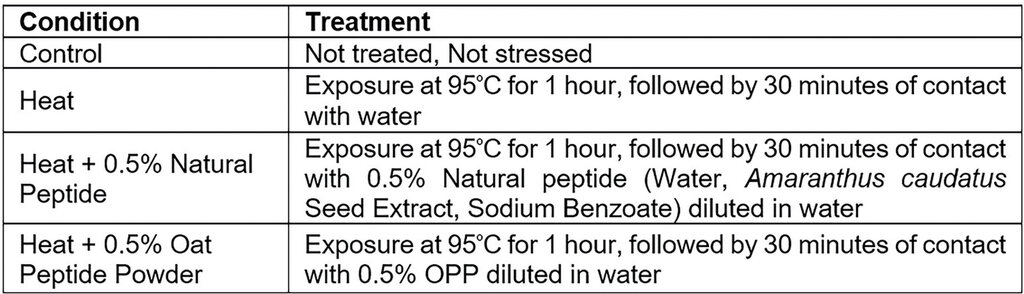
Table 1. Summary of the experimental conditions (Leave on application).
Evaluation of oxidation damage: Hair shafts were cryo-preserved, snap-frozen in liquid nitrogen and cross-sectioned. Slices of 5 μm were obtained using a cryostat (Leica). Carbonyls were labelled in situ using a fluorescent probe (Ex=647 nm / Em=650 nm) functionalised to specifically bind carbonyl groups (5).
Qualitative Data: Fluorescent images were collected with an epi-fluorescent Microscope (ThermoFisher, Evos M5000) and analysed with ImageJ software. Identical conditions of acquisition (40x objective) were used for all samples.
Quantitative Data: The intensity of carbonylation was obtained by the integration of the specific fluorescence signal normalised by the evaluated area. Three images per condition were used to quantify the carbonylation levels; the mean value and standard deviation were obtained per condition (on the whole section) and per compartment (cortex and cuticle).
Restructuration of hair fibre (structural reparation)
An ex vivo study was performed using 3 straight, healthy, hair tresses for each condition:

Table 2. Summary of the experimental conditions (Leave on application).
Evaluation of hair fibre: Hair segments were transferred on slides following KAMAX’s protocol (6). The XPolar compatible slides were analysed using a KProbe slide scanner. For each condition, 30 independent hair segments of 1 cm length were analysed. XPolar technology is based on an imaging approach to measure the birefringence. The propagation of the light that goes through the hair segment is different whether the polarisation of the light is parallel or not to the keratin fibre. The observed difference results in a delay of light propagation that is called birefringence. The determination of the keratin birefringence of each hair segment by K index (depending on hair thickness) was performed and analysed using GraphPad Prism 9 software.
Strengthening of hair (visual reparation)
An ex vivo study was performed using 3 straight, healthy, hair tresses for each conditioner: placebo, 1% Oat Peptide Liquid and 1% OPP conditioners. For each conditioner, the treatment was the same:
- Application of standard SLS shampoo.
- Determination of initial hair strength (T0) by Tensile Test using a Universal test machine (measurement of the force per unit area, or tensile stress, required to break the hair, which characterises the structural integrity of individual hair fibres).
- Thermal aggression: 8 applications of hair straighteners (> 230°C) to damage the hair surface.
- Application of test conditioner: Soaking hair in water at 37°C for 1 minute, applying 2 g of conditioner and leaving for 4 minutes, rinsing with water at 37°C and then drying the tress naturally.
- Determination of final hair strength (TF).
RESULTS AND DISCUSSION
Peptides Identification
Peptide purity: OPP contains 90 % peptides.
Peptides molecular weight (MW): The MW of peptides present in OPP is directly related to their function at the hair level. Peptides are present in, predominately the medium (3,000 – 1,000 Da) and low (<1,000 Da) range, to maximise hair efficacy. Medium MW can form ionic or hydrogen bonds with the hair and have a repairing role of the cuticle (7,8). Low MW allow peptides to penetrate and perform a repairing action of the hair fibres from the inside (7,8). OPP peptide distribution is ideal for hair care, for acting both internally and externally.
Amino acid distribution: OPP has a high amino acid content with high substantivity for keratin (Fig. 1). Keratin can be linked to the following amino acids:
- Acidic amino acids through ionic bonds.
- Polar amino acids which establish hydrogen bonds.
- Sulphuric amino acids which are linked by disulphide bonds.
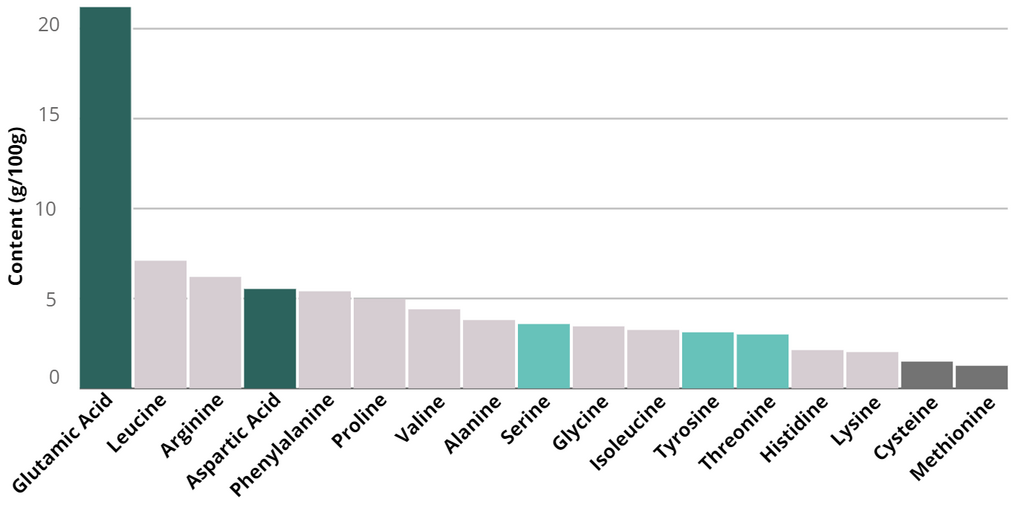
OPP will effectively target all 3 types of bonds for comprehensible repair.Reparation of hair keratins (molecular reparation)
The hair is permanently exposed to external aggressions that attack its structure and make it vulnerable. Oxidative damage to hair keratins proteins produces carbonyl groups, which destabilise hair keratins. The presence and concentration of these carbonyl groups is an important indicator of hair deterioration or hair ageing. An increase in carbonylated keratin, on both cortex and cuticle, was observed upon stress (Fig. 2). The application of 0.5% OPP preserved the hair fibres from stress-induced carbonylation. A significant reduction in the level of oxidation compared to Control, was observed:
- 91% reduction on the cuticle (p<0.001).
- 56% reduction on the cortex (p<0.001).
- 59% reduction on the whole hair (p<0.001).
Having the Natural Peptide comparison allow an understanding on how OPP performs relative to other products already known for their reparative properties.
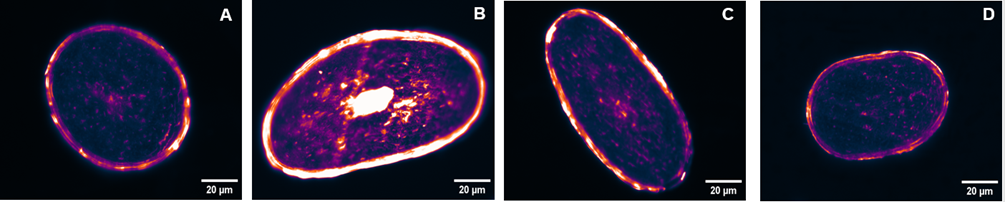
Figure 2. In situ visualisation of oxidised keratins (colour gradient, more orange/white the colour is and higher protein oxidation is, and hair are damaged) on hair cross-section. A = Control, B = Heat, C = Heat + 0.5% Natural Peptide, D = Heat + 0.5% Oat Peptide Powder
Stress factors like heat styling tools cause physicochemical changes in the molecular components (keratin proteins) of hair strands. Oxidation leads to increased fibre surface porosity, weakening the hair and reducing its strength. These oxidative processes primarily break hydrogen bonds and weaken disulphide bonds within the hair. As a result, hair becomes more brittle and prone to breakage.
OPP repairs, at the molecular level, keratins from external aggressions, helping to restore the integrity of these bonds and improve hair resilience.
Restructuration of hair fibre (structural reparation)
Hair, continually exposed to chemical aggression, undergoes structural alteration that compromise its strength and resilience. Birefringence was utilised to evaluate the spatial arrangement and alignment of hair keratin fibres, assessing the ability to preserve and restore hair integrity.
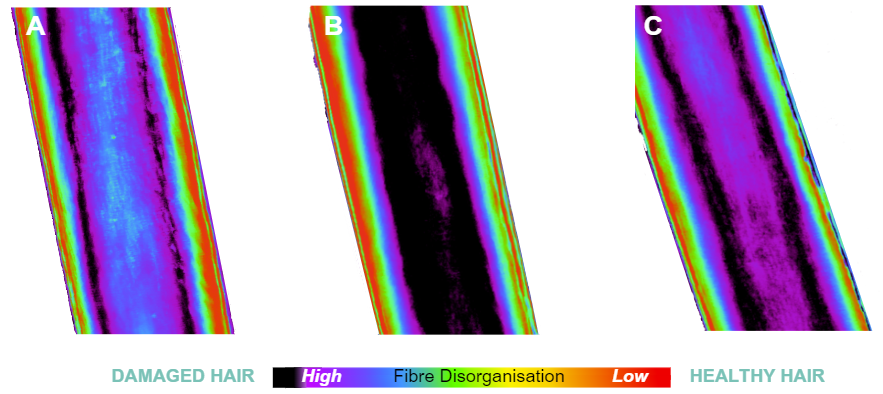
Figure 3. In situ visualisation of hair fibre organisation (birefringence). The healthier the hair (fibre organised), the lower the K index, which appears as colour red, orange and green. The more damaged the hair (fibre disorganised), the higher the K index is, which appears as colour black, purple and blue . A = Control, B = Bleaching, C = Bleaching + 0.5% Oat Peptide Powder
After chemical treatment (bleaching), the hair is damaged, and the K-index decreases (Fig. 3, when B compared to A). This decrease indicates structurally damaged keratins upon stress exposures. Fig. 3 (C compared to B) demonstrates the beneficial effect of OPP to counteract the stress-induced decrease in birefringence. 0.5% OPP, applied after bleaching, significantly increases the K-index by 20% (p<0.05) compared to the bleached condition. OPP application results in denser and better-organised keratin fibres, indicating a repair at the structural level. The observed enhancement likely involves the repair of weakened hydrogen bonds and disulphide bonds, which are crucial for maintaining the structural integrity of the hair fibre, contributing to the overall improvement of hair health and resilience.
Strengthening of hair (visual reparation)
Hair strength measurements was used to assess how effective OPP was in repairing the hair surface after the use of heat styling tools. Keratins, which contain a high degree of disulphide bonding, provides rigidity and chemical resistance to hair. These bonds are sensitive to heat and their structure can be temporarily changed by heat, resulting in hair weakening, brittleness and breakage.
After a single application, 1% OPP significantly increased hair strength by 227% (p<0.05) compared to placebo and by 203% (p<0.10) compared to 1% Oat Peptide Liquid.
OPP is rich in sulphuric amino acids, which will strengthen and repair disulphide bonds (responsible for hair strength and protecting hair from damage), resulting in stronger and more resistant hair.
Conclusion
Aged hair often exhibits characteristics such as dullness, brittleness, fragility and a fine texture. Oat Peptide Powder is designed to specifically target the needs of fragile and ageing hair. By efficiently strengthening and addressing all three types of hair bonds, Oat Peptide Powder offers comprehensive repair and immediate perceivable benefits.
Through its molecular level repair of keratins, structural repair of hair keratin fibre organisation and density, and visual strengthening of hair, Oat Peptide Powder application results in healthier, more structured and repaired hair strands, combatting the visible signs of hair ageing.
References and notes
- Monselise A, Cohen D E, Wanser R, Shapiro J. What Ages Hair? Int J Women’s Dermato. 2017; 3(1): S52-S57https://www.ncbi.nlm.nih.gov/pmc/articles/PMC5419032/
- Hirai T, Ikeda-Imafaku M, Tasaka N et al. Human hair keratin responds to oxidative stress via reactive sulfur and supersulfides. Advances in Redox Research. 2021; 10: 100091. https://www.researchgate.net/publication/376732763_Human_hair_keratin_responds_to_oxidative_stress_via_reactive_sulfur_and_supersulfides
- Breakspear S, Noecker B, Popescu C. Relevance and Evaluation of Hydrogen and Disulfide Bond Contribution to the Mechanics of Hard α‑Keratin Fibers. J Phys Chem B. 2019; 123: 4505-4511. https://pubmed.ncbi.nlm.nih.gov/31067053/
- Breakspear S, Noecker B, Popescu C. Chemical bonds and hair behaviour—A review. Int J Cosmet Sci. 2024; 00: 1-9. https://pubmed.ncbi.nlm.nih.gov/38733167/
- Baraibar MA, Ladouce R, Friguet B. Proteomic quantification and identification of carbonylated proteins upon oxidative stress and during cellular aging. J Proteomics. 2013; 92:63-70. https://pubmed.ncbi.nlm.nih.gov/23689083/
- Tubia C, Fernández-Botello A, Dupont J et al. A New Ex Vivo Model to Evaluate the Hair Protective Effect of a Biomimetic Exopolysaccharide against Water Pollution. Cosmetics. 2020; 7(4): 78-90. https://www.mdpi.com/2079-9284/7/4/78
- Stern E S, Johnson V L. Studies of the molecular weight distribution of cosmetic protein hydrolysates. J Society Cosmet Chemists. 1977; 28:447-55. https://library.scconline.org/v028n08/33
- Teglia A, Mazzola G, Secchi G. Chemical characteristics and cosmetic properties of protein hydrolysates. Cosmetics & Toiletries. 1993;108(11):56-65. https://www.semanticscholar.org/paper/Chemical-characteristics-and-cosmetic-properties-of-Teglia-Mazzola/43e9ab23df1cea9dcd4fc1d13deebdb6b16b9890
The holistic connection between skin health and emotional wellbeing: A...
Innovative ingredients and formulations for a more sustainable Home Ca...

Improved mushroom sourcing yields enhanced pore minimiser

ICC, an international research network dedicated to cosmetics
The science of fresh – Consumer trends in laundry

Biosurfactants – The State of the Industry

The rise of Collagen in Beauty: from animal sources to plant based inn...

Sustainable cosmetic ingredient: let’s make it a question of «su...