Introduction
Skin ageing ultimately result in visible signs such as sagging, fine lines and eventually wrinkles. The primary internal causes of skin ageing originate within the body, gradually impacting the skin’s structure, function and appearance. The natural ageing process is intricate, influenced by internal (genetics, hormonal changes and inflammation) and external (sun exposure, pollution and lifestyle) factors (1).As skin ages, changes occur at multiple levels, each contributing to the overall appearance of ageing. This process unfolds in three main stages: at the cellular level, where the foundational ageing process begins; the structural level, where the skin’s integrity and resilience are compromised; and the visual level, where these cumulative effects become visible. These stages affect the skin’s layers— the hypodermis, dermis and epidermis—each undergoing distinct changes that collectively influence the skin’s appearance (2).
Understanding these processes is essential for creating effective strategies to maintain healthy, youthful-looking skin. Addressing the challenges of skin ageing requires a holistic approach that focuses on restoring cellular function, reinforcing skin structure and renewing the skin’s visual appearance.
Peptides play a critical role in skin health by supporting collagen synthesis, hydration and structural integrity. To harness these benefits, Oat Cosmetics has developed Oat Peptide Powder (OPP), a patent-pending, high purity (90%) active derived from Avena sativa (oat). OPP is obtained through an enzymatic extraction, filtration and purification process that isolates bioactive peptides with optimised molecular weight ranges for targeted skin benefits. The molecular weight distribution of OPP peptides includes low (300–1,000 Da) to medium (1,000–3,000 Da) molecular weight, with a maximum of 5,000 Da. This size range is critical for bioactivity, as lower molecular weight peptides are known to reach the dermis and stimulate cellular activity, while medium-weight peptides contribute to hydration and reducing the appearance of fine lines and wrinkles.
This work presents the efficacy of OPP in extending skin vitality through a multi-dimensional revitalisation to promote a resilient and youthful appearance.
Materials and methods
Restoration of the Skin’s Foundation at the Cellular LevelAn ex vivo study was performed to evaluate the effect of OPP on collagen I, III and V and elastin synthesis. Skin explants were obtained from a 37-year-old female Caucasian. The explants were divided into 3 experimental groups (Control: Untreated, Vehicle control: Distilled water, 0.1% OPP in vehicle control), with products applied topically twice a day for three days. Sections of the explants were prepared and fixed, followed by incubation with primary antibodies targeting collagen
Col1 (Abcam / ab34710), Col3 (Abcam / ab34710), Col5 (Abcam/ ab7046) and elastin Ela (Santa Cruz / sc-166543).. Secondary antibodie coupled to a fluorophore (Invitrogen/A21244 or Invitrogen/A21235) was used for detection and cellular nuclei were labelled with DAPI. Excess antibodies and DAPI were removed and fluorescent images were captured using an epifluorescent microscope (EVOS M5000 Imaging System).
Reinforcement And Densification of Skin Structure
A blind in vivo study was conducted to evaluate the efficacy of OPP in improving the skin structural integrity (skin density), compared to a placebo. The study included 2 panels of 15 Caucasian female, aged 48 to 72, with moderate to very severe signs of ageing. Over 84 days, one panel applied 0.1% OPP face cream (containing Aqua, Methylpropanediol, Caprylyl Glycol, Sodium Phytate, Sodium Acrylate Copolymer, Lecithin, Avena sativa (Oat) Peptide, Caprylic/Capric Triglyceride) while the other applied a placebo face cream (with the same ingredients minus the Avena sativa (Oat) Peptide). Treatment was applied twice daily, in the morning and evening. Measurements were taken on day 0 (before treatment) and day 84.
Skin density was assessed by Ultrascan UC22 Echograph (Courage + Khazaka Electronic GmbH) on the cheekbone area, by analysing the reflection intensity of the ultrasound waves from different skin layers: Dermis and epidermis. Denser tissues (collagen-rich dermis) will produce stronger reflections.
Strengthening Skin Firmness and Elasticity
A blind in vivo study was conducted to evaluate the efficacy of OPP in improving skin firmness and elasticity, compared to a placebo. The study included 2 panels of 10 Caucasian female, aged 48 to 72, with moderate to very severe signs of ageing. Over 84 days, one panel applied 0.1% OPP face cream (containing Aqua, Methylpropanediol, Caprylyl Glycol, Sodium Phytate, Sodium Acrylate Copolymer, Lecithin, Avena sativa (Oat) Peptide, Caprylic/Capric Triglyceride) while the other applied a placebo face cream (with the same ingredients minus the Avena sativa (Oat) Peptide). Treatment was applied twice daily, in the morning and evening. Measurements were taken on day 0 (before treatment), 28, 56 and 84.
Skin mechanical properties were evaluated by Cutometer MPA Dual 580 (Courage + Khazaka Electronic GmbH) on the cheekbone area:
- Skin Firmness (1/R0, mm): Inverse of the amplitude at the end of the suction phase, representing the ability of the skin to deform or stretch, indicated by the maximum depth, in mm, of skin penetration into the probe when the vacuum is applied.
- Skin Elasticity (R2, %): Resistance to mechanical force versus ability of returning.
Reducing Visible Signs of Ageing
A blind in vivo study was conducted to evaluate the efficacy of OPP in reducing facial wrinkles, compared to a placebo. The study included 2 panels of 20 Caucasian female, aged 48 to 72, with moderate to very severe signs of ageing. Over 84 days, one panel applied 0.1% OPP face cream (containing Aqua, Methylpropanediol, Caprylyl Glycol, Sodium Phytate, Sodium Acrylate Copolymer, Lecithin, Avena sativa (Oat) Peptide, Caprylic/Capric Triglyceride) while the other applied a placebo face cream (with the same ingredients minus the Avena sativa (Oat) Peptide). Treatment was applied twice daily, in the morning and evening. Measurements were taken on day 0 (before treatment) and day 84.
Facial wrinkles (marionette lines) were assessed by 3D fringe-projection image analysis, using AEVA-HE V4 system
(Eotech). Stereo imaging captures the skin relief by analysing the deformation of these projected fringes, providing high-resolution 3D images.
Each in vivo studies were conducted under clinical surveillance following international ethical standards, including the Scientific Committee on Consumer Safety (SCCS) guidance, Good Clinical Practices (ICH-GCP) and the Declaration of Helsinki. GraphPad Prism V10.1.2 software was used for the statistical analysis. Data were statistically analysed applying two-way analysis of variance (ANOVA) with Dunnett’s or Sídak’s multiple comparison test.
Results and discussion
Restoration of the Skin’s Foundation at the Cellular LevelCollagen is the most abundant fibrous protein in the extracellular matrix (ECM) and constitutes the ECM’s main structural component, particularly the fibrillar collagens. Type I collagen represents 60% to 80% of collagen, type III collagen from 15% to 25%. Type I, III and V fibrillar collagen self-assemble in thicker fibres that form a three-dimensional network in the entire thickness of the dermis (3). They give the skin resilience and are essential for tissue integrity. Elastin is another important protein found in the skin. Its primary function is to provide elasticity to tissues, allowing them to return to their original shape after being stretched (4). Although elastin is not as abundant as collagen in the skin, it is vital for maintaining the skin’s resilience and flexibility and supporting the skin’s structural integrity and function (4). The improvement in the synthesis of collagen I, III and V and elastin will contribute to overall anti-ageing benefits.
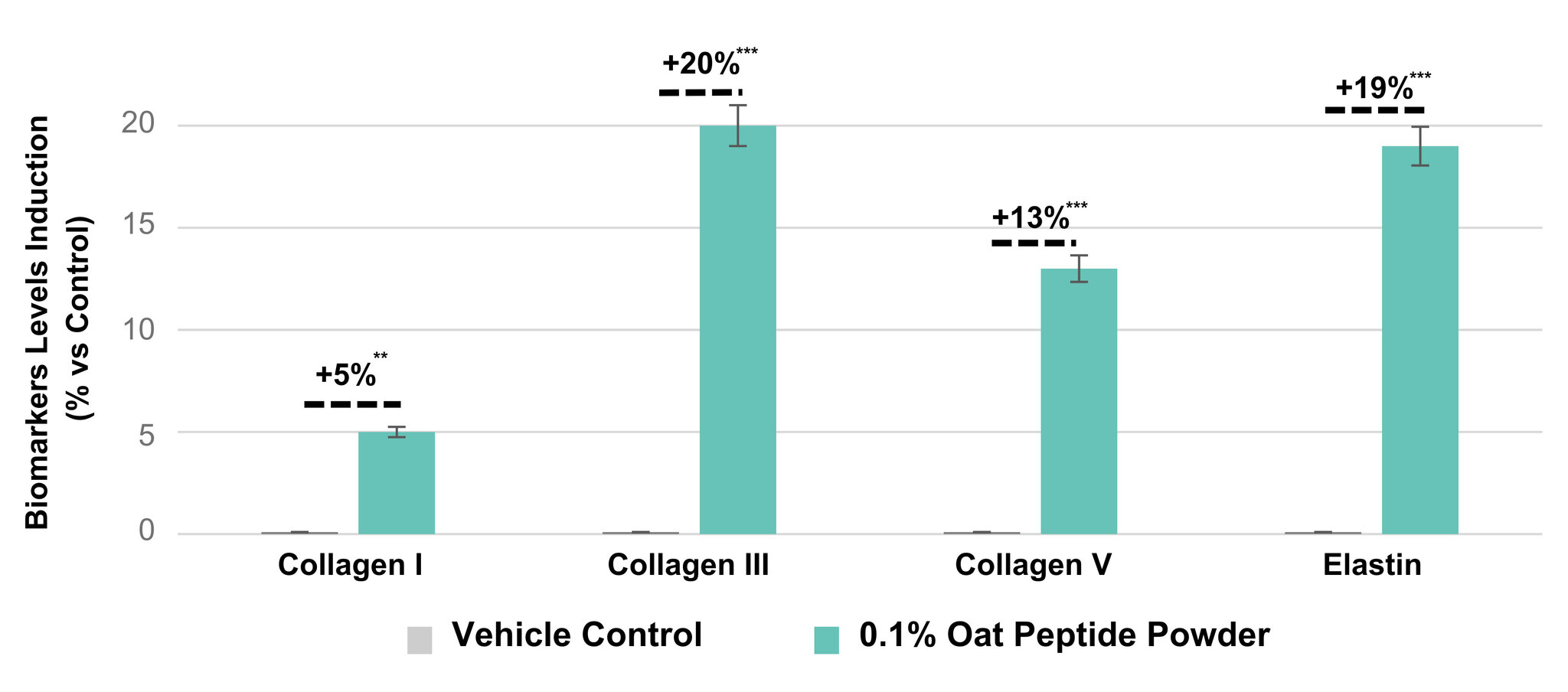
Figure 1. Stimulation of dermal structural biomarkers with OPP. ANOVA test, Significant: ***p<0.001, **p<0.01 (99%).
- Collagen I levels by 5%.
- Collagen III levels by 20%.
- Collagen V levels by 13%.
- Elastin levels by 19%.
OPP stimulates the production of collagen I, III, V and elastin.
Reduced collagen and elastin levels can result in the appearance of sagging and wrinkles, highlighting the importance of collagen and elastin in preserving youthful skin. OPP restores the skin’s foundation (structural integrity) and revitalises the skin at the cellular level.
Reinforcement And Densification of Skin Structure
Ageing impacts both the function and appearance of the skin, necessitating the restoration of cellular function due to the decline in collagen and elastin, as well as the reinforcement of skin structure. Thinning skin results in a loss of structural support, contributing to sagging and wrinkles (5). Similarly, reduced skin density, caused by a decreased compactness of collagen and elastin fibres, results in diminished firmness and resilience (6).
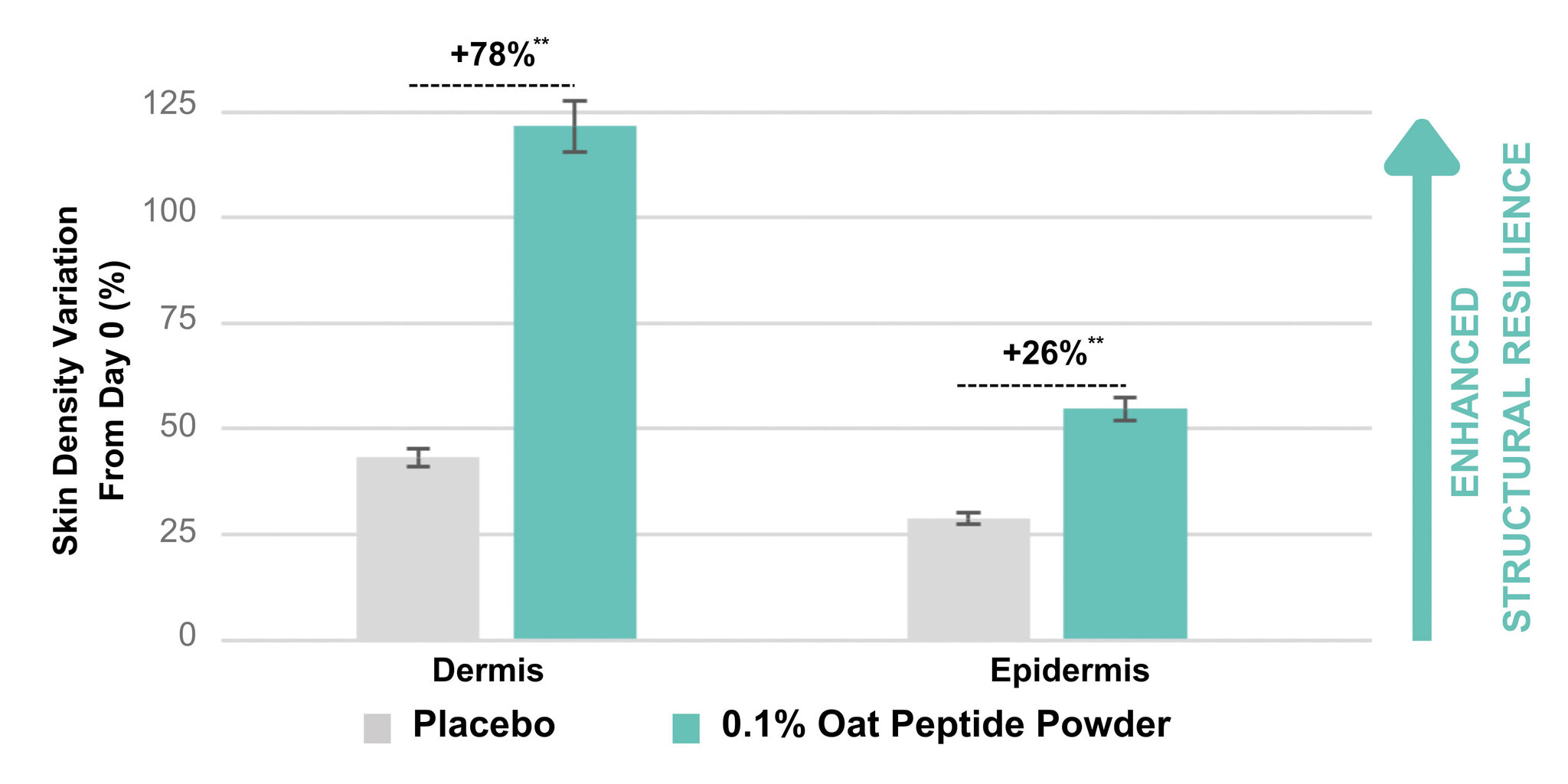
Figure 2. Skin density variation with OPP after 84 days. T-test, Significant: **p<0.01 (99%), *p<0.05 (95%).
After 84 days, 0.1% OPP significantly increases dermis density by 78% and epidermis density by 26%, compared to placebo (Figure 2). OPP boosts skin density at both dermal and epidermal levels, promoting a more resilient skin.
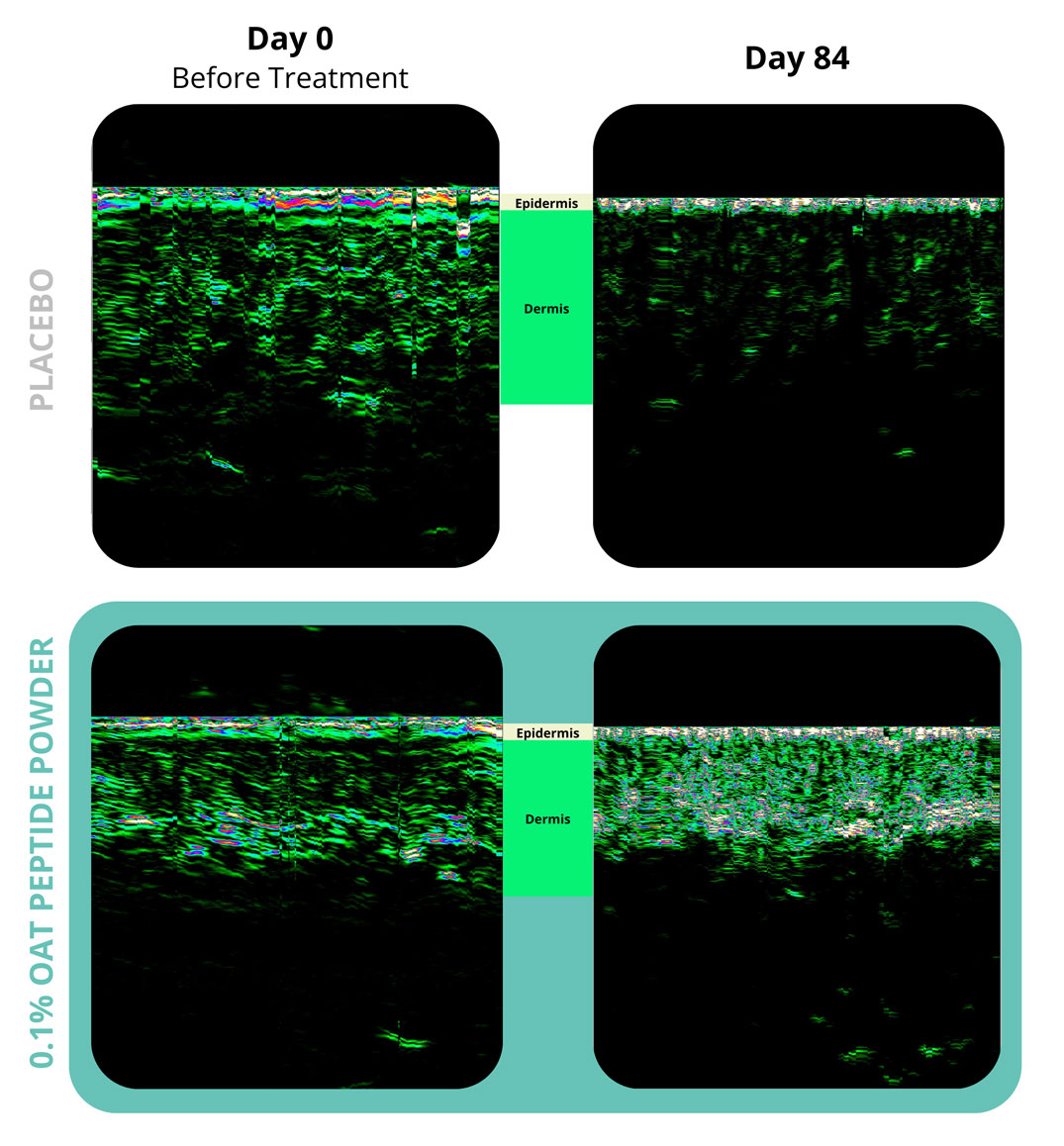
Figure 3. Comparative analysis of skin density improvement with OPP vs. placebo after 84 days (green regions represent tissues of interest, dermal structures such as collagen, which indicate skin density and thickness).
At Day 0, the green areas appear relatively thin and not densely packed for both placebo and OPP participants (Figure 3). After 84 days with placebo treatment, the green signal appears less intense and the dermal structures seem more disorganised compared to Day 0, which is a clear indication of decreased skin density. After 84 days with 0.1% OPP treatment, there is a noticeable increase in the green signal intensity and the structure appears more organised and uniformly packed. This suggests that OPP enhances skin density and uniformity. The boundary between the upper (epidermal) and lower (dermal) layers seems clearer and more defined, indicating better structural integrity. Figure 3 shows OPP’s ability to improve dermal quality and structural resilience. OPP redensifies the skin at the structural level.Strengthening Skin Firmness and Elasticity
Ageing progressively reduces skin density, as previously demonstrated. This process is primarily due to the degradation of key structural proteins, collagen and elastin. Consequently, the skin’s structural framework is weakened, leading to a noticeable decline in skin firmness (7) and elasticity (9). The thinning of both the epidermis and dermis further exacerbates the loss of firmness, while the reduction in subcutaneous fat diminishes the cushioning effect that helps to maintain a youthful appearance (8).
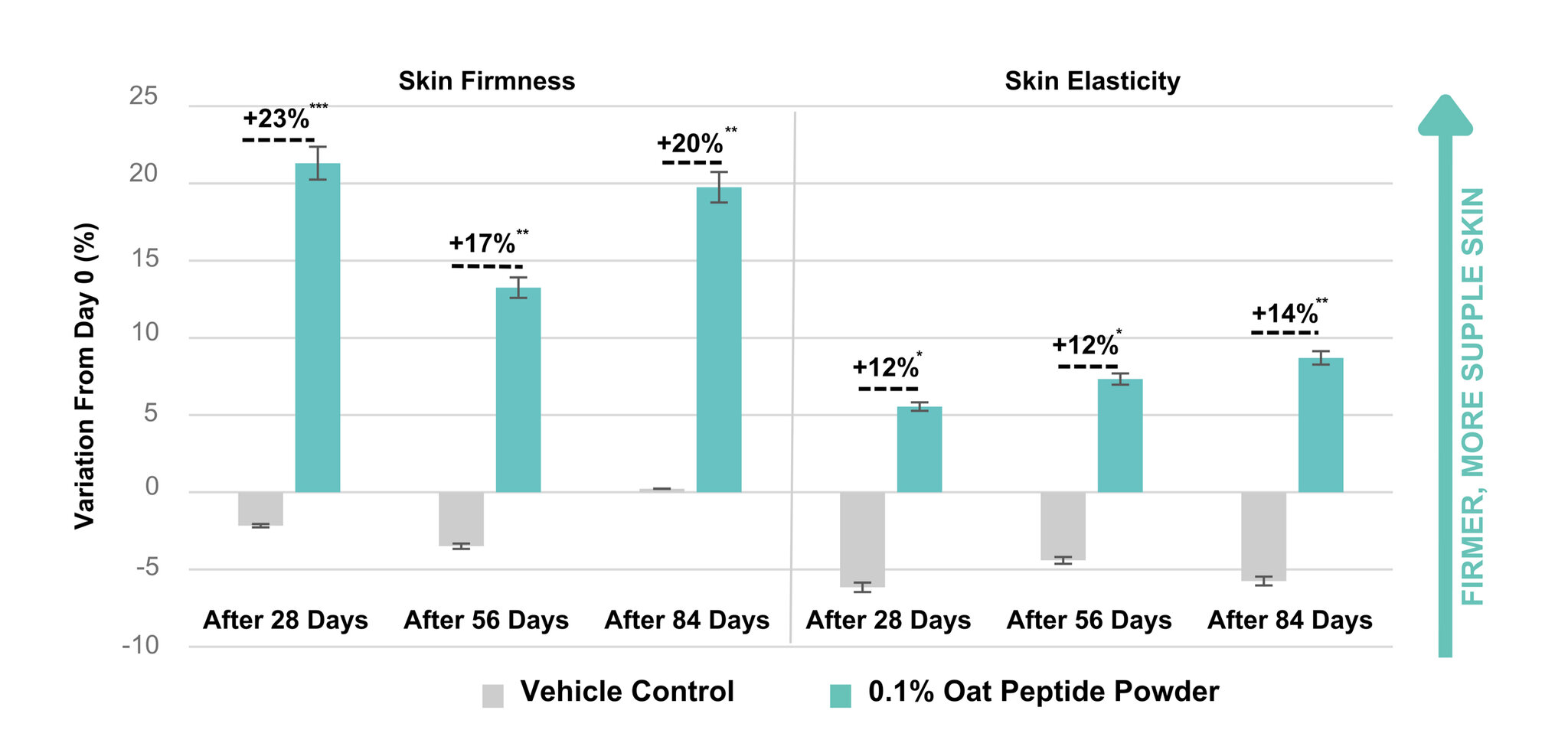
Figure 4. Skin firmness and elasticity variation with OPP over 84 days. T-test, Significant: ***p<0.001, **p<0.01 (99%), *p<0.05 (95%).
0.1% OPP significantly increases skin firmness by 23%, 17% and 20% after 28, 56 and 84 days respectively, compared to placebo. Figure 4 indicates that OPP enhances the skin’s capacity to preserve skin structure and prevent sagging and deformation. 0.1% OPP significantly increases skin elasticity by 12%, 12% and 14% after 28, 56 and 84 days respectively, compared to placebo. This indicates that OPP helps the skin to rapidly regain its original shape. OPP acts at the structural level and strengthens skin firmness and elasticity, resulting in more resilient and supple skin.Reducing Visible Signs of Ageing
As the skin ages, it loses density and structural support, leading to a noticeable decline in skin firmness (7) and elasticity (9). This results in the skin becoming less capable of maintaining its shape and resilience, causing sagging and the formation of wrinkles, especially in areas subjected to frequent movement, such as around the eyes. This repeated movement of the surrounding muscles contributes to the emergence of crow’s feet wrinkles.
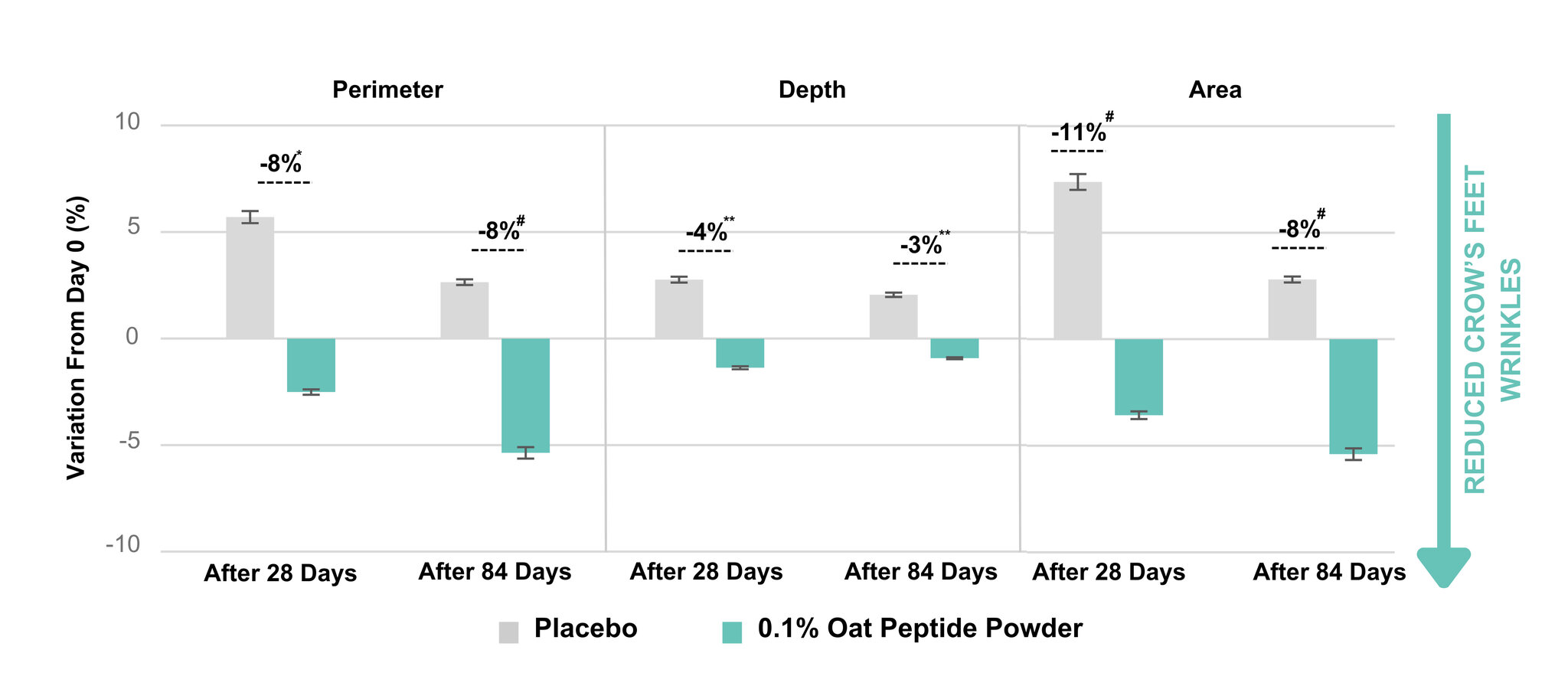
Figure 5. Crow’s feet wrinkles with OPP over 84 days. T-test, Significant: **p<0.01 (99%), *p<0.05 (95%), #p<0.10 (90%)
Figure 5 shows a noticeable improvement of 0.1% OPP significantly reducing crow’s feet wrinkles after only 28 days. After 28 and 84 days of treatment and compared to placebo, 0.1% OPP results in:
- 11% and 8% reduction in wrinkles area, suggesting smoother skin and improved texture.
- 8% and 8%reduction in wrinkles perimeter, after 28 and 84 days, making wrinkles less visible and the skin appear younger.
- 4% and 3% reduction in wrinkles depth, indicating that wrinkles are becoming less pronounced with smoother transitions between wrinkled and non-wrinkled areas.
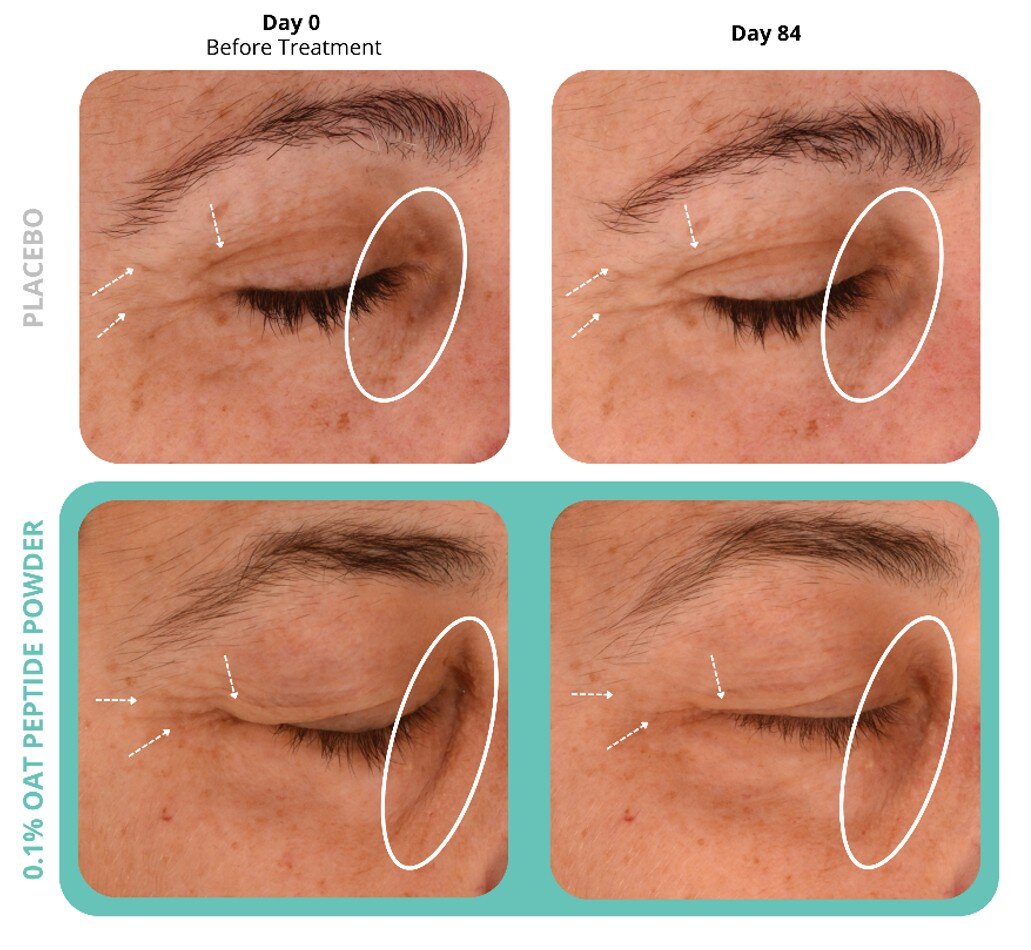
Figure 6. Comparative analysis of wrinkles with OPP vs. placebo after 84 days.
Figure 6 shows that after 84 days of placebo treatment, crow’s feet wrinkles appear more pronounced, with increased depth and length, indicating no improvement in skin texture or ageing signs. In contrast, after 84 days of treatment with 0.1% OPP, there is a significant reduction in the depth, length, volume, and area of crow’s feet wrinkles, resulting in smoother skin texture and visibly diminished wrinkle severity. OPP visibly reduces the appearance of crow’s feet wrinkles, contributing to a more youthful, refined appearance around the eyes.
Oat Peptide Powder revitalises the skin and promotes a youthful appearance through several mechanisms. By stimulating collagen and elastin production, OPP restores the skin’s foundation at the cellular level, enhancing structural integrity and supporting a youthful complexion. Additionally, OPP increases skin density and strengthens firmness and elasticity resulting in more sculpted and resilient skin. Finally, OPP addresses visible signs of ageing, such as crow’s feet wrinkles, promoting a naturally revitalised appearance.Through revitalisation, the skin regains its ability to restore and maintain youthful vitality, ensuring healthier, more resilient skin over time. By providing a multi-dimensional solution for long-term skin vitality, Oat Peptide Powder addresses the concept of natural ageing, targeting key mechanisms.
- G. J. Fisher, S. Kang, J. Varani et al. Mechanisms of photoaging and chronological skin aging. Archives of Dermatological Research, 2002; 138: 1462–1470.
- J. W. Shin and al. Molecular Mechanisms of Dermal Aging and Antiaging Approaches. International Journal of Molecular Sciences, 2019; 20(9): 2126.
- B. Jadach, Z. Mielcarek, T. Osmałek. Use of Collagen in Cosmetic Products. Current Issues in Molecular Biology, 2024; 46: 2043-2070.
- L. Baumann, E. F. Bernstein, A. S. Weiss, D. Bates, S. Humphrey, M. Silberberg, R. Daniels. Clinical Relevance of Elastin in the Structure and Function of Skin. Aesthetic Surgery Journal Open Forum, 2021; 3 (3).
- S. Diridollou and al. Skin ageing: changes of physical properties of human skin in vivo. International Journal of Cosmetic Science, 2001; 23 (6): 353-362.
- S. Park. Biochemical, structural and physical changes in aging human skin, and their relationship. Biogerontology, 2022; 23: 275–288.
- A. K. Langton, M. J. Sherratt, C. E. M. Griffiths, R. E. B. Watson. Review Article: A new wrinkle on old skin: the role of elastic fibres in skin ageing. International Journal of Cosmetic Science, 2010; 32 (5): 330-339.
- J. W. Shin, S. H. Kwon, J. Y. Choi, J. I. Na, C. H. Huh, H. R. Choi, K. C. Park. Molecular Mechanisms of Dermal Aging and Antiaging Approaches. International Journal of Molecular Sciences, 2019; 20 (9): 2126.
- A. Oba, C. Edwards. Relationships between changes in mechanical properties of the skin, wrinkling, and destruction of dermal collagen fiber bundles caused by photoaging. Skin Research & Technology; 2006; 12 (4): 283-288.

AI in Cosmetics: beyond beauty filters to biotech breakthroughs

PARSOL® Shield making history post-FDA Approval: A Breakthrough in Sun...

How Plant Cell Culture Can Revolutionise the Cosmetic Industry

The New Anti-Hair Loss Era: Skinification, Multifunctional Science wit...

How to improve skin well-being by taking inspiration from centenarians...

Skin barrier analysis in relation to the effectiveness and tolerance o...
Buzz, Glow, Fade? The Behavioral Science of Beauty Device UX

Next-generation resveratrol from plant-derived exosomes: exosomic resv...