Circular content for home care products
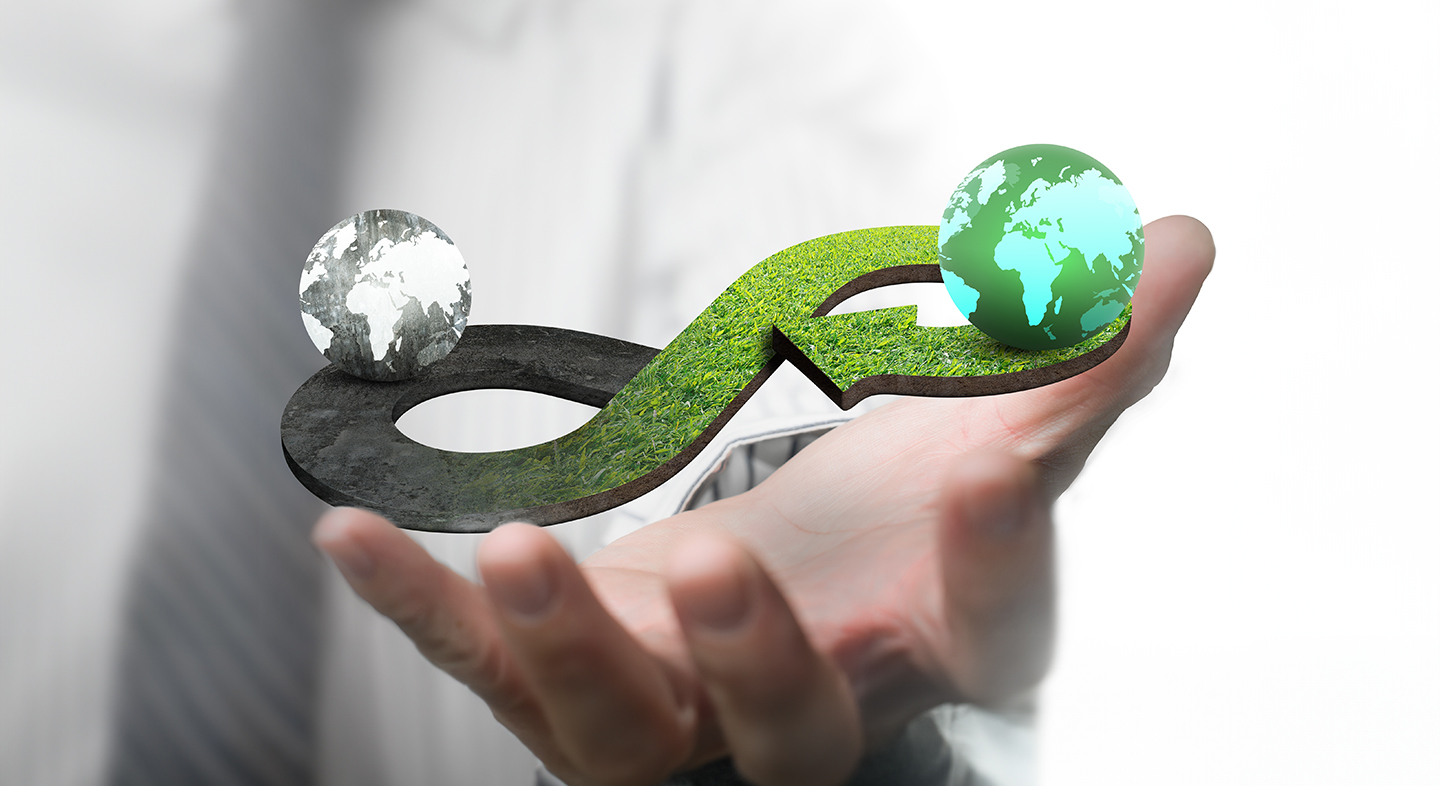
While packaging for home care products often boasts being ‘Made from recycled plastics,’ consideration might also be given to a content of circular origin for the product formulation itself, provided adequate quality and safety parameters are met.
Exploring circular resources can be achieved through value chain collaboration, extending outreach to even seemingly disparate sectors of the industry.
Industrial production processes may involve many chemical substances that are consumed in the production of numerous products, like home care products. However, various chemical substances may be used as process aids during other processes, while not being consumed. For example, in the pharmaceutical industry, this may include organic solvents used as chemical synthesis media, extraction- and recrystallization media, for purification, or for other purposes. The food industry may also use process aids, similar to biotech, electronics, metals, and other sectors.
Where used process aids today are managed as (hazardous) chemical waste for destruction or eventually for energy recovery at the lowest level of the EU Waste hierarchy in the EU Waste Framework Directive (2), there may be a potential to step up to a more sustainable and beneficial solution. When successful, these have the potential to become components in home care products as well.
It is a key point here to become able to separate out the used process aid from the processes in a good way. From this point onwards, the quality will have to be checked and assessed thoroughly. Possible needs for purification have to be determined.
The assessment should consider eventual impurities in the form of carry-over from the process. Any impurity that can impact performance and application options of the chemical substance in a new life cycle? Any impurity which can impact safety, CLP label (3) and REACH compliant Safety Data Sheet (4) negatively? For comparison, the virgin source may be kept as a baseline for this assessment.
Adequate separation may, in some cases, require an amendment to a targeted step in a production facility. We saw the national Medicines Agency support solutions for more circularity. We have also seen a new production facility being targeted from the start to collect the used process aids, limiting mix-up with other process aids.
In one project (5), an organic acid used as process aid in the food industry could be reused directly, without further purification. The organic acid could be used safely for the production of a product in a different sector. The acid was to be supplied with Safety Data Sheet and label in compliance with REACH and CLP, in line with the virgin source.
In a continuing project, samples were collected from solvents used as process aids in a number of pharmaceutical companies. Chemical analysis of the qualities was performed, and the necessary purification via selected technologies was tested and verified.
Special attention was paid to eventual traces of Active Pharmaceutical Ingredients (API).
In one case, special attention was paid to exclude any remaining genetically modified organism.
Any traces of API would additionally have to comply with internal policies (no acceptance) from the pharmaceutical companies.
New value chains can save resources and reduce CO2 emission
All examples above and below carry positive options to be valorized in innovative partnerships throughout the industry, with the initial users of process aids becoming the new suppliers. Connected via the distribution link, these suppliers provide the circular substances to users.
Both pharmaceutical companies and other new suppliers of circular substances can benefit from the practical logistic capabilities, as well as the market knowledge, which can be found in the distribution link, to bring the circular substances to the market – as alternative options to virgin chemical substances.
CO2 impact of circularity is also under investigation in a follow-up project, involving various sectors of industry, their associations and academia.
The CO2 emission “cradle to cradle” for circular ethanol was examined, focusing on “business to business”. This considers transport of ethanol used as a process aid to a purification plant, the purification process, and subsequent transport of this ethanol to a user.
Based on data in 2023 sourced from the Eco-invent database and from the project, the reduction of CO2 emissions per ton of circular ethanol was approximately 1,3 tons compared to virgin ethanol of fossil origin (kg CO2/ kg treated ethanol: 131 for circular ethanol; 1433 for ethanol of fossil origin).
In the context of upcycling, this is indeed of environmental value.
Becoming a supplier of a circular substance, a company may contribute to reduce climate change while simultaneously ensuring that a valuable resource does not end up as waste or is solely used for heat recovery purposes.
Industrial users like producers of home care products can participate by adopting circular substances and incorporating them as components in their product formulations were suitable. By requesting and utilizing circular chemistry, their businesses contribute to increased resource efficiency, waste reduction, minimized CO2 emissions, leading to innovation that can drive economic growth throughout the new value chains. This demand for circular substances propels development forward and can shape solutions across the industry. Such initiatives extend the lifetime of resources, ensuring more responsible consumption, lower climate impact, and create new business opportunities.
Ecolabel
Switching from a virgin to a circular chemical substance as a component in a product is indeed also an option for a product already carrying the Nordic Swan ecolabel. It was clarified in the follow-up project that the circular substance would then have to meet the same criteria as for a corresponding virgin substance.
Fully circular or partial circular
Another example comes from airport deicers.
We have experience from a project case where prolonged use of glycol from a used deicer seemed unattractive for the time being (5).
However, we do also see other cases where used glycol is purified to a high, well-performing quality for safe use elsewhere. So, here the circular economy works as it should, keeping materials and products in the economic cycle with the highest possible value for as long as possible.
From a similar perspective we observe cases that may not be fully “circular” but still involve positive circular elements.
In one example, cooling gas ammonia is distributed in pressurized cylinders to the users. Before a supplier refills the cylinders, they are emptied and checked according to standardized requirements. The remaining ammonia gas from the cylinders can then be transferred into ammonia water and sold as such. In this way, some of the ammonia gas has been in circulation from supplier to users and backward. However, the remaining gas has not been used in the first cycle before being transferred into ammonia water for other uses. Still, preventing ammonia as a waste represents an environmental value.
In a different example, two companies in a value chain agree to work together to prevent the loss of resources while avoiding waste. They share what has become a surplus (for different reasons) for one of them. The surplus products have not been used by the first company before the transfer to the second company. This symbiosis is also tailored to circularity.
Regulatory landscape
The regulatory landscape for the circular use of chemicals is explored in the project across different sectors of industry, their associations and academia (5).
The waste legislation at the EU level and corresponding national levels start by aiming to reduce the amounts of waste, dispose of them safely, and improve resource efficiency. It is essential to ensure that waste ends up in the right place.
REACH, in product legislation, aims to protect humans and the environment concerning the use of chemical substances.
The borderline between the different legal areas requires close attention in a circular economy and when transitioning from one life cycle to the next.
The work from the project essentially reveals three important options to clarify when looking at used process aids:
- Can it be used directly and (safely!) again without any purification or “cleaing”? Then it may be considered as direct reuse. It would then not be waste but a chemical in the product legislation.
- Does it require a purification or “cleaning” process according to “normal industrial practice” before entry of a new life cycle? It may then be considered a “byproduct” according to the Waste Framework Directive Article 5, when the conditions herein are met. Then it is not waste but a chemical in the product legislation.
- If it’s not possible to consider the used process aid as neither reuse nor a by-product in I or II, it may be defined as waste. It would then have to obtain End of Waste status, like through (mechanical) recycling of the molecules, to become a chemical in the product legislation.
References and notes
- The European Green Deal – European Commission (europa.eu)
- Waste Framework Directive legislation – ECHA (europa.eu)
- CLP Legislation – ECHA (europa.eu)
- REACH Legislation – ECHA (europa.eu)
- mst.dk/publikationer/2020/august/generering-og-anvendelse-af-sekundaere-kemiske-ressourcer-gear [In Danish with a summary in English]

H3i 2024: Detergents – navigating ecological transition, opportu...
Personalized skin care, an update
Amazonian Oils Blend calms sensitive skin while rebalancing skin micro...
Mind, body, beauty – decoding the holistic beauty revolution

The power of holistic beauty: the future of personal care
A Word With Beatrice Tassone (Senior Scientist Lab Head, dsm-firmenich...
How to formulate with active ingredients