- Provide chemists with a knowledge of the patent system and its processes.
- Introduce the basic “language” and structure of patent law.
- Encourage chemists to actively partner with patent attorneys.
- Motivate chemists to advocate for their inventions.
- Clarify that legal determinations require lawyers, but technical understanding resides with chemists.
- Emphasize the importance of inventor advocacy in successful patent filings.
- Highlight that more good inventions are lost due to lack of advocacy than to patent office rejections.
A patent serves both offensive and defensive purposes. As a sword, it allows an inventor or company to challenge infringers. As a shield, it protects against competitors attempting to enter the same technological space. This dual utility makes patents an essential business strategy tool in chemical research and development.

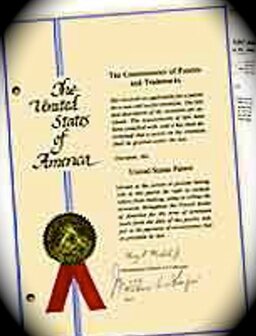
The U.S. Constitution (Article I, Section 8) empowers Congress to grant exclusive rights to inventors to promote the progress of science and useful arts. This authority is implemented through statutes such as Title 35 of the United States Code (U.S.C.), regulations under 37 CFR, and procedural guidelines in the Manual of Patent Examining Procedure (MPEP).
- A process
- A machine
- A manufacture
- A composition of matter
- An improvement of any of the above
This means chemists can potentially patent new compounds, synthetic methods, formulations, or even new uses for known substances.
- Utility (35 U.S.C. §101) – The invention must be useful.
- Novelty (35 U.S.C. §102) – The invention must be new and not publicly disclosed before the filing date.
- Non-Obviousness (35 U.S.C. §103) – The invention must not be an obvious improvement to someone skilled in the relevant field.
Chemists often underestimate the patentability of small but significant improvements. These “incremental inventions” are frequently patentable and commercially valuable.
- What was done
- How it differs from prior work
- Why it is unexpected or advantageous
Chemists must provide the technical narrative, while attorneys frame it in the legal context of claims and statutes.
Common Issues:
- Misjoinder: Listing someone who didn’t contribute can jeopardize the patent’s validity.
- Nonjoinder: Leaving out a legitimate inventor can also invalidate the patent.
- Fraudulent Claims: Listing executives or supervisors with no technical input is unethical and risky.
- Utility Patents: Cover inventions with practical utility (e.g., compounds, processes, devices).
- Design Patents: Protect the ornamental design of functional items.
- Plant Patents: Cover new plant varieties reproduced asexually.
- Title
- Abstract
- Background of the Invention
- Summary
- Drawings and Descriptions
- Detailed Description
- Claims
The claims define the legal boundaries of the patent. They must be drafted carefully to balance breadth (to cover potential variations) and specificity (to ensure enforceability).
A provisional application is a low-cost way to establish an early filing date. It does not require claims and is not examined. However, it provides a 12-month window to file a formal non-provisional application.
Key Benefits:
- Immediate “Patent Pending” status
- Lower initial filing cost
- Time to assess commercial potential
Limitations:
- Must be followed by a non-provisional application within 12 months
- Must fully describe the invention to support future claims
Non-Provisional Applications
This is the full patent application that includes claims and undergoes formal examination. It must provide a clear, detailed, and enabling disclosure of the invention as required by 35 U.S.C. §112.
- What is the invention?
- What are the critical elements?
- How do these elements interact?
- Are there multiple inventions or embodiments?
- What are the unexpected results or advantages?
These insights help patent attorneys draft stronger, more defensible claims.
- Documenting the development process
- Explaining the novelty and utility to attorneys
- Engaging during claim drafting and review
- Helping anticipate design-arounds or competitive workarounds
Many potential patents are never filed simply because inventors fail to recognize their invention’s value or believe it’s too minor. As a result, more inventions are lost due to lack of advocacy than to USPTO rejections.
Far from being the domain of legal professionals alone, the patent process thrives on a collaborative relationship between chemist and attorney. Chemists hold the technical key to invention; attorneys provide the legal framework. Together, they unlock the full potential of innovation.
- Paul, Louis, O’Lenick, Anthony; Patent Peace of Mind, 2006 2008.

Precision Fermentation Meets AI: Transforming Personal Care Ingredient...
Exploring Hybrid Beauty: from the origins to the latest trends and reg...
Skinimalism, Hybrid Beauty and What Consumers Really Want
Soothing and Protective effects of a mixture of Saccharide Isomeratem...

The complexity of sunscreens
EUDR – Europe’s Dumbest Regulation

The Green Transformation: Strategies to Achieve Net Zero in the Househ...
The unique multifunctionality of polyglyceryl esters: The science, sus...