
This prospective, single-center exploratory pilot study included 32 female patients undergoing elective aesthetic breast surgery. The primary objective was to investigate the potential effects of a sequential perioperative extracellular matrix (ECM) modulation protocol on peri-mammary and cervico-décolleté skin quality. Given the exploratory nature of the study, the findings were intended to generate preliminary clinical evidence and hypotheses for future controlled investigations rather than to establish definitive treatment efficacy. The mean age of the cohort was 48.6 ± 6.9 years, with a mean body mass index (BMI) of 22.4 ± 2.8 kg/m². Patients were classified within Fitzpatrick skin phototypes II to IV, representing a heterogeneous but clinically representative population for aesthetic breast surgery. All surgical procedures were performed according to standardized operative techniques without modification of the planned surgical approach. However, the cohort included three distinct surgical procedures, each of which may independently influence skin tension, morphology, hydration, elasticity, and postoperative tissue behavior. Accordingly, the regenerative protocol cannot be considered the only variable influencing the observed changes, and the absence of a non-treated control group prevents causal attribution of the outcomes specifically to the regenerative treatment. The surgical cohort included 12 patients undergoing primary augmentation mammoplasty (37.5%), 11 patients undergoing mastopexy with implants (34.4%), and 9 patients undergoing implant exchange combined with mastopexy (28.1%) (Graph 1). The regenerative conditioning protocol was applied to a continuous anatomical field defined as the cervico-décolleté–peri-mammary complex. This region included the cervical transition zone extending from the submandibular area and lateral neck, the pre-sternal and cleavage region of the décolleté, and the peri-mammary skin envelope involving the upper pole and the medial and lateral aspects of the breast. This anatomical selection is consistent with biomechanical models of regional skin heterogeneity, which demonstrate significant variations in dermal thickness, collagen density, and viscoelastic behavior across the cervico-thoracic axis (5, 6). The treatment strategy was structured as a sequential extracellular matrix modulation protocol divided into four distinct phases across the perioperative timeline (Graph 2). The first phase, administered four weeks before surgery, consisted of an injectable formulation based on highly purified polynucleotides, intended to support fibroblast activity and extracellular matrix synthesis through enhancement of tissue regenerative processes and modulation of the dermal microenvironment (5, 6, 8, 9, 17, 18, 19, 20). The second phase, performed two weeks before surgery, involved the administration of a hybrid high- and low-molecular-weight hyaluronic acid formulation aimed at improving dermal hydration, viscoelastic behavior, and overall tissue quality. Hybrid hyaluronic acid formulations act as bio-remodelling agents rather than volumizing fillers by promoting sustained fibroblast activation through CD44- and RHAMM-mediated pathways, resulting in documented improvements in dermal elasticity and hydration (16, 18, 19, 20) (Graph 2). All patients subsequently underwent standard aesthetic breast surgery (T0) without modification of the surgical technique. The third phase was carried out four weeks postoperatively with a second polynucleotide treatment to support extracellular matrix remodeling. The final phase, performed eight weeks after surgery, consisted of a second hybrid hyaluronic acid treatment to stabilize tissue hydration and biomechanical properties. From a methodological standpoint, this sequential approach reflects a biologically driven “ECM priming–activation–stabilization cycle”, consistent with emerging regenerative medicine paradigms in dermal tissue modulation and wound healing biology (3, 13, 14, 18, 19, 20). The study was designed to optimize extracellular matrix homeostasis through complementary biological pathways: fibroblast activation and matrix support induced by polynucleotide administration, followed by the bio-remodelling effects of hybrid hyaluronic acid, with the aim of improving tissue hydration, viscoelastic properties, and overall skin quality throughout the perioperative healing process (14, 16) (Graph 2). The study was conducted in accordance with the principles of the Declaration of Helsinki. Written informed consent was obtained from all participants before enrollment. The study protocol was approved by the local Institutional Review Board, ensuring compliance with ethical standards for clinical research in aesthetic surgery. Given the single-center, non-randomized design, potential selection and performance bias cannot be excluded. However, all surgical procedures were standardized and performed by the same surgeon using consistent operative techniques to minimize procedural variability. Outcome assessment was performed using validated objective measurement tools, including cutometric and corneometric evaluations, to reduce observer-related bias. Missing data were not imputed, and all available observations were included in the final analysis using a complete-case approach. Given the exploratory nature of this pilot study and the absence of a control group, the statistical analysis was descriptive. Continuous variables were expressed as mean ± standard deviation (SD), whereas categorical variables were summarized as absolute frequencies and percentages. Longitudinal observations were summarized descriptively relative to baseline. No formal inferential hypothesis testing was performed, and no p-values or confidence intervals were calculated; accordingly, no claims of statistical significance are made. Adverse events are reported as absolute patient numbers and corresponding percentages of the total study population (n = 32). No subgroup inferential analysis according to surgical procedure was performed because the pilot sample was not designed or powered for such comparisons. Owing to the single-center, non-randomized, uncontrolled design, limited sample size, and heterogeneity of surgical procedures, all findings should be interpreted as descriptive and hypothesis-generating rather than confirmatory.
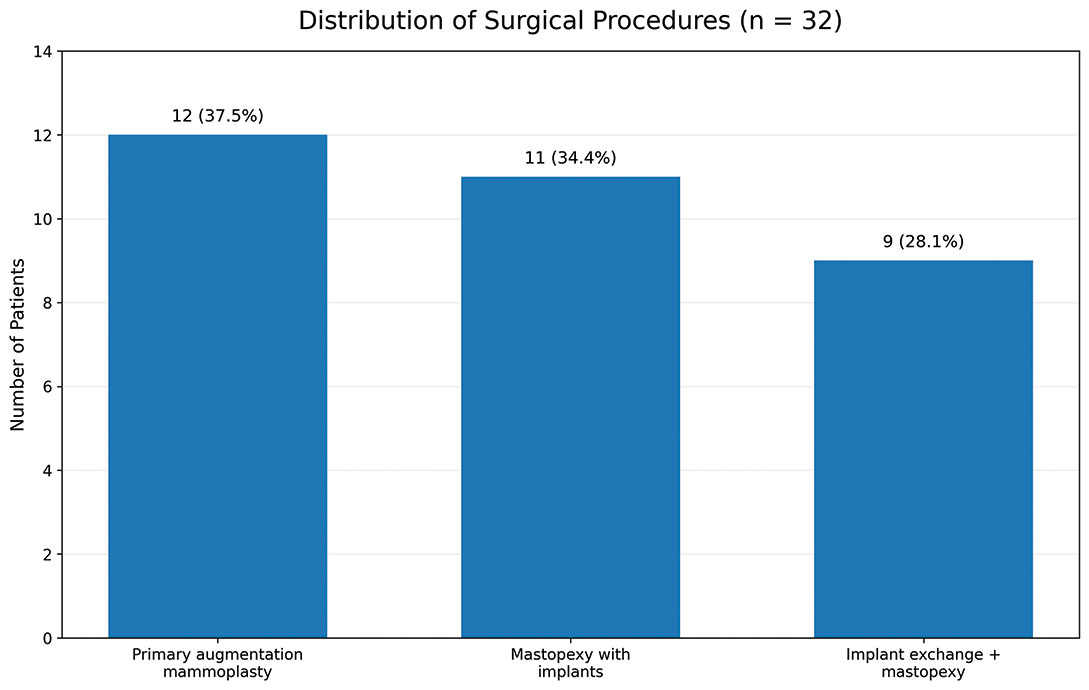
Graph 1. Distribution of surgical procedures within the study cohort. Percentage distribution of patients undergoing primary augmentation mammoplasty, mastopexy with implants, and implant exchange combined with mastopexy among the 32 enrolled subjects.
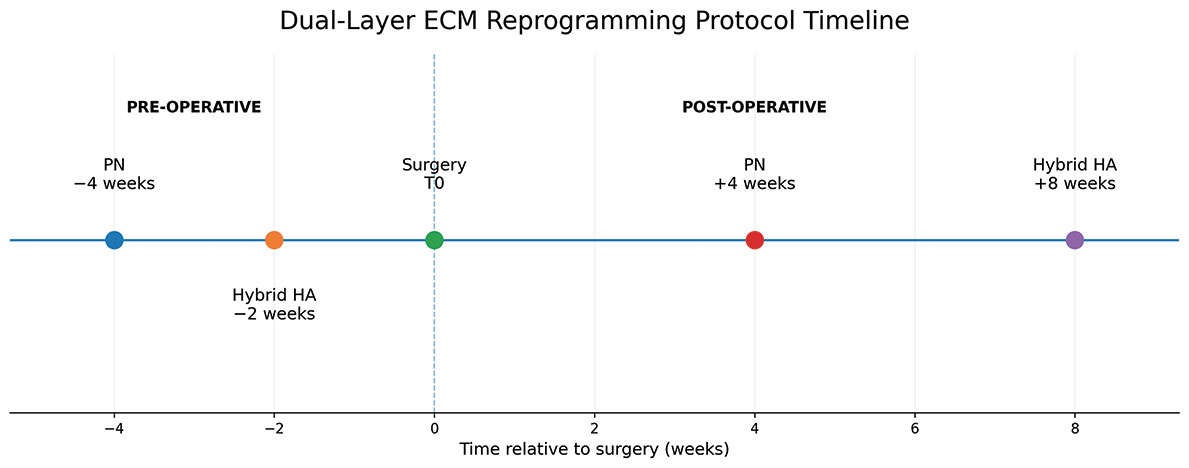
Graph 2. Sequential Dual-Layer ECM Reprogramming protocol timeline. Schematic representation of the sequential perioperative treatment protocol. Polynucleotides (PN) were administered 4 weeks before surgery, followed by hybrid high-/low-molecular-weight hyaluronic acid (HA) 2 weeks before surgery. Surgery was performed at T0. Postoperatively, PN treatment was administered at 4 weeks, followed by hybrid HA at 8 weeks.
Results
Primary outcome measures included skin elasticity assessed by Cutometer® R2, skin hydration assessed by Corneometer®, and clinical skin laxity. Secondary outcome measures included the Global Aesthetic Improvement Scale (GAIS), patient satisfaction, and treatment safety. At the 12-week follow-up after completion of the treatment protocol, improvements were observed across all primary outcome measures (Figures 3,4,5; Graph 3). Mean skin elasticity increased from 0.48 ± 0.06 (95% CI, 0.458–0.502) at baseline to 0.59 ± 0.07 (95% CI, 0.565–0.615) at 12 weeks, corresponding to a relative increase of 22.9% based on the group means. Mean skin hydration increased from 42.1 ± 6.3 AU (95% CI, 39.83–44.37) at baseline to 52.8 ± 7.1 AU (95% CI, 50.24–55.36) at 12 weeks, corresponding to a relative increase of 25.4% based on the group means. Clinical skin laxity decreased by 14% to 27% compared with baseline. According to the Global Aesthetic Improvement Scale (GAIS), 13 of 32 patients (41%) were rated as much improved, 16 of 32 (50%) as “improved”, and 3 of 32 (9%) as “showing “no change” (Graph 4). The mean patient satisfaction score was 8.7/10, and 30 of 32 patients (94%) reported that they would be willing to undergo the treatment again. At the 6-month follow-up, improvements in skin elasticity, hydration, and clinical skin laxity were generally maintained. A mild physiological reduction in hydration and elasticity was observed compared with the 12-week evaluation; however, all parameters remained above baseline values throughout follow-up. At the 12-month evaluation, skin elasticity remained above baseline, while skin hydration showed partial regression from the 12-week assessment but also remained above baseline. Improvement in clinical skin laxity was maintained in the majority of patients, and more than 80% of participants continued to be classified as improved or much improved according to the GAIS. Safety outcomes were evaluated throughout the 12-month follow-up period (Graph 5). Transient erythema occurred in 3 of 32 patients (9.4%), mild edema in 2 of 32 patients (6.3%), and minor ecchymosis in 1 of 32 patients (3.1%). No serious treatment-related or long-term adverse events were recorded. All adverse events were mild, self-limiting, and resolved spontaneously without medical intervention (Table 4).
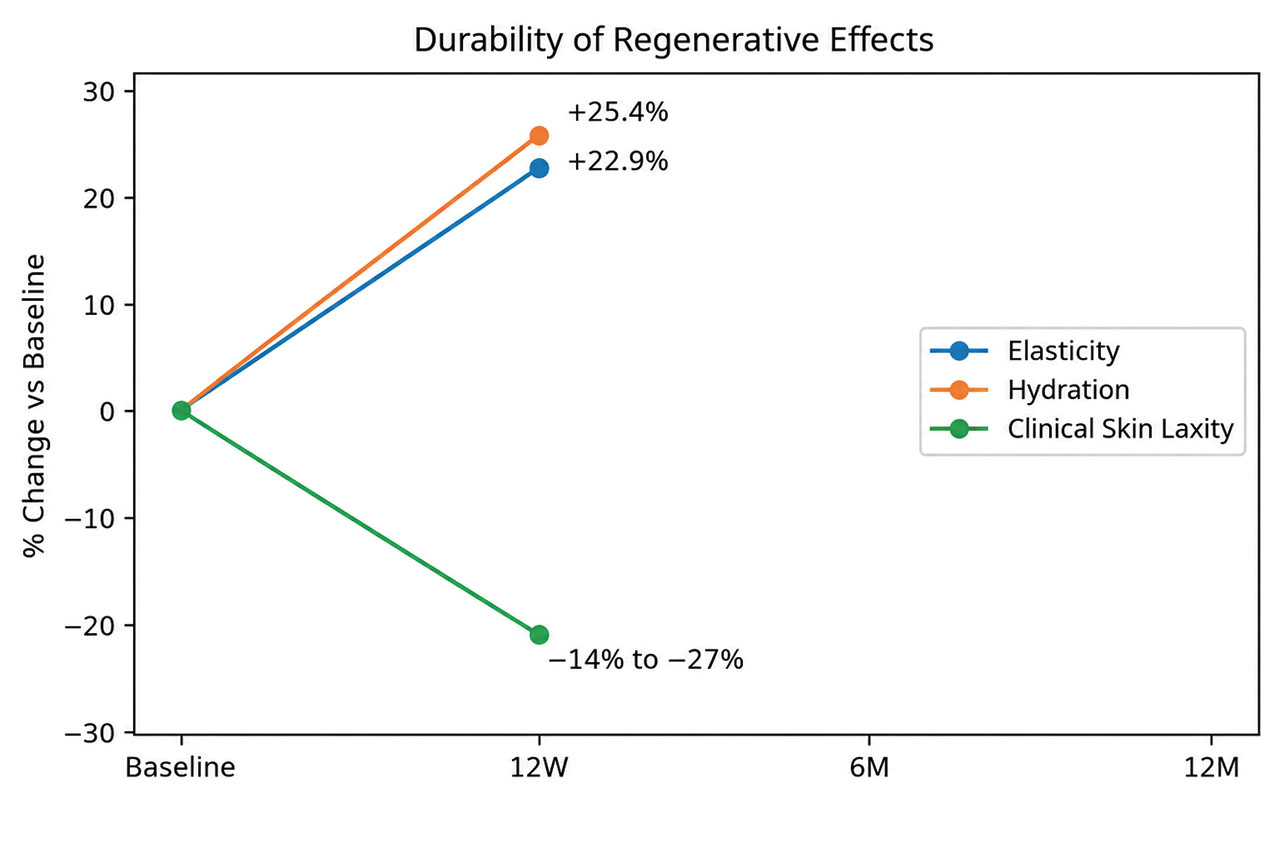
Graph 3. Relative change in skin quality measures at 12 weeks. Mean Cutometer R2 elasticity increased from 0.48 ± 0.06 at baseline to 0.59 ± 0.07 at 12 weeks, corresponding to a relative increase of 22.9% based on the group means. Mean Corneometer hydration increased from 42.1 ± 6.3 AU to 52.8 ± 7.1 AU, corresponding to a relative increase of 25.4% based on the group means. Clinical skin laxity showed a reduction ranging from 14% to 27% compared with baseline. The graph summarizes descriptive changes observed at the 12-week assessment; no inferential statistical significance is implied.
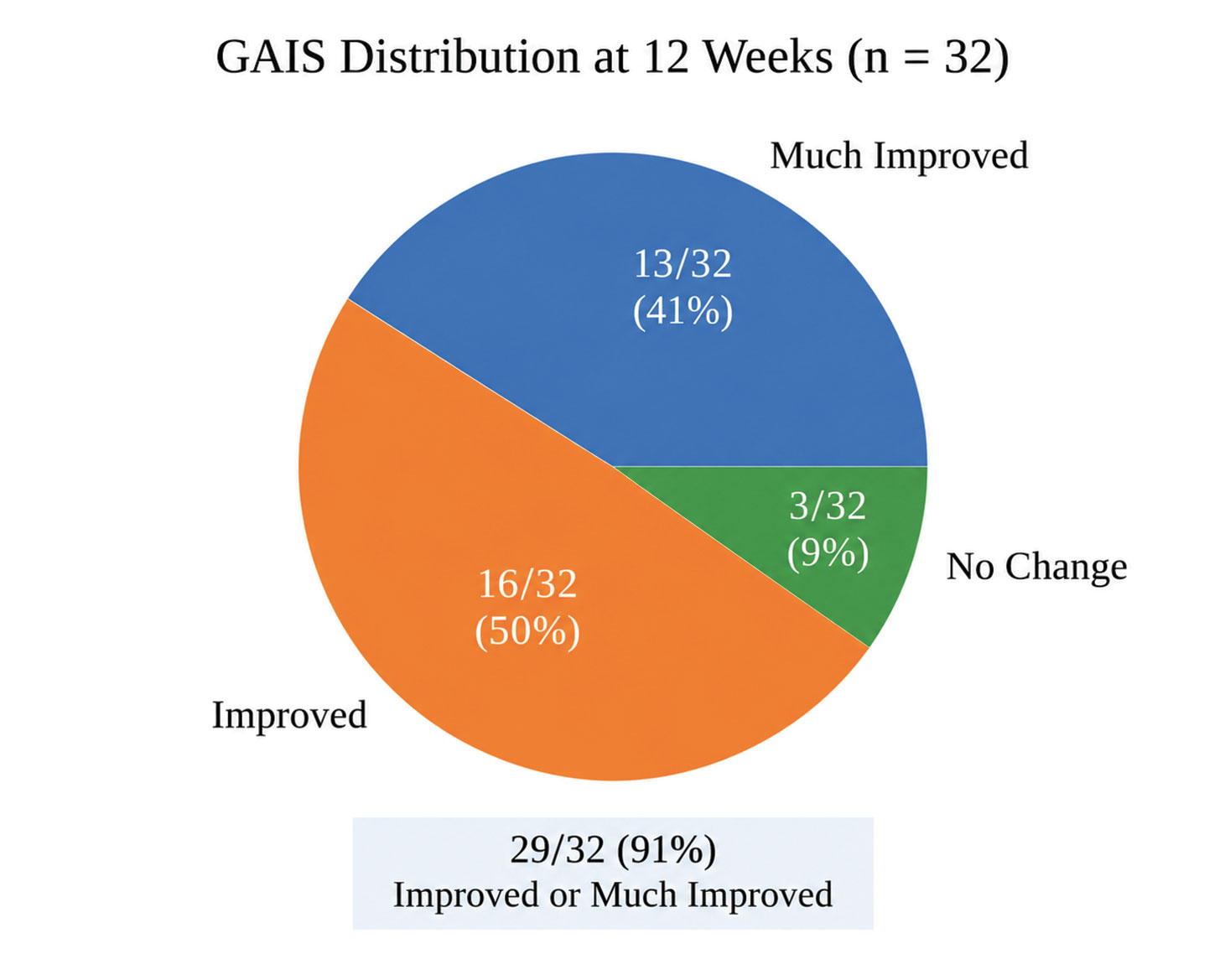
Graph 4. Global Aesthetic Improvement Scale (GAIS) outcomes. Distribution of physician-assessed aesthetic improvement scores at 12-week follow-up, showing the proportion of patients classified as “much improved,” “improved,” or “no change” after treatment.
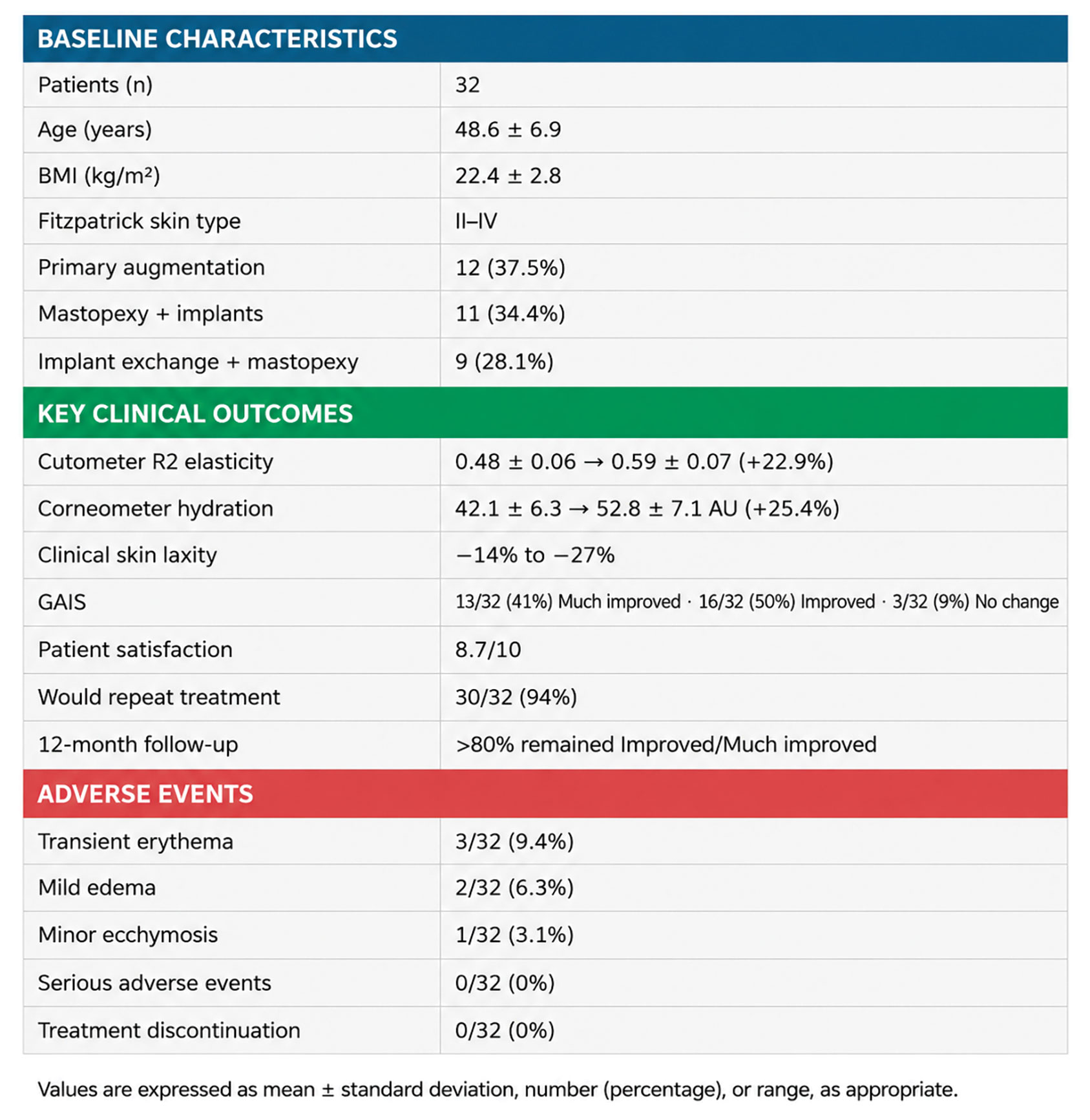
Table 4. Summary of baseline characteristics, key clinical outcomes, and adverse events in the study population. Values are reported as mean ± standard deviation, number of patients and percentage, or relative change from baseline, as appropriate. BMI, body mass index; GAIS, Global Aesthetic Improvement Scale; AU, arbitrary units.
Discussion
This study explores a regenerative framework for aesthetic breast surgery based on extracellular matrix modulation within the cervico-décolleté–peri-mammary continuum. Unlike conventional approaches focused on volumetric modification and implant positioning, this model considers the skin envelope as a biologically active system influencing surgical outcomes. The Dual-Layer ECM Reprogramming model distinguishes a biological ECM layer regulating fibroblast activity and matrix remodeling, and a biomechanical ECM layer governing hydration and viscoelastic behavior. This framework aligns with established principles of dermal mechanobiology, where fibroblast function is modulated by extracellular mechanical forces and matrix stiffness (1, 2). Extracellular matrix homeostasis is increasingly recognized as a central regulator of skin aging and tissue regeneration, with structural degradation of collagen and elastin fibers representing a key determinant of dermal aging (5, 6, 21, 22, 23, 24, 25, 26, 27, 28). Polynucleotides act as bio-inductive mediators promoting fibroblast activation and extracellular matrix turnover (Table 1). Emerging clinical evidence suggests improvements in dermal texture, elasticity, and hydration following PN-based therapies, likely mediated through purinergic signaling pathways and modulation of fibroblast metabolic activity (8, 9, 17, 18, 19, 20). Hybrid hyaluronic acid systems act as sustained bioremodelling agents rather than volumizing fillers, inducing prolonged CD44- and RHAMM-mediated fibroblast stimulation and ECM remodeling (Table 2). This mechanism supports a biologically driven improvement in dermal quality rather than simple volumetric correction (10, 11, 12, 26, 27, 28).
Taken together, polynucleotides and hybrid hyaluronic acid may represent a rational dual-phase ECM programming strategy (Graph 2), in which:
- PN acts as a biological activation phase, enhancing fibroblast activity and ECM synthesis
- Hybrid HA acts as a biomechanical stabilization phase, improving hydration and viscoelastic properties
This sequential approach is consistent with regenerative dermatology literature suggesting that staged extracellular matrix modulation may influence tissue quality over time (28). However, the present study was not designed to compare the sequential protocol with single-agent or untreated controls and therefore cannot establish superiority. The cervico-décolleté region is defined as a “Second Face,” reflecting its role as a high-visibility aesthetic unit subject to both intrinsic and extrinsic aging processes (Figures 2, 3, 4, 5). This supports a shift toward tissue-centered surgical planning, where dermal quality becomes a relevant preconditioning factor for optimal surgical outcomes rather than a passive variable. Limitations of this study include its single-center, non-randomized and uncontrolled design, limited sample size, and the heterogeneity of the surgical procedures performed. Primary augmentation mammoplasty, mastopexy with implants, and implant exchange combined with mastopexy impose different mechanical and morphological changes on the breast skin envelope and may independently influence skin tension, hydration, elasticity, laxity, and postoperative tissue behavior. Although procedures were performed by the same surgeon using standardized operative techniques and objective measurement tools were used, these measures reduce but do not eliminate confounding. Therefore, the observed postoperative changes cannot be attributed specifically or exclusively to the regenerative protocol. The clinical photographs likewise reflect the combined effects of surgery and perioperative skin treatment. The proposed Dual-Layer ECM Reprogramming model should consequently be interpreted as a conceptual, hypothesis-generating framework supported by preliminary clinical observations rather than as a validated mechanistic or efficacy model.
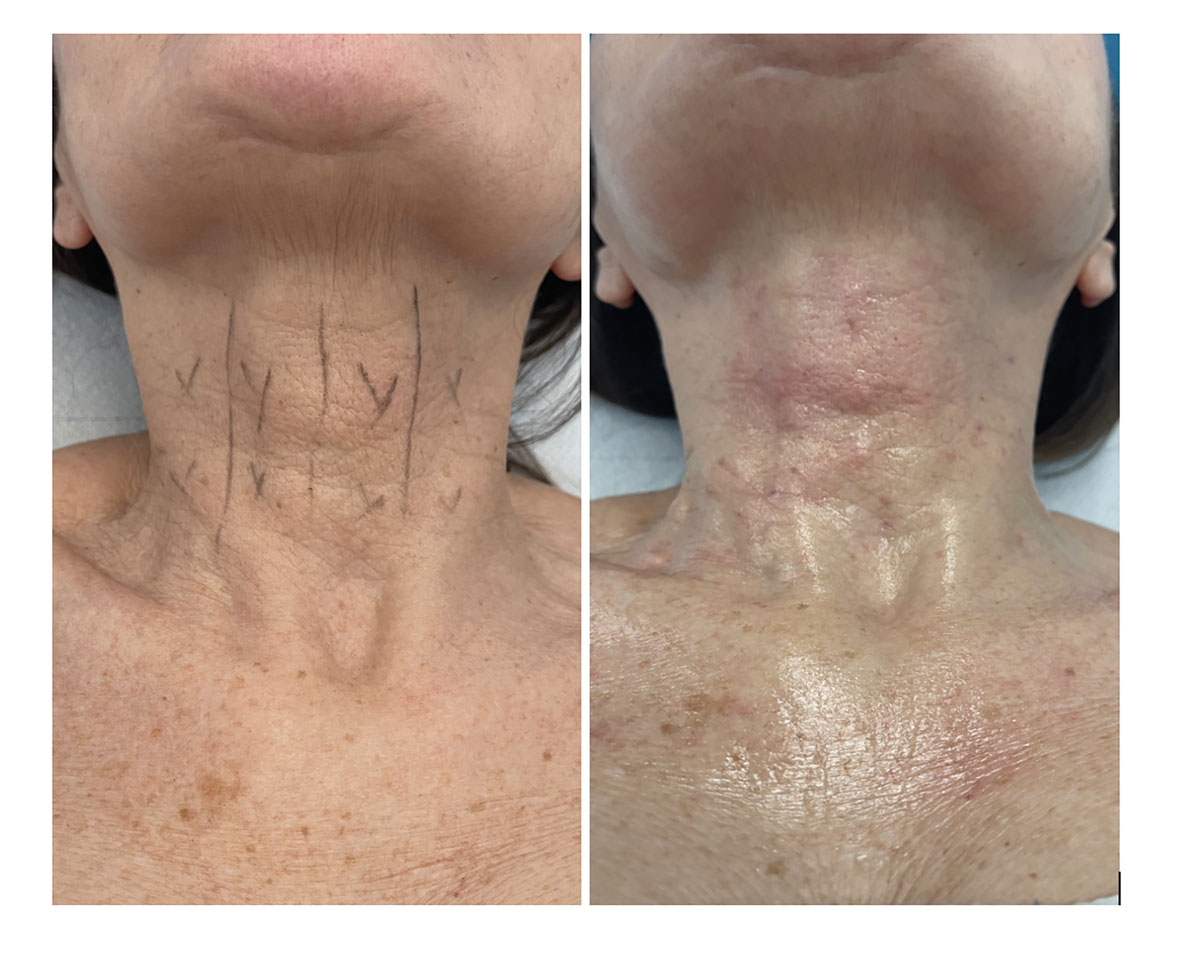
Figure 3. Clinical improvement of the cervico-décolleté region following the Dual-Layer ECM Reprogramming protocol. Representative standardized clinical photographs of the cervico-décolleté region obtained at baseline (left) and 12 months after completion of the treatment protocol (right) in a patient undergoing mastopexy with implants. Visual comparison shows a reduction in skin wrinkling and an overall improvement in skin surface appearance. Objective changes in skin elasticity and hydration were assessed separately using Cutometer® and Corneometer® measurements, as reported in the Results section.
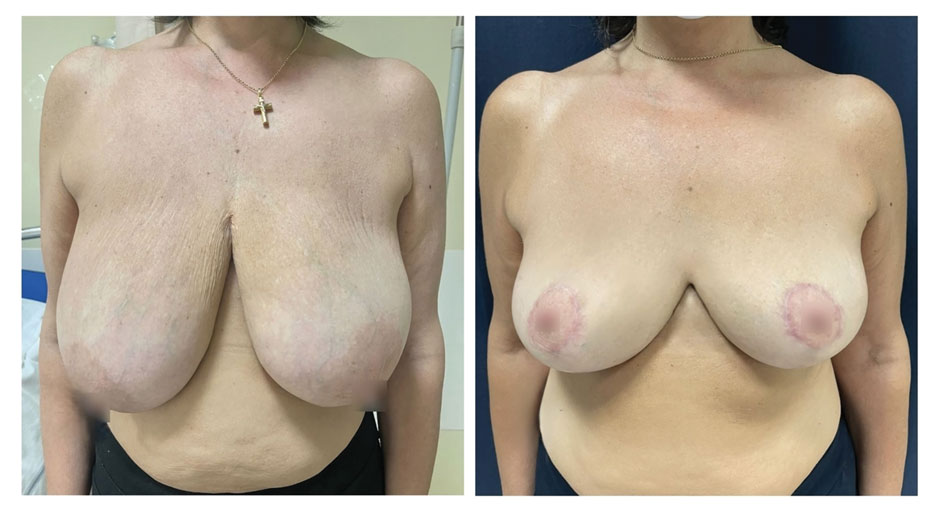
Figure 4. Peri-mammary skin quality enhancement after regenerative extracellular matrix modulation. Representative standardized clinical photographs of the breast and peri-mammary region obtained before treatment (left) and at the 12-month follow-up (right) in a patient undergoing implant exchange combined with mastopexy who received the sequential perioperative extracellular matrix modulation protocol. Clinical comparison demonstrates improved appearance of the peri-mammary skin envelope, with reduced skin wrinkling, improved surface texture, and a more homogeneous skin appearance. These qualitative observations are consistent with the objective instrumental measurements of skin elasticity and hydration and the clinical assessments reported in the Results section.
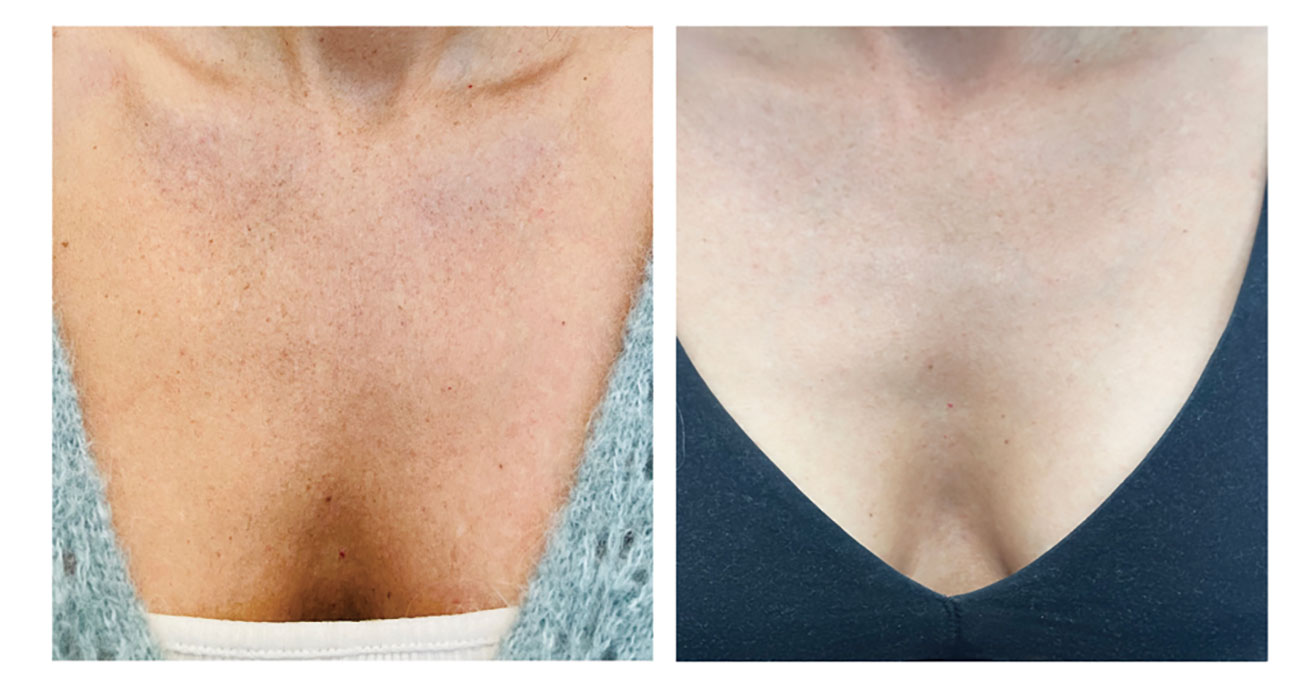
Figure 5. Long-term regenerative effects within the décolleté area after Dual-Layer ECM Reprogramming. Representative standardized clinical photographs of the décolleté region obtained before treatment (left) and at the 12-month follow-up (right) in a patient undergoing primary augmentation mammoplasty (with implants) who received the sequential perioperative extracellular matrix modulation protocol. Clinical comparison demonstrates a more homogeneous skin appearance, reduced visible photodamage and pigmentation irregularities, and an overall improvement in skin surface texture. These qualitative observations are consistent with the objective instrumental measurements and clinical assessments reported in the Results section.
Conclusions
This prospective exploratory pilot study provides preliminary observations on sequential perioperative extracellular matrix modulation using polynucleotides and hybrid hyaluronic acid in patients undergoing aesthetic breast surgery. Changes in peri-mammary and cervico-décolleté skin quality measures were observed during follow-up; however, because the cohort underwent three different surgical procedures and no untreated control group was included, these changes cannot be causally attributed to the regenerative protocol. The proposed Dual-Layer ECM Reprogramming model should therefore be regarded as a conceptual and hypothesis-generating framework rather than as evidence of definitive treatment efficacy or superiority. Further multicenter, prospective randomized controlled studies with larger and more homogeneous cohorts, procedure-specific stratification, standardized treatment protocols, and appropriate control groups are required to determine the independent contribution, reproducibility, and long-term clinical relevance of perioperative extracellular matrix modulation in aesthetic breast surgery.
Conflicts of interest
This study involved the clinical use of commercially available medical products manufactured by IBSA Derma and MayPharm Co., Ltd., which were independently selected by the investigators on the basis of the scientific rationale of the study and their established clinical experience. EnerMedica, the Italian distributor of the polynucleotide-based formulation manufactured by MayPharm Co., Ltd., had no role in the conception or design of the study, patient selection, data collection, statistical analysis, interpretation of the results, manuscript preparation, or the decision to submit the manuscript for publication. The authors declare that they have no financial, commercial, or personal relationships with the above-mentioned companies that could be perceived as potential conflicts of interest.
References and notes
- Discher DE, Janmey P, Wang YL. Tissue cells feel and respond to the stiffness of their substrate. Science. 2005;310(5751):1139–1143. https://www.science.org/doi/10.1126/science.1116995
- Humphrey JD, Dufresne ER, Schwartz MA. Mechanotransduction and extracellular matrix homeostasis. Nat Rev Mol Cell Biol. 2014;15(12):802–812. https://www.nature.com/articles/nrm3896
- Hinz B. The role of myofibroblasts in wound healing and fibrosis. Exp Eye Res. 2016;142:56-70. doi:10.1016/j.exer.2015.07.009. https://pubmed.ncbi.nlm.nih.gov/27939455/
- Wells RG, Discher DE. Matrix elasticity, cytoskeletal tension, and TGF-beta: the insoluble and soluble meet. Sci Signal. 2008;1(10):pe13. doi:10.1126/stke.110pe13. https://pmc.ncbi.nlm.nih.gov/articles/PMC2740328/
- Fisher GJ, Kang S, Varani J, Bata-Csorgo Z, Wan Y, Datta S, Voorhees JJ.
Mechanisms of photoaging and chronological skin aging.
Arch Dermatol. 2002;138(11):1462-1470. https://pubmed.ncbi.nlm.nih.gov/12437452/ - Quan T, Little E, Quan H, Qin Z, Voorhees JJ, Fisher GJ. Elevated matrix metalloproteinases and collagen fragmentation in photodamaged human skin: impact of altered extracellular matrix microenvironment on dermal fibroblast function. J Invest Dermatol. 2013;133(5):1362-6. doi:10.1038/jid.2012.509. https://linkinghub.elsevier.com/retrieve/pii/S0022202X15362370
- Fink B, Matts PJ, Röder S, Johnson R, Burquest M. Differences in visual perception of age and attractiveness of female facial and body skin. Int J Cosmet Sci. 2011;33(2):126-31. doi:10.1111/j.1468-2494.2010.00594.x https://onlinelibrary.wiley.com/doi/10.1111/j.1468-2494.2010.00594.x
- Galeano M, Bitto A, Altavilla D, et al. Polydeoxyribonucleotide stimulates angiogenesis and wound healing in the genetically diabetic mouse. Wound Repair Regen. 2008;16(2):208-217. https://onlinelibrary.wiley.com/doi/10.1111/j.1524-475X.2008.00361.x
- Lampridou S. et al. The effectiveness of polynucleotides in aesthetic medicine: a systematic review. J Cosmet Deermatol 2025; 24 (2):e16721. https://onlinelibrary.wiley.com/doi/10.1111/jocd.16721
- D’Agostino A, Stellavato A, Busico T, Papa A, Tirino V, Papaccio G, et al. In vitro analysis of the effects on wound healing of high- and low-molecular weight chains of hyaluronan and their hybrid H-HA/L-HA complexes. https://pmc.ncbi.nlm.nih.gov/articles/PMC4499215/
- Stellavato A, Corsuto L, D’Agostino A, La Gatta A, Diana P, Bernini P, et al. Hyaluronan Hybrid Cooperative Complexes as a Novel Frontier for Cellular Bioprocesses Re-Activation. PLoS One. 2016;11(10):e0163510. doi:10.1371/journal.pone.0163510. https://journals.plos.org/plosone/article?id=10.1371/journal.pone.0163510
- Cirillo N. The hyaluronan/CD44 axis: a double-edged sword in cancer. Int J Mol Sci. 2023;24(21):15812. doi:10.3390/ijms242115812. https://www.mdpi.com/1422-0067/24/21/15812
- Frantz C, Stewart KM, Weaver VM. The extracellular matrix at a glance. J Cell Sci. 2010;123(Pt 24):4195–4200. https://journals.biologists.com/jcs/article/123/24/4195/31378/The-extracellular-matrix-at-a-glance
- Quan T, Fisher GJ. Role of age-associated alterations of the dermal extracellular matrix microenvironment in human skin aging.A mini Review.Gerontology 2015;61(5):427–34. https://karger.com/ger/article-abstract/61/5/427/147882/Role-of-Age-Associated-Alterations-of-the-Dermal?redirectedFrom=fulltext
- Farage MA, Miller KW, Elsner P, Maibach HI. Intrinsic and extrinsic factors in skin ageing: a review. Int J Cosmet Sci. 2008;30(2):87–95. https://onlinelibrary.wiley.com/doi/10.1111/j.1468-2494.2007.00415.x
- Kablik J, Monheit GD, Yu L, Chang G, Gershkovich J. Comparative physical properties of hyaluronic acid dermal fillers. J Cosmet Dermatol. 2009;8(1):15–20. https://doi.org/10.1111/j.1524-4725.2008.01046.x
- Cavallini M, Bartoletti E, Maioli L, Massirone A, Palmieri IP, Papagni M, et al. Consensus report on the use of PN-HPT™ (polynucleotides highly purified technology) in aesthetic medicine. J Cosmet Dermatol. 2021;20(3):922–928. doi:10.1111/jocd.13679. https://onlinelibrary.wiley.com/doi/10.1111/jocd.13679
- Lee YJ, Kim HT, Lee YJ, et al. Comparison of polynucleotide and hyaluronic acid fillers in periocular rejuvenation. J Dermatolog Treat. 2022;33(1):254–260. doi:10.1080/09546634.2020.1748857. https://www.tandfonline.com/doi/full/10.1080/09546634.2020.1748857
- Park KY, Seok J, Rho NK, et al. Long-chain polynucleotide filler for skin rejuvenation. Dermatol Ther. 2016;29(1):37–40. doi:10.1111/dth.12299. https://onlinelibrary.wiley.com/doi/10.1111/dth.12299
- Kim JH, Kwon TR, Lee SE, et al. Comparative evaluation of HA-polynucleotide complex dermal filler. Sci Rep. 2020;10:5127. doi:10.1038/s41598-020-61952-w. https://www.nature.com/articles/s41598-020-61952-w
- Schwartz MA. Integrins and extracellular matrix in mechanotransduction. Cold Spring Harb Perspect Biol. 2010;2(12):a005066. doi:10.1101/cshperspect.a005066. https://cshperspectives.cshlp.org/content/2/12/a005066
- Baumann L. Skin ageing and its treatment. J Pathol. 2007;211(2):241–251. doi:10.1002/path.2098. https://pathsocjournals.onlinelibrary.wiley.com/doi/10.1002/path.2098
- Sherratt MJ. Tissue elasticity and the ageing elastic fibre. Age. 2009;31(4):305–325. doi:10.1007/s11357-009-9103-6 https://link.springer.com/article/10.1007/s11357-009-9103-6
- Varani J, Dame MK, Rittie L, et al. Decreased collagen production in chronologically aged skin. Am J Pathol. 2006;168(6):1861–1868. https://linkinghub.elsevier.com/retrieve/pii/S0002944010622055
- Quan T, Qin Z, Xia W, et al. Matrix-degrading metalloproteinases in photoaging. J Investig Dermatol Symp Proc. 2009;14(1):20–24. https://linkinghub.elsevier.com/retrieve/pii/S1087002415305050
- Rittié L, Fisher GJ. Natural and sun-induced aging of human skin. Cold Spring Harb Perspect Med. 2015;5(1):a015370. doi:10.1101/cshperspect.a015370. https://perspectivesinmedicine.cshlp.org/content/5/1/a015370
- Ganceviciene R, Liakou AI, Theodoridis A, Makrantonaki E, Zouboulis CC. Skin anti-aging strategies. Dermatoendocrinology. 2012;4(3):308–319. doi:10.4161/derm.22804. https://www.tandfonline.com/doi/full/10.4161/derm.22804
- Alan D Widgeroe et al. Extracellular matrix modulation: optimizing skin care and rejuvenation procedures. J Drugs Dermatol 2016; 15(4): s63-71. https://pubmed.ncbi.nlm.nih.gov/27050707/
- Tebbetts JB. A system for breast implant selection based on patient tissue characteristics and implant-soft tissue dynamics. Plast Reconstr Surg. 2002;109(4):1396-1409. https://www.ovid.com/jnls/plasreconsurg/abstract/00006534-200204010-00030~a-system-for-breast-implant-selection-based-on-patient?redirectionsource=fulltextview
- Adams WP Jr. The process of breast augmentation: four sequential steps for optimizing outcomes for patients. Plast Reconstr Surg. 2008;122(6):1892-1900. https://www.ovid.com/jnls/plasreconsurg/abstract/10.1097/prs.0b013e31818d20ec~the-process-of-breast-augmentation-four-sequential-steps-for?redirectionsource=fulltextview
- Sinno S, Hidalgo DA. Current Trends and Controversies in Breast Augmentation. Plast Reconstr Surg. 2016;137(4):1142-1150. https://journals.lww.com/plasreconsurg/abstract/10.1097/01.prs.0000481110.31939.e4~current-trends-and-controversies-in-breast-augmentation?redirectionsource=fulltextview
- Nava MB, et al. Decisional pathways in breast augmentation: how to improve outcomes. Gland Surg. 2017;6(2): 203-209. doi:10.21037/gs.2017.03.01. https://gs.amegroups.org/article/view/14470/14658

The Skin Microbiome in 2026: From Modulation to Measurable Biology

Gale & Cosm and DKSH: Building New Opportunities for the Future o...

Multifunctional Ingredients in Hair and Scalp Care: From Active Perfor...

PEER REVIEWED – Breaking the Cycle: Complementary Biological Pat...

PEER REVIEWED – Scalp First: Advanced Solutions for Barrier Prot...
Beyond Compliance: Steering Cosmetic Packaging Innovation Towards 2030

What Cross-Platform Consumer Data Can Tell Us About the Ingredients Sh...

When Beauty Routines Become Sleep Rituals