Introduction
Today’s formulators have a multitude of options for building successful formulations that cater to a diversity of consumers with varying demands, desires and priorities. One can reduce formulation complexity and accelerate development time by using multifunctional ingredients that can deliver several benefits simultaneously. Some multifunctionals offer more functions and are better at achieving the desired benefits than others. No other multifunctional has been quite as successful in demonstrating real, sought-after benefits at a power even surpassing single-function, dedicated ingredients than Hydroxyacetophenone. Since its discovery in 2013 by Symrise, the industry has learned a lot about the true capabilities of this cosmetic ingredient.4-Hydroxyacetophenone was introduced to the cosmetic market in 2013. This aromatic ketone, also known as p-Hydroxyacetophenone or piceol, occurs naturally in an herb native to Latin America, Lampaya hieronymi (1), in an edible fruit-bearing flowering plant of the rose family native to Alpine and arctic regions, cloudberry, and in Norway Spruce (2). In fact, Hydroxyacetophenone is GRAS listed. In its pure form, it’s a white to beige crystalline powder with water solubility up to its highest recommended use level, 1%. The ingredient is stable at least up to 100oC. In addition to the solid form of the neat material, Hydroxyacetophenone is also available in liquid preservative or multifunctional blends (3).
In this paper, we are reviewing the key aspects of this ingredient including its main cosmetic benefits, how to formulate with it, and its safety profile. We are also introducing new experimental data on its antioxidant properties via an in vitro ABTS assay and an ex vivo scalp study, as well as on its product protection enhancing performance.
Materials and Methods
ABTS assay:The assay principle is based on the reductive decolorization of the green colored cationic radical 2,2’-Azinobis (3-ethylbenzothiazoline 6-sulfonic acid) (ABTS·+) by antioxidants (4). The decolorization can be measured spectrophotometrically at 734 nm. Determination of the antioxidant capacity was performed in 96-well microplates from Nunc (Wiesbaden, Germany) and with the microplate reader “Spark” from Tecan (Crailsheim, Germany). The test sample was diluted to 5 different concentrations (0.0068%, 0.0034%, 0.00068%, 0.00028%, 0.00006%). 20 ml of each test sample, solvent (control), and 200 ml of the background control were pipetted into separate wells of a 96-well plate. 180 µl of the potassium persulfated oxidized ABTS+ – usage-solution was added to the wells with samples, blank control and mixed shortly and carefully without bubbles. The plate was incubated at 30oC for 10 min in the dark. Absorption was detected at 734 nm.
Ex vivo scalp study:
Test formulations were prepared with the compositions of Tables 1 and 2:
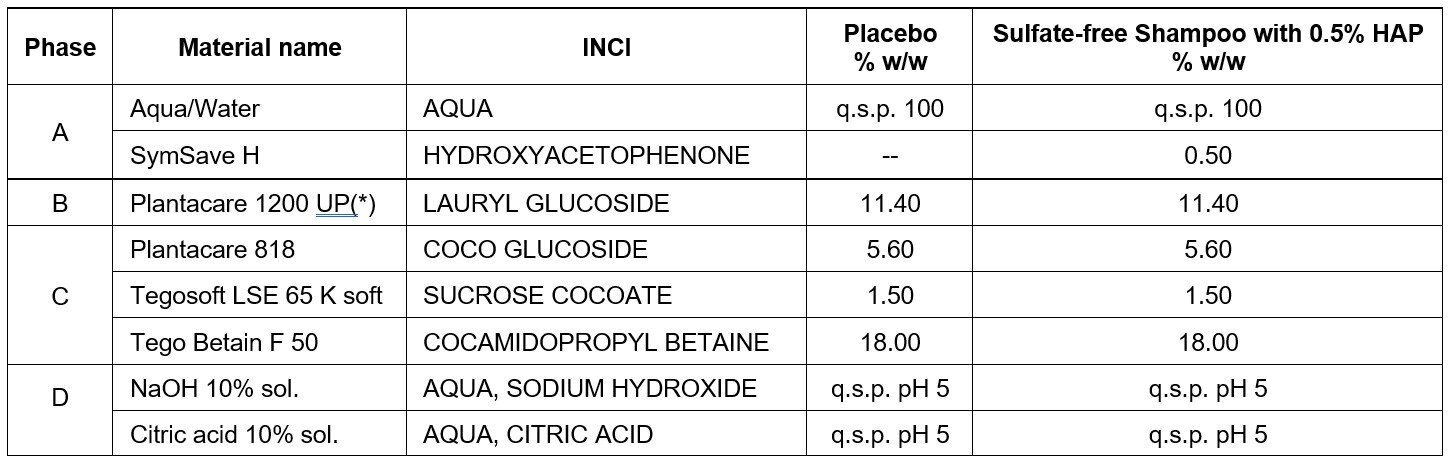
Table 1. Shampoo test formulations for ex vivo scalp study.
- Mix Phase A and stir until homogeneous
- Incorporate Phase B into A and stir until homogeneous
- Incorporate Phase C in the given order and mix until homogeneous
- Adjust the pH with Phase D to approx. pH 5.
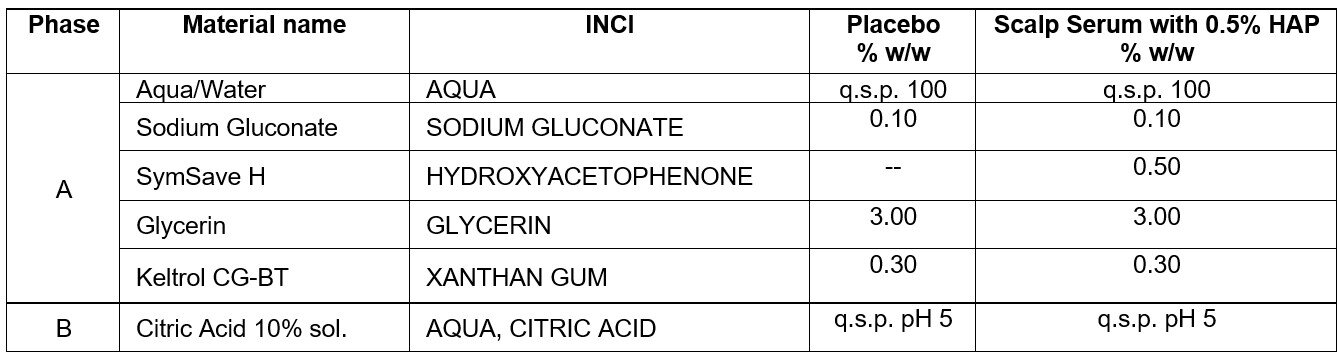
Table 2. Scalp serum test formulations for ex vivo scalp study.
- Mix all ingredients of phase A and heat up to 40°C (when HAP is used)
- Adjust to pH 5 using phase B
Scalp fragments were fractionated into pieces of approximately 1.5 cm2, placed in culture plates (Corning, USA) with specific culture medium and kept in an incubator at 37ºC in the presence of 5% CO2. In the scalp fragments were applied 25-30 mg/cm2 of the shampoo formulations with circular movements, kept in culture for 5 minutes and then rinsed with PBS 1x. After that the fragments were treated with 25-30 mg/cm2 of the serum formulations and were kept in cultures for 2 days.After incubation, the scalp specimens were subjected to a dose of 15 J/cm2 of ultraviolet (UV) radiation using UVA Cube 400, SOL 500 H1 filter and UV Meter devices (Honle UV America Inc., MA, USA).
An additional application was made. The fragments were kept for another 24 hours with the products evaluated and the fragments were collected for labeling and semi-quantification of free radical synthesis using a DCFH-DA probe. After the treatment period, the scalp fragments were embedded in Tissue-Tek® O.C.T.™ and then serial 12-micrometer histological sections were taken directly onto silanized slides with a cryostat (Leica, GER – CRYOCUT 1800). The sections were then washed with phosphate buffer (PB) and incubated for 1 minute with a solution (1:10,000 in phosphate buffer) of Dichloro-dihydro-fluorescein diacetate (DCFH-DA; Sigma, USA).
The fluorescence intensity parameter emitted by the oxidation of the DCFH-DA probe was analyzed under the microscope (OLYMPUS, JAP – BX53) using CellSens software (©2010 OLYMPUS CORPORATION).
After obtaining the images, the fluorescence intensity was quantified using ImageJ software (version 1.48, Arbitrary Units – A.U.).
The statistical evaluation used the ANOVA test to measure the variation in the results, comparing the data between the groups. The Bonferroni post-test was then applied, which reinforced and made the results presented in the ANOVA test even more precise. A 5% significance level was used.
Preservative Efficacy Test (PET):
The challenge tests were carried out in accordance with the European Pharmacopia (Ph. Eur.).
Results and Discussion
Antioxidant propertiesAntioxidants are ubiquitous ingredients in cosmetics, present in close to 40% of global personal care product launches (5). They are essential in maintaining the stability of certain unsaturated ingredients, such as some natural oils. They are also used to inhibit or control oxidation in the skin. Many products with anti-ageing claims also contain antioxidants. Their role in maintaining scalp health has also been recognized. Oxidative stress in the scalp may lead to seborrheic dermatitis (dandruff), scalp odor, or even hair loss (6). Antioxidant activity is one of the most useful benefits in cosmetics and is offered by only a very few multifunctionals, such as Hydroxyacetophenone and Tropolone. This property alone is a good reason to incorporate the ingredient in a formulation.
An in vitro ABTS assay demonstrated the strong antioxidant efficacy in comparison with Trolox (6-hydroxy-2,5,7,8-tetramethylchroman-2-Carboxylic Acid), a water-soluble analog of vitamin E commonly used in antioxidant capacity studies as a positive control (Figure 1).
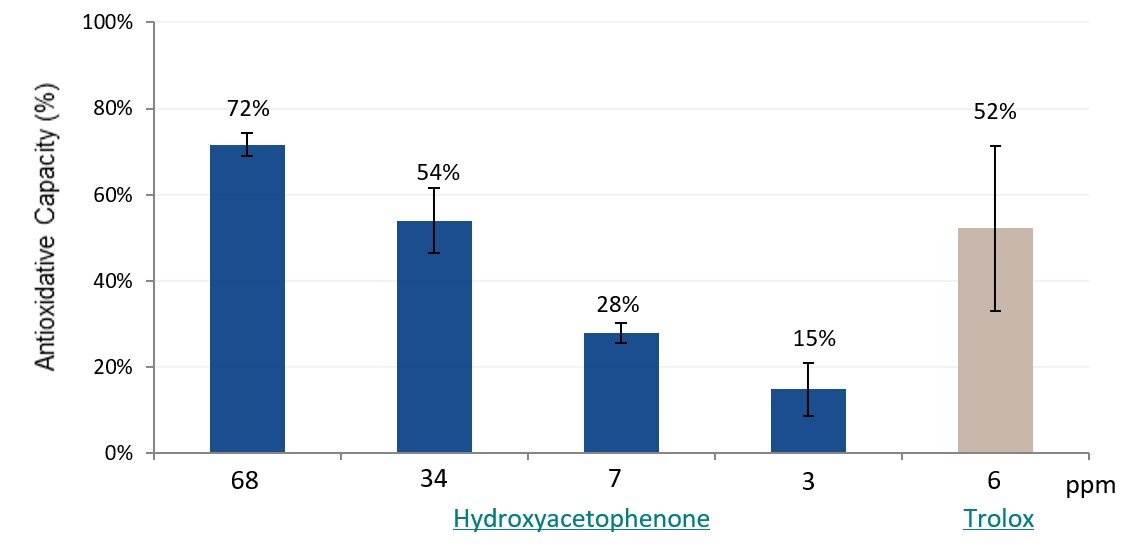
Figure 1. In vitro test results of the antioxidant activity of Hydroxyacetophenone in comparison with the positive control Trolox in an ABTS assay.
Antioxidant activity was further confirmed by an ex vivo study on scalp fragments obtained from surgical procedures, using UV exposure followed by semi-quantification of the oxidative stress via fluorescence measurement (Figure 2).
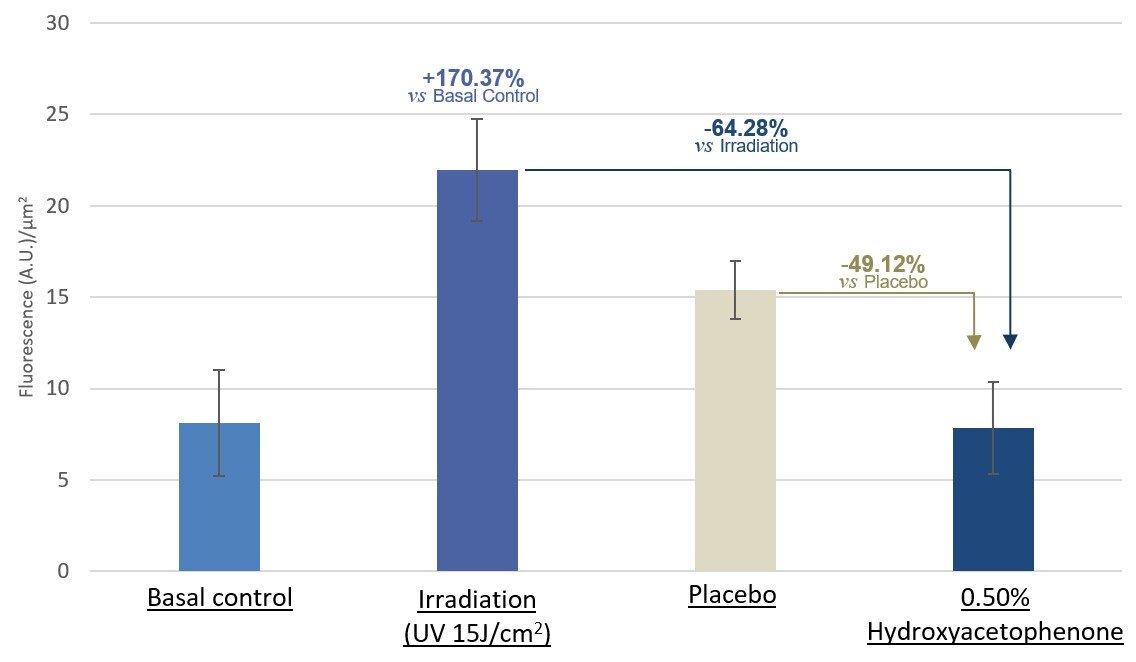
Figure 2. Ex vivo fluorescence data showing the reduction of oxidative stress on scalp fragments when treated with a scalp serum containing 0.50% Hydroxyacetophenone.
Soothing properties
4-Hydroxyacetophenone truly stands out among multifunctional ingredients with its unique properties. One such special feature is its soothing benefit through the inhibition of the COX-2 enzyme (1). This substance helps reduce skin irritation and is therefore an ideal ingredient in nearly any personal care formulation to provide a calming effect. Particularly considering the growing consumer demand for products with sensitive skin claims, such a benefit is more than a curiosity: it’s a need answered.
Product protection performance
The support of broad-spectrum performance elevates the status of Hydroxyacetophenone among multifunctionals. It’s one of the very few options available today to support antifungal protection. Robust performance is seen at low use levels in various formulation types when combined with antimicrobial ingredients. A multitude of combinations have been shown to demonstrate its versatility. A few examples are shown in Figures 3-5.
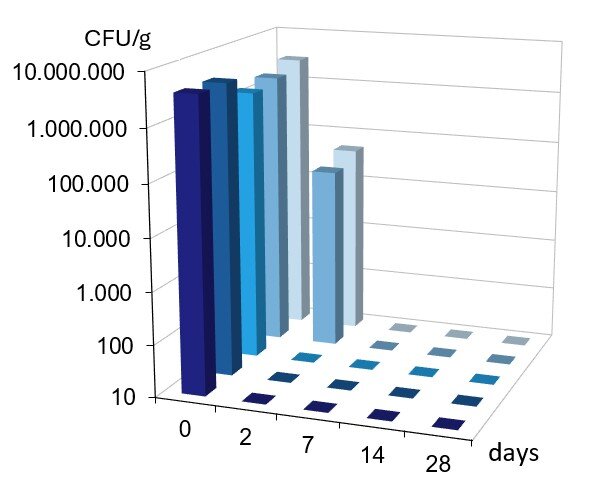
Figure 3. Challenge test results of 0.5% Hydroxyacetophenone + 0.5% Phenoxyethanol in O/W emulsion; E. coli, P. aeruginosa, S. aureus, C. albicans, A. brasiliensis
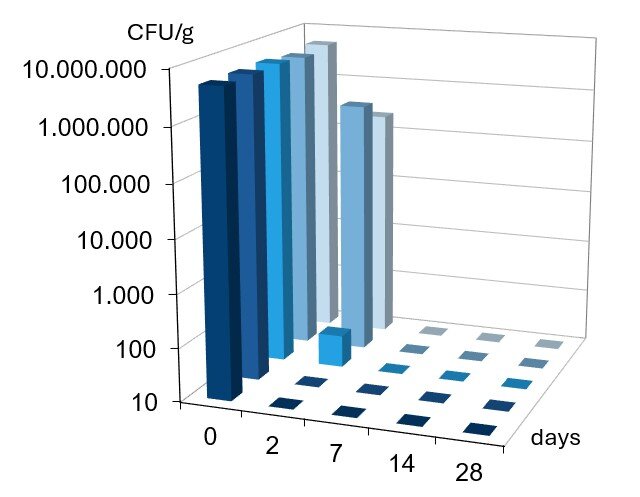
Figure 4. Challenge test results of 0.5% Hydroxyacetophenone + 0.1% o-Cymen-5-ol in O/W anionic emulsion; E. coli, P. aeruginosa, S. aureus, C. albicans, A. brasiliensis
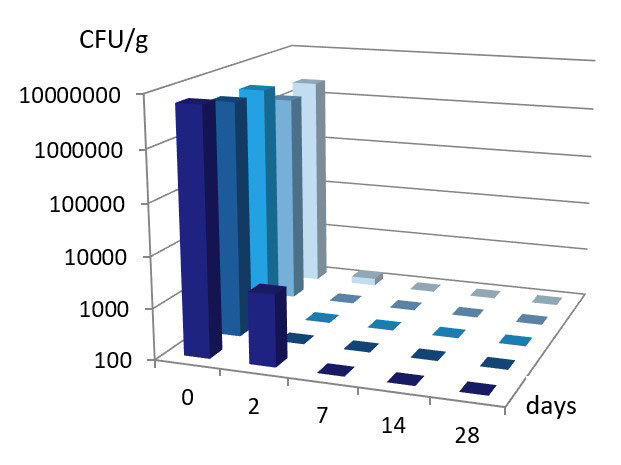
Figure 5. Challenge test results of 0.2% Hydroxyacetophenone + 0.5% Sodium Benzoate in a shampoo formulation; E. coli, P. aeruginosa, S. aureus, C. albicans, A. brasiliensis
Even though this solid, crystalline substance is soluble in water at its recommended use level of up to 1%, complete dissolution may take about an hour at room temperature, which can be accelerated by gently heating the water phase (50-60oC). Recently, a water-soluble liquid blend was developed to enhance the processability (6). It’s also soluble in a variety of cosmetic ingredients, such as Pentylene Glycol, Propylene Glycol, Dipropylene Glycol, Glycerin, Ethanol, Propanediol, or Caprylic/Capric Triglyceride. The ingredient has good compatibility with a wide variety of formulations. The ketone molecular structure ensures good stability in a broad pH range and at elevated temperatures.
Safety
The safety of 4-Hydroxyacetophenone has been thoroughly reviewed by both the Flavor and Extract Manufacturers Association (FEMA)(9) and the Cosmetic Ingredient Review (CIR) (10). Both authoritatively concluded that the ingredient is safe. In fact, the substance is listed as GRAS (Generally Regarded As Safe) (11). It’s important to note that Hydroxyacetophenone does not cause irritation or sensitization. On the contrary, this known soothing agent actually helps to reduce irritation and inflammation caused by other substances in the formulation by inhibiting cyclooxygenase-2 (COX-2), an enzyme involved in irritation and inflammation. In vivo microbiome studies coupled with gene sequencing have shown that the substance does not impact healthy skin microbiome (12).
4-Hydroxyacetophenone, as a ketone, is structurally very different from well-known aromatic cosmetic ingredients, such as parabens, Benzyl Alcohol, Methylbenzyl Alcohol, Phenethyl Alcohol, and Phenylpropanol, which are aromatic esters or aromatic alcohols, respectively. Consequently, many of its properties, including formulation or skin/hair benefits, antimicrobial performance, and safety profile are strikingly different, and any analogy could be misguided. Even the structurally similar acetophenone shows differences in many aspects.
Hydroxyacetophenone is a globally compliant cosmetic ingredient.
Conclusions
It’s not often that an ingredient pops up that delivers much sought-after properties all in one simple molecule. 4-Hydroxyacetophenone offers some of the most important personal care benefits alongside powerful support of broad-spectrum product protection. These features combined with an excellent safety profile represent a formulator’s wish list packed into a nature-identical GRAS ingredient.
- Alvarez, M.E., Rotelli, A.E., Pelzer, L.E., Saad, J.R., Giordano, O. Phytochemical study and anti-inflammatory properties of Lampaya hieronymi Schum. ex Moldenke. Il Farmaco 2000; 55(6-7):502-5.
- Metsämuuronen, S., Sirén, H. Bioactive phenolic compounds, metabolism and properties: a review on valuable chemical compounds in Scots pine and Norway spruce. Phytochem Rev. 2019;18(3):623-664.
- Symrise Shapes Water-soluble Liquid Variant of SymSave H: SymSave 5E, Cosmetics & Toiletries, May 7, 2022.
- Re R., Pellegrini N., Proteggente A., Pannala A., Yang M., Rice-Evans C. Antioxidant activity applying an improved ABTS radical cation decolorization assay. Free Radic. Biol. Med. 1999;26:1231–1237.
- Mintel
- Davis, MG, Piliang MP, Bergfeld WF, Caterino TL, Fisher BK, Sacha JP, Carr GJ, Moulton LT, Whittenbarger DJ, Schwartz JR. Scalp application of antioxidants improves scalp condition and reduces hair shedding in a 24-week randomized, double-blind, placebo-controlled clinical trial. Int J Cosmet Sci. 2021 Nov;43 Suppl 1:S14-S25.
- Koroskenyi, B., Salmen, J., Fontan Yanes, M. T. Multifunctionals Empowered – Part 1, SOFW Journal 12, 2023.
- Koroskenyi, B., Salmen, J., Fontan Yanes, M. T. Multifunctionals Empowered – Part 2, SOFW Journal 06, 2024.
- Adams, T.B., McGowen, M.M., Williams, M.C., Cohen, S.M., Feron, V.J., Goodman, J.I., Marnett, L.J., Munro, I.C., Portoghese, P.S., Smith, R.L., Waddell, W.J., The FEMA GRAS assessment of aromatic substituted secondary alcohols, ketones, and related esters used as flavor ingredients, Food and Chemical Toxicology 2007; 45: 171–201.
- Safety Assessment of Hydroxyacetophenone as Used in Cosmetics, Final Report October 11, 2022, https://www.cir-safety.org/
- FEMA No. 4330
- Exploring Microbiome-friendly Product Protection Solutions, Global Cosmetic Industry, January 22, 2021

Influences and Insights into Future Claims Technology and Testing

Gale & Cosm: Innovation in Made-In-Italy raw materials

Improving skin longevity by targeting biological aging causes

Longevity’s Groundbreaking AI Revolution: Reinventing Ingredient...

Clean Beauty: From Consumer Perception to Scientific Validation

Active ingredients in beauty – top trends

Redefining How We Measure Skin Longevity

PCS360: setting the Global Standard for Excellence in Cosmetic Ingredi...