Introduction
The cosmetics industry is undergoing a profound paradigm shift, moving away from the reactive concept of “anti-aging” to embrace a proactive and holistic approach focused on skin longevity. This evolution is driven by a societal aspiration for health and vitality throughout a longer lifespan, with the global population of people aged more than 60 years old and over projected to rise from 12% in 2015 to 22% by 2050 (1).Skin longevity is influenced by the twelve hallmarks of aging as defined by Carlos López-Otín (2) and addresses this demand by targeting the fundamental biological causes of aging at a cellular level, thereby moving beyond the superficial signs to address the mechanisms that govern skin health.At the core of this scientific understanding lies the critical concept of intercellular communication. This vital process, which is the exchange of signals between cells, occurs through various means, including signaling molecules and, crucially, interactions between the extracellular matrix (ECM) and cell surface receptors, such as integrins (3, 4). The skin’s structural integrity and its key mechanical properties, such as firmness and elasticity, are entirely dependent on this intricate communication network. The dermis, in particular, is a dense fibro-elastic tissue where fibroblasts, the main cell population, constantly interact with the extracellular matrix they produce, composed of collagenous and elastic fibers.With age, this intricate communication system becomes altered and impaired (5). The consequences are profound, leading to a reduction in signaling efficiency, widespread extracellular matrix degradation, and the induction of chronic inflammatory signals. This cascade of events culminates in a loss of tissue homeostasis, impaired cellular functions, and a progressive acceleration of aging at the tissue and organ level. As a direct consequence, the fibroblasts in the dermis lose their ability to adhere to the extracellular matrix and exert traction forces (6, 7), a phenomenon that ultimately manifests as the visible signs of skin aging, notably loss of firmness, sagging and wrinkles (8).A bio-inspired active ingredient has been developed to specifically address this altered intercellular communication. This approach draws on solutions that nature has developed to withstand mechanical stresses, such as gravity. The ingredient, an extract from the brown seaweed Himanthalia elongata, contains a specific phytochemical signature rich in glycolipids, mainly sulfoquinovosyldiacylglycerol (SQDG). These molecules have been identified as of interest to help maintain skin architecture and fight against skin sagging and loss of firmness by restoring the lost communication between fibroblasts and the extracellular matrix.
The science of altered intercellular communication: the role of mechanotransduction
The core function of fibroblasts is to produce and remodel the extracellular matrix, a scaffold that provides structural support and mechanical cues to the cells. The ability of fibroblasts to physically interact with this matrix is mediated by key proteins. One of the most critical is Integrin β1, an anchoring protein and an essential mechanoreceptor that physically links the extracellular matrix to the cell’s internal skeleton, known as the cytoskeleton. This cytoskeleton is a dynamic structure composed of proteins like α-SMA (alpha-smooth muscle actin), which is capable of lengthening and shrinking (9).The relationship between these components is central to skin firmness and the process of mechanotransduction. When the cytoskeleton, driven by α-SMA, contracts or expands, it pulls on the extracellular matrix via the Integrin β1 anchors. This physical tension is the very source of the skin’s tensile forces and is directly responsible for its firmness (10). However, as revealed in a study by Liu et al. (11), Integrin β1 expression is downregulated with aging, leading to a critical loss of anchoring. Consequently, the communication between the cytoskeleton and the extracellular matrix is disrupted. When the α-SMA moves, the extracellular matrix no longer responds effectively, resulting in a complete loss of tensile strength and, clinically, in sagging and a reduction in skin firmness.To address this loss of anchoring, a bio-inspired active ingredient was developed. Studies have shown that this ingredient, rich in glycolipids from the brown seaweed Himanthalia elongata, significantly improves dermal traction forces in aged fibroblasts. It works by “reconnecting” the cytoskeleton of aged cells to the extracellular matrix via integrins, thereby restoring the traction forces. This action is not limited to a single layer of the skin but extends to the key junctions that maintain its multi-layered architecture: the dermo-epidermal junction (DEJ), the dermis itself, and the dermo-hypodermal junction (DHJ). The efficacy was validated through a series of in vitro and in vivo studies that demonstrated its action at these multiple levels of the skin’s structure.
Dermal reinforcement: restoring mechanotransduction
The primary hypothesis was that the ingredient could restore the mechanotransduction machinery in the dermis. This was tested by measuring the expression of Integrin β1 and α-SMA, as well as the traction forces of fibroblasts.
- Methods: Human primary fibroblasts were cultured and treated with 0.01% of the active ingredient for 72 hours. Integrin β1 expression was measured by immunostaining, and α-SMA expression was measured by Western blot. The traction forces exerted by fibroblasts were then measured using an advanced technique called Atomic Force Microscopy (AFM) on old fibroblasts cultured in a collagen type I lattice. The AFM quantifies local mechanical properties by measuring the deflection of a microscale cantilever tip, which is then translated into Young’s modulus, a measure of the substrate’s resistance to elastic deformation.
- Results: The active ingredient significantly increased the expression of Integrin β1 by +14% and α-SMA by +61%. By stimulating these two key components, the ingredient reinforced the crucial link between the cytoskeleton and the extracellular matrix. The AFM measurement confirmed this effect at a functional level, showing that the active significantly increased the Young’s modulus of aged fibroblasts by +117% (from 1.93 kPa to 4.18 kPa) (figure 1), restoring their mechanical tension to a level comparable to that of young fibroblasts (3.87 kPa).
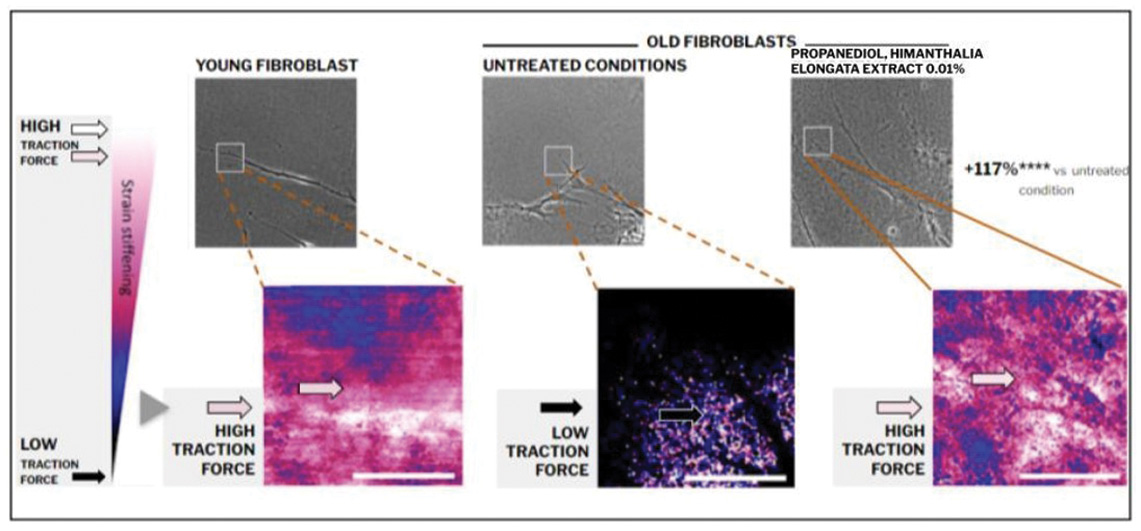
Figure 1. Propanediol – Himanthalia elongata extract increases traction force of fibroblasts. Arrows are situated around fibroblasts to indicate the traction force exerted by fibroblasts on the collagen type I matrix.This result demonstrates that the ingredient effectively restores the phenotype of a cell that is 28 years younger.
Reinforcing the dermo-epidermal and dermo-hypodermal junctions
The ingredient’s action was also proven at the interfaces that bind the skin’s layers together. The mechanism here is similar: restoring the expression of key structural proteins that decline with age (12, 13, 14). This multi-level action on overall skin mechanical properties from the DEJ to the DHJ is an innovative approach to combat skin sagging.
- Methods: To study the DEJ, old skin explants from donors aged 54 were topically treated with a 2% formula of the active ingredient, and the expression of collagen IV and collagen XVII was measured by immunofluorescence. To study the DHJ, the same kind of test was performed on skin explants, measuring the Young’s modulus with AFM. Additionally, a co-cultivation model of fibroblasts and adipocytes was used to evaluate the secretion of procollagen type I, to account for the crucial interconnexion between these cell types (15, 16, 17).
- Results: The active ingredient significantly increased the expression of collagen IV by +107% and collagen XVII by +12% at the DEJ level, restoring the structural integrity of this junction (figure 2).
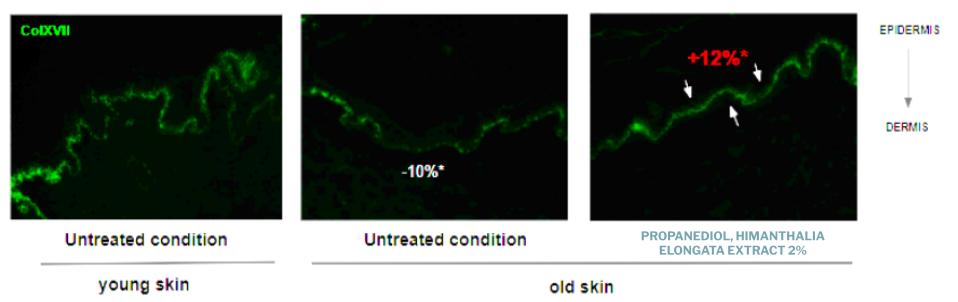
Figure 2. Representative images of collagen XVII. *p<0.05.Green: collagen XVII localized at the interface between epidermis and dermis.At the DHJ level, the ingredient significantly increased Young’s modulus by +69% (from 307 kPa to 518 kPa) in aged skin explants, restoring the stiffness of this interface (figure 3).
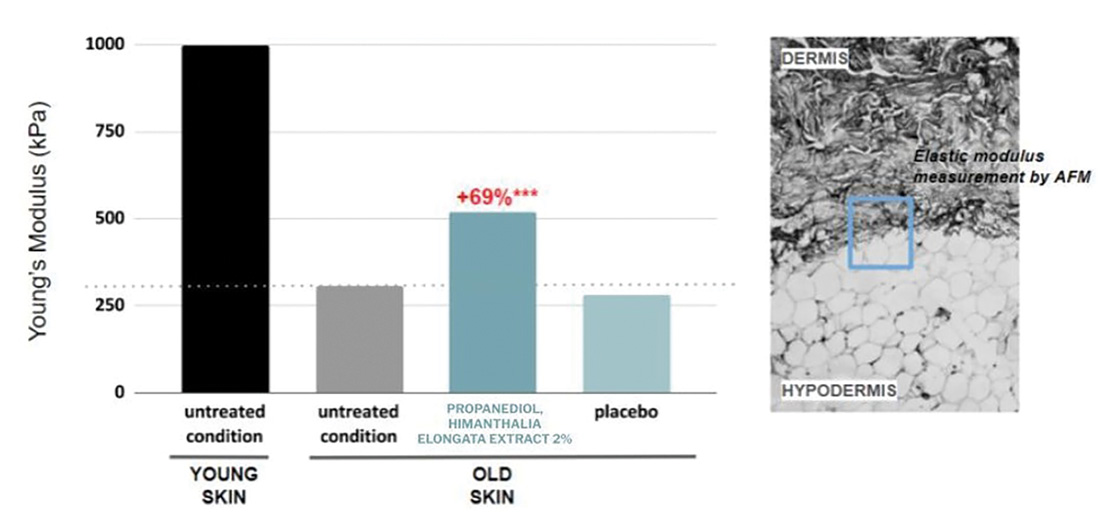
Figure 3. Propanediol – Himanthalia elongata extract increases Young’s modulus at the interface dermis/hypodermis.In the co-culture model, the ingredient was able to stimulate the secretion of type I procollagen by +42%, confirming its ability to increase collagen content in this key junction.
in vivo clinical confirmation
The multi-level actions of the active ingredient were validated in a randomized, double-blind, placebo-controlled study on 63 women aged 50 to 65 with visible nasogenian folds. After 28 days of twice-daily application, the formula containing the active ingredient significantly improved skin firmness compared to the placebo. A Dynaskin device was used to create a deformation on the cheek by pulsing air and measure the volume of the deformation. The skin treated with the active was found to be 8.5 times firmer, based on the area of skin deformation. The ingredient reduced the volume of air displaced by deformation by –13.5 mm², whereas the placebo showed only slight variation, increasing by 1.8 mm² (figures 4 & 5).
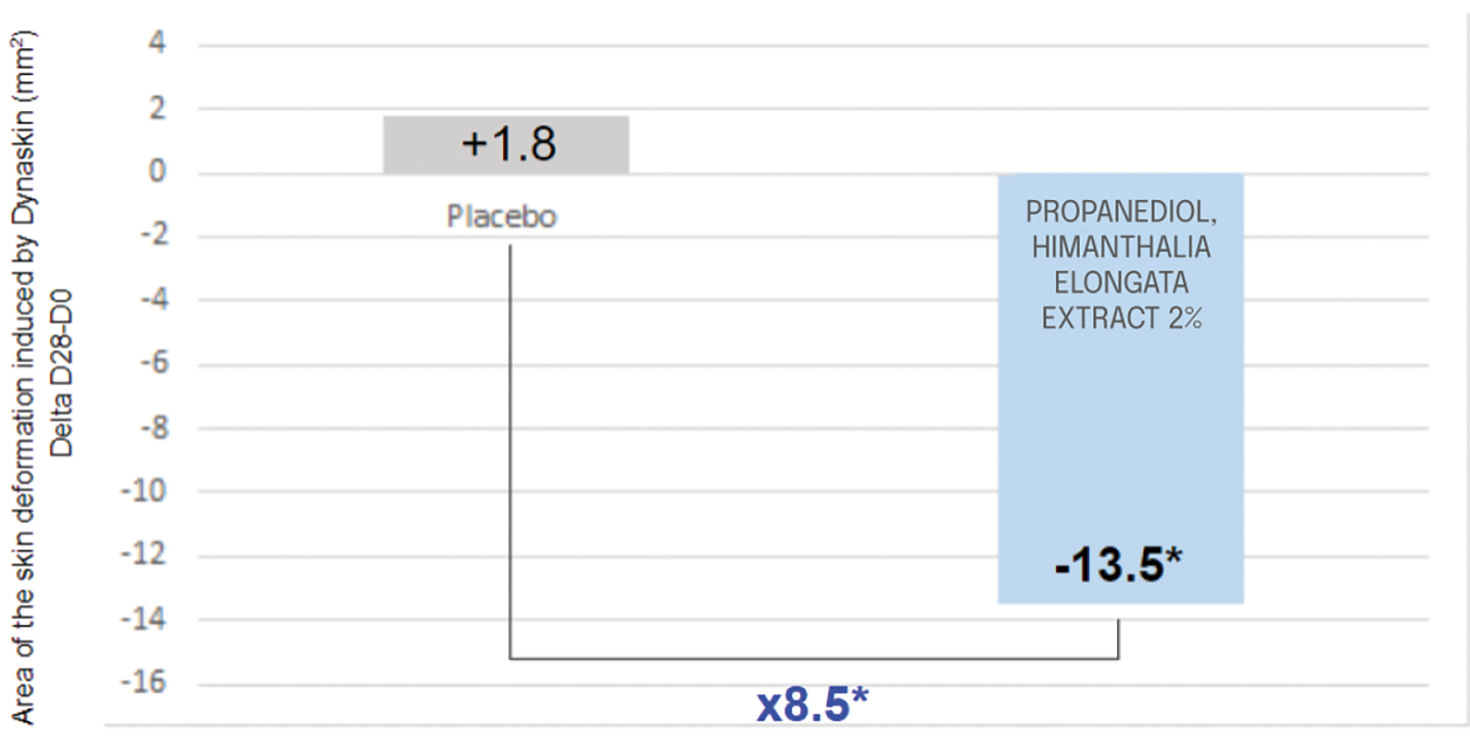
Figure 4. Variation D28-D0 of the skin area deformation induced by Dynaskin (mm²)
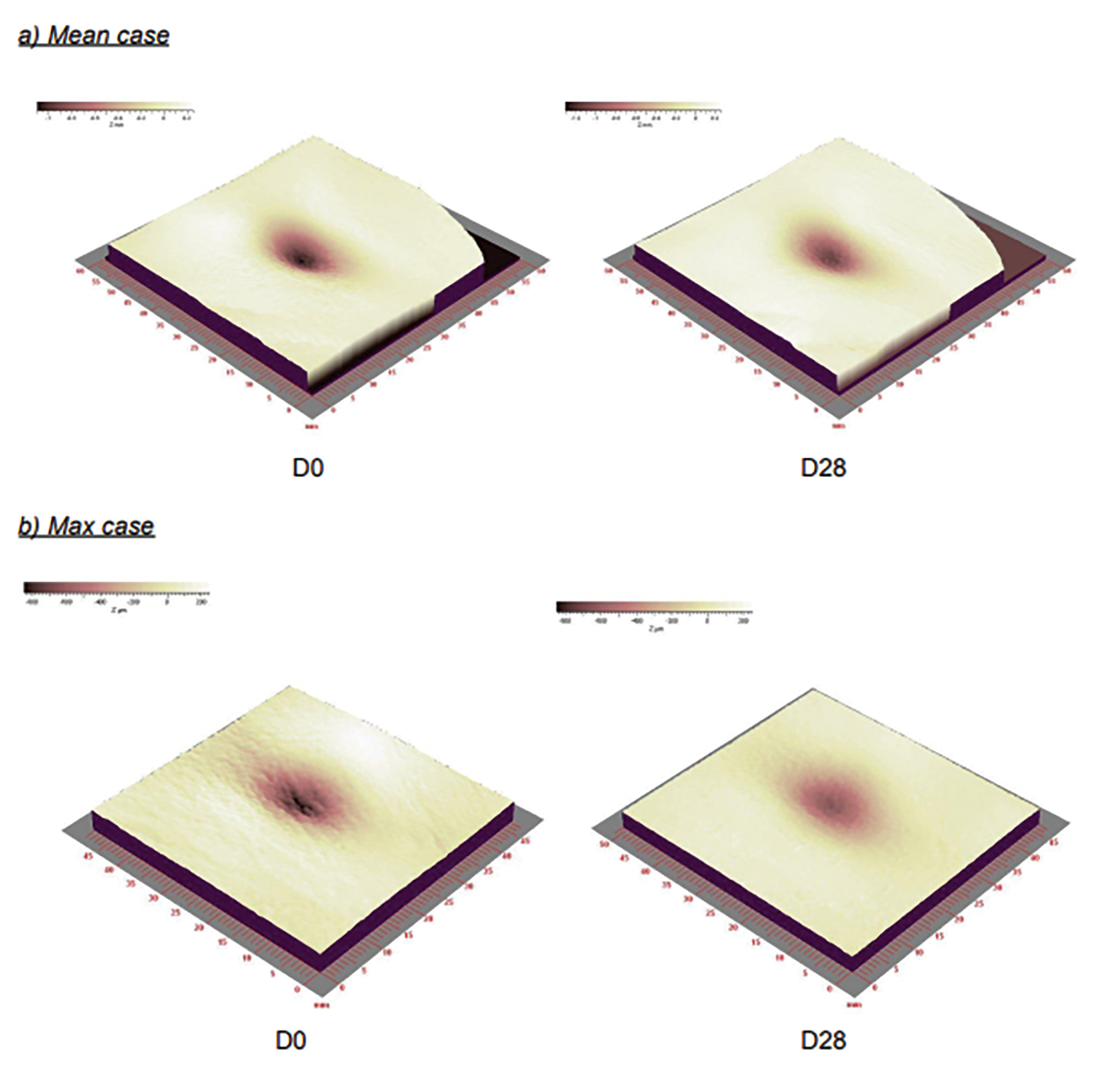
Figure 5. Illustration of 3D acquisition with Dynaskin at D0 and after 28 days of application of Propanediol – Himanthalia elongata extract 2%. a) Mean case volunteer, D28 – D0 = – 10.1 mm2 . b) Max case volunteer, D28-D0 = – 62.5 mm2Additionally, the ingredient reduced the surface area of nasogenian folds by –7.1%, compared to the placebo, as measured by fringe projection (figures 6 & 7).
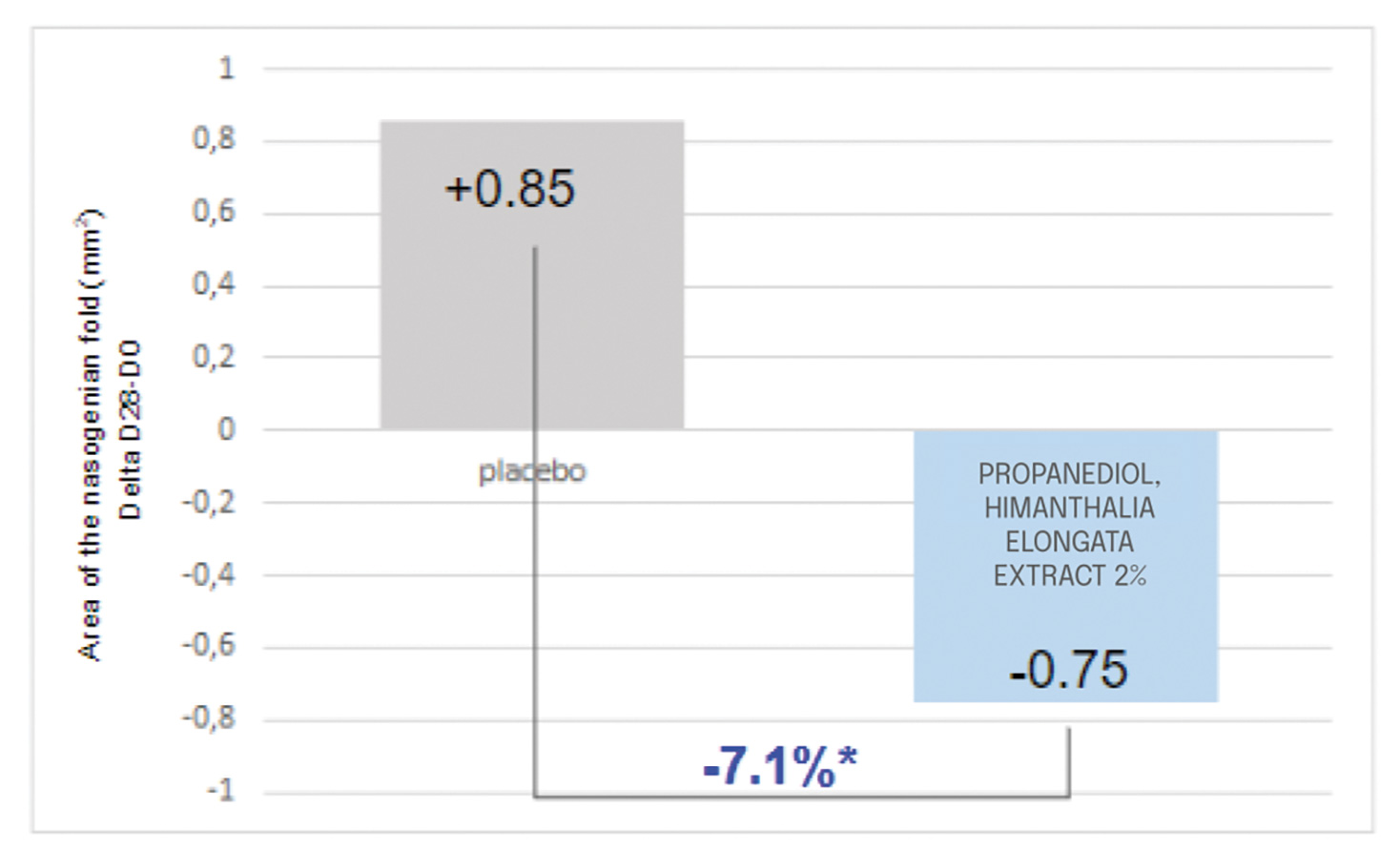
Figure 6. Variation D28-D0 of the nasogenian fold area measured by fringe projection
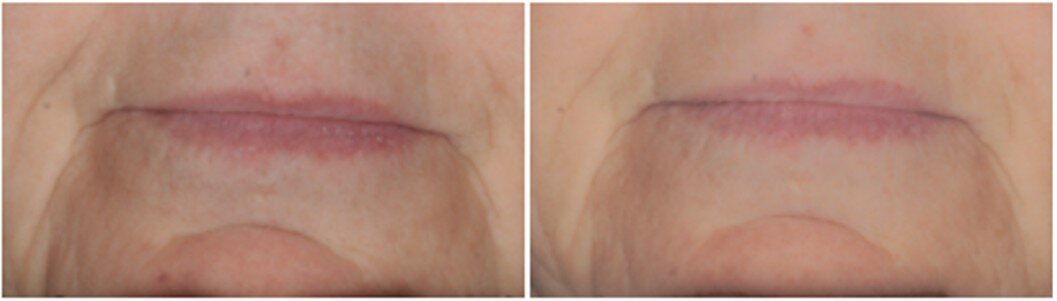
Figure 7. Illustration of the reduction of the area of the nasogenian fold area after 28 days of applicationThese results provide robust, clinical confirmation that restored cellular communication visibly and macroscopically affects skin firmness and sagging.
Conclusion
The active ingredient, Propanediol – Himanthalia elongata extract, successfully targets a key biological hallmark of aging, altered intercellular communication, by providing a multi-level action on the skin’s mechanical properties. It reinforces the dermo-epidermal junction by stimulating collagens IV and XVII, boosts the dermal mechanotransduction machinery by increasing integrin β1 and α-SMA expression, and increases the rigidity and collagen content of the dermo-hypodermal junction. These combined actions at the cellular and tissue levels directly translate to visible clinical benefits, including improved skin firmness and a reduction in the area of nasogenian folds. This comprehensive approach to skin longevity, supported by robust scientific data, positions this bio-inspired ingredient as a powerful and effective solution to promote long-term healthy skin.

Longevity’s Groundbreaking AI Revolution: Reinventing Ingredient...

Influences and Insights into Future Claims Technology and Testing

Gale & Cosm: Innovation in Made-In-Italy raw materials

Clean Beauty: From Consumer Perception to Scientific Validation

Active ingredients in beauty – top trends

Redefining How We Measure Skin Longevity

PCS360: setting the Global Standard for Excellence in Cosmetic Ingredi...

What are the main innovations driving the future of evaluation in the...