SELİN ERGUN*, GULSAH ACAR, OKAN YUZUAK, MEHMET SERHAN BODUROGLU
Hayat Kimya R&D Center Kocaeli, Turkey
*Corresponding author
Test Procedure for Washing:
- Cotton program 40°C; 1h:49 min 1000 rpm.
- Fuzzly logic control disabled Miele W 5872 Edition 111 washing machine
- 2,5 kg Cotton and polyester ballast
- 65 mL liquid detergent
- 150 ppm CaCO3 (15 french hardness)
- 19 stain set with 5×5 cm
- 4 repetition
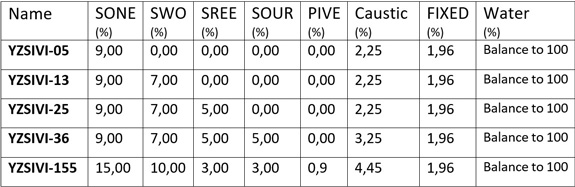
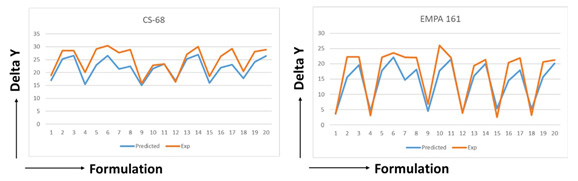
The stains indicated above are standard stains produced by test materials firm like CFT and WFK. The CIELAB system was used to do a colorimetric evaluation of the stain removal performance. The colorimetric measurement’s Y values are the response that was examined for the designed formula. Five raw components were employed in various proportions during the formulation design process, while ingredients that had no effect on performance were maintained constant.
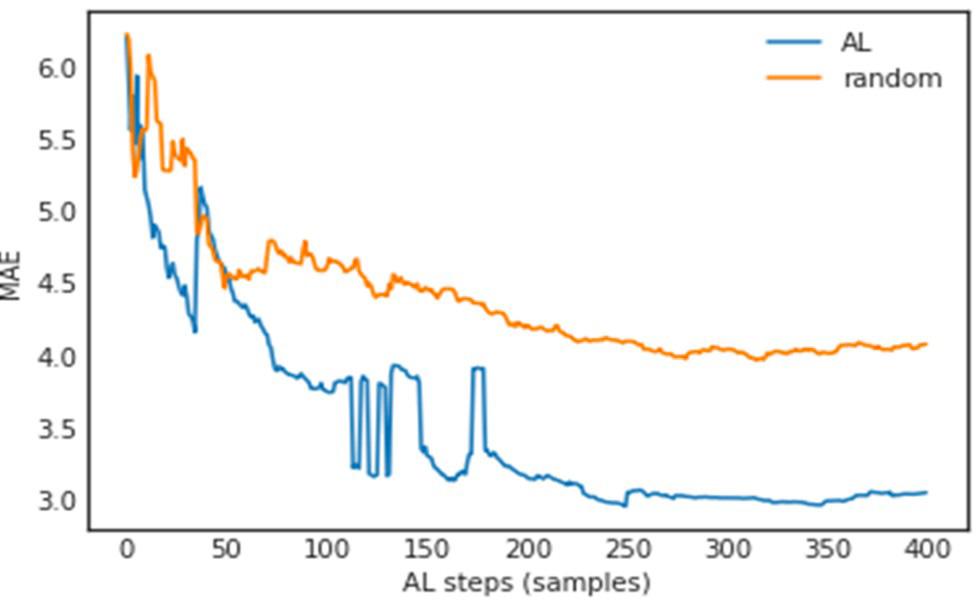
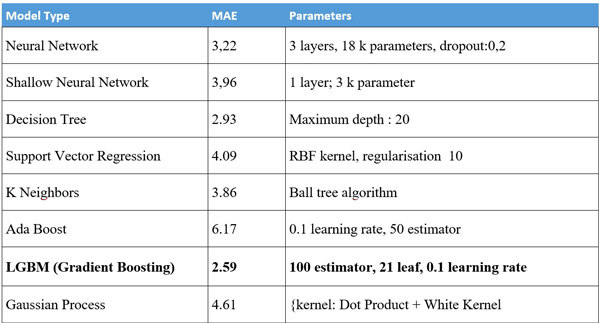
According to the complexity of the dataset created, different “machine learning models” were tried in the literature and Mean Absolute Error (MAE) values were taken into account for the selection of appropriate model(s). Dataset enlargement studies continued in order to improve the prediction ability of the algorithm by selecting appropriate models.
Several “machine learning models” were tested based on the complexity of the dataset produced, and the Mean Absolute Error (MAE) values were taken into consideration while choosing the model or models. By choosing the right models, dataset enlargement studies were carried out to enhance the algorithm’s prediction capability. In other words, the algorithm was requesting studies to enrich the data points that it considered “weak/insufficient”. This situation continued for a while, because the studies were done gradually, as the demands could change as new data was fed to the model. During data enrichment, improvements were made to the model structure. Two hundred and sixty different detergent formulas were designed for this study. The total number of experimental runs was 1040 (260 formulations x 4 repetitions), with 4 repetitions of the experiments performed for each of these formulations. Each of these runs yielded 19 data points to be evaluated, giving our model a rich feature set of 19760 data points.
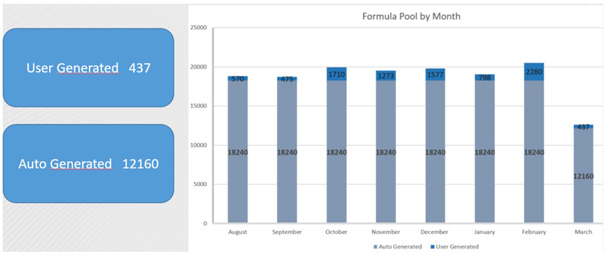
The server went online at August 2024, as shown in the Figure 3 auto-generated “estimations” of the formulas allow user to scan formulas from larger library. To create the model, 19760 data points were gathered, as previously mentioned. Figure 3 displays the number of anticipated data points by month. Based on the user-specified parameters (ranges and increments for the five parameters), the model itself makes predictions. As mentioned before; one of the aim of this server is to scan through estimation and to find the possible formula for the given performance with intended cost. The addition of real-time pricing data for every raw ingredient in the formulation improves the predicted output even further. Through this integration, a useful database of reasonably priced and capable applicants is produced, which may be used to expedite further research and development initiatives. It would be useful to provide an example in order to highlight the “benefit” of this formula pool. One of the main problems in FMCG is unexpected (unforeseen) raw material crises brought on by cost or shortage. And it is essential to manage the issue with the least amount of harm possible without sacrificing the product’s ability to remove stains, the “filter” option on the formula pool allows user for a thorough cost-benefit analysis of suggested formulations, facilitating cost and performance optimization.
- Biranje, S. S.; Nathany, A.; Mehra, N; Adivarekar , R.; Optimisation of Detergent Ingredients for Stain Removal Using Statistical Modelling; J. Surfact Deterg. 2015, 18, 949-956 DOI 10.1007/s11743-015-1722-6 https://aocs.onlinelibrary.wiley.com/doi/10.1007/s11743-015-1722-6
- Simeone, A.; Woolleey, E.; Escrig, J.; Watson, N. J.; Intelligent Industrial Cleaning: A Multi-Sensor Approach Utilising Machine Learning-Based Regression; Sensors 2020, 20, 3642 doi:10.3390/s20133642 https://www.mdpi.com/1424-8220/20/13/3642
- Jangir, K.; Gour, A; Suniya, N. K.; Meena, S. K.; Parihar K.; Multi-objective optimization of detergent pre-formulations using machine learning techniques; Journal of Indian Chemical Society 2023, 100 https://doi.org/10.1016/j.jics.2022.100815 https://www.sciencedirect.com/science/article/abs/pii/S0019452222004770?via%3Dihub
- A.I.S.E. Laundry Detergent Testing Guidelines https://aise.eu/priorities/product-stewardship/detergents/detergent-test-protocol/
- Acar, G., Yuzuak, O., & Vatansever, E. C. Laundry Detergent Performance Tests by Six Sigma-Based Sustainable Approach [Poster presentation], Sepawa Congress 2023.

Now and Beyond: The Top Trends Shaping the Laundry and Cleaning Market

From Stains to Sustainability: a new era for fabric care?
The Rise of Upcycled Ingredients in Cosmetics: A Sustainable Innovatio...

High Active Alpha Olefin Sulfonate

More than anti-ageing: the retinol-alternative Chios mastic as a compr...

Bakuchiol: A Comprehensive Review of Its Anti-Aging, Antioxidant, and...
A word with Marine Pasquier – Seppic