


Lesignano de’ Bagni (Parma), Italy, 3 September 2026 – Verel presented at the GA 2026 congress in Reims three studies that begin at the same place: a biomass the agri-food industry treats as waste, and which Verel valorises as a functional raw material.
Among these, Verel presented in particular SAFFROSENSE, a proprietary skincare active obtained from the floral biomass of Crocus sativus L.
The presentation, delivered on 2 September within the session dedicated to functional foods, cosmetics and nutraceuticals, retraced the ingredient’s full development path, from chemical characterisation to instrumental clinical assessment.
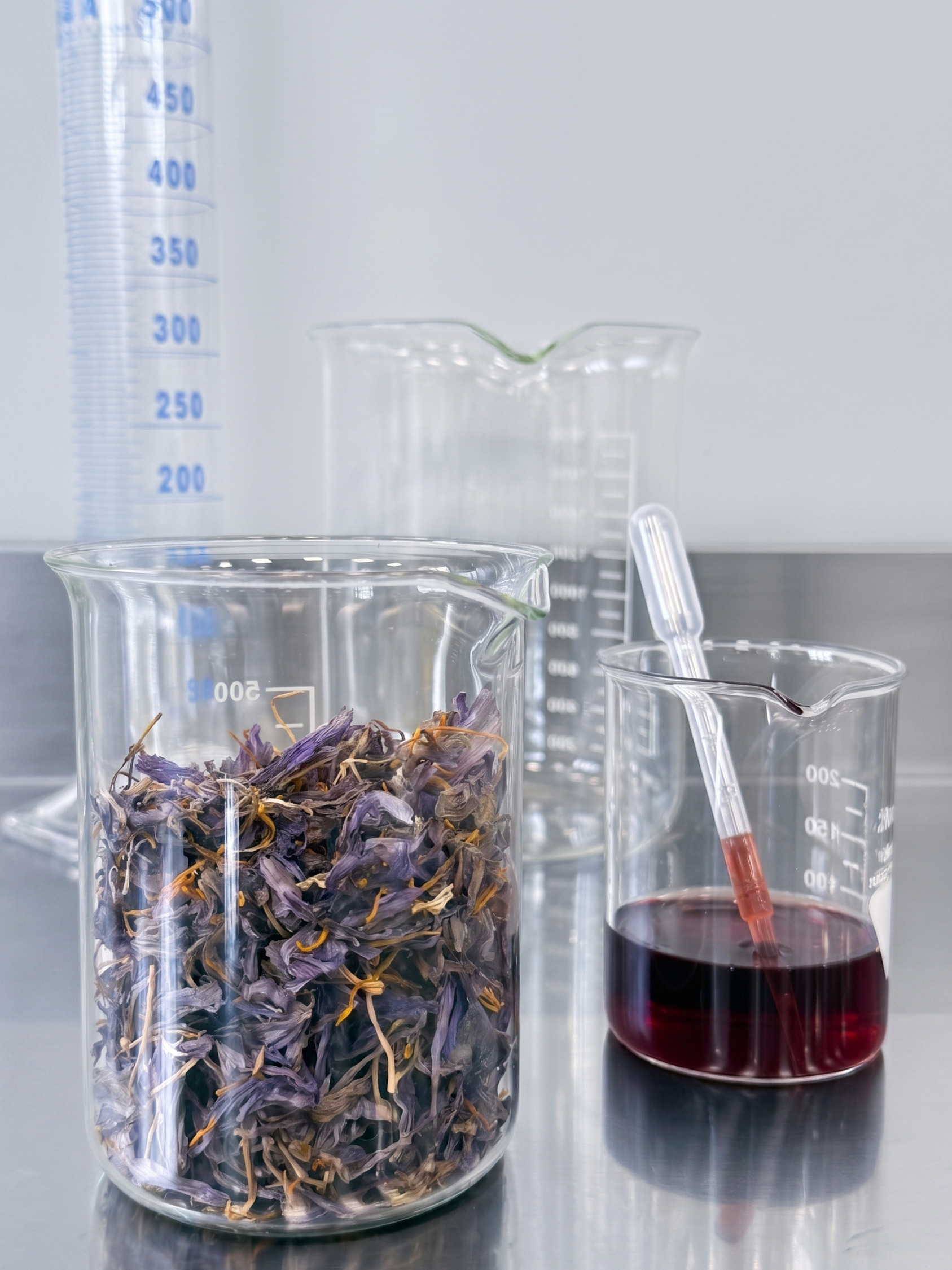
The starting point: the 90% of the flower that is discarded today
Every Crocus sativus L. flower yields three stigmas. Once these are separated, the residual floral biomass accounts for 90-92% of the total harvested mass and currently constitutes an agricultural by-product, despite its content of polyphenols, flavonoids and anthocyanins. SAFFROSENSE is derived from the valorisation of this fraction through gentle drying followed by cold mechanical extraction with fluid-dynamic treatment of the botanical matrix.
Three levels of evidence
The characterisation of the ingredient was carried out across three levels: chemical and analytical characterisation, in vitro study and clinical study. The characterisation and the in vitro testing were made possible through the collaboration with the Department of Food and Drug Sciences at the University of Parma, Verel’s scientific partner.
- Chemical and antioxidant characterisation: the ABTS assay recorded 93% free-radical inhibition, while Folin–Ciocalteu determination quantified a total polyphenol content of 5.3 mg GAE/mL.
- Cellular antioxidant protection: an assay on human fibroblasts under UV-induced oxidative stress assessed the extract’s capacity to protect cells at intracellular level.
- Cell viability and metabolic activity: the in vitro test showed an increase in fibroblast metabolic activity, up 5.7% at 2% concentration and 11.3% at 3% concentration.
Clinical study results
The clinical study was conducted by an external laboratory on 30 healthy female volunteers aged 40 to 65, selected for loss of skin elasticity and firmness. The sample was divided into two groups of 15 subjects, one on the active product and one on placebo. The protocol involved twice-daily application, over 28 days, of a serum containing 2% SAFFROSENSE, with instrumental assessments at baseline and at the end of the use period.
Measurements, performed using non-invasive bioengineering techniques, recorded:
- an improvement in skin firmness up to 8 times greater than placebo, measured as a reduction in the R0 parameter with Cutometer® MPA 580;
- an improvement in overall skin elasticity over 2 times greater than placebo, measured on the R2 parameter;
- a 15.5% reduction in wrinkle depth in the periorbital area, assessed by three-dimensional profilometry with the PrimosCR SF® system.
All differences reported were statistically significant versus placebo.
Four hair care extracts for Davines Group, from certified supply chains
Verel also presented in Reims two projects covering four extracts for hair care applications, developed for Davines Group in collaboration with the Department of Food and Drug Sciences at the University of Parma.
The first study addresses the conversion of three Italian food-industry by-products into cosmetic ingredients: bitter orange peel from Avola, clementine processing residues from Limbadi and apricot by-products from Larino, all sourced from Regenerative Organic Certified farms.
The characterisation carried out with the university guided the formulation destination of each
extract:
- bitter orange extract: high free-radical scavenging capacity in the ABTS assay, expressed as Trolox equivalents per gram of dry extract, and high total polyphenol content determined by the Folin–Ciocalteu method as gallic acid equivalents. Intended for moisturising after-sun treaments, with protection of the hair fibre against oxidative stress;
- clementine extract: a comparable antioxidant and polyphenolic profile, used as a volumising ingredient for fine hair. In the finished product containing it, a 16.6% increase in hair volume was measured*;
- apricot extract: a profile rich in polysaccharides and sugars, quantified by the phenol-sulfuric acid method as glucose equivalents, intended for moisturising treatments for dry hair. In the finished product containing it, hair hydration was measured up to 11.8 times higher*.
*Performance data on the finished products were measured by Davines Group
The second study presents the untargeted metabolomic characterisation of Trifolium pratense flowers, leaves and aerial parts from a Regenerative Organic Certified supply chain. The analysis identified and quantified 151 secondary metabolites, revealing distinct phytochemical profiles across plant organs: leaves are rich in isoflavones and flavonol derivatives, flowers show a broader polyphenolic profile rich in flavonoid glycosides, while aerial parts reflect an integrated profile.
The isoflavone fraction (biochanin A, genistein and daidzein), the class the literature associates with the anti-hair-loss potential of red clover, remains qualitatively comparable across the fractions analysed. The finding provides a scientific rationale for using whole aerial parts instead of separated flowers and leaves, reducing processing steps and biomass left unused.
Moving upstream: from raw material to finished product
Verel covers the entire chain that brings an agricultural raw material into a finished product. Biomass selection, design, transformation and production of the active, analytical characterisation, in vitro study, clinical validation, formulation development, industrialisation, manufacturing: steps that in most cosmetic projects belong to four or five different suppliers.
The engine of that chain is the research and development laboratory. Five hundred square metres where the proprietary actives that go into our clients’ formulations are studied, developed and produced. SAFFROSENSE was created there, like the other functional actives in our range: each reaches the market with its own dossier, from extraction method to efficacy data.
For a brand the difference is concrete. An ingredient bought off the shelf is available to whoever is developing the competing line too. An active built upstream, on a chosen supply chain and with data generated for the project, stays an advantage for the company that commissioned it.


