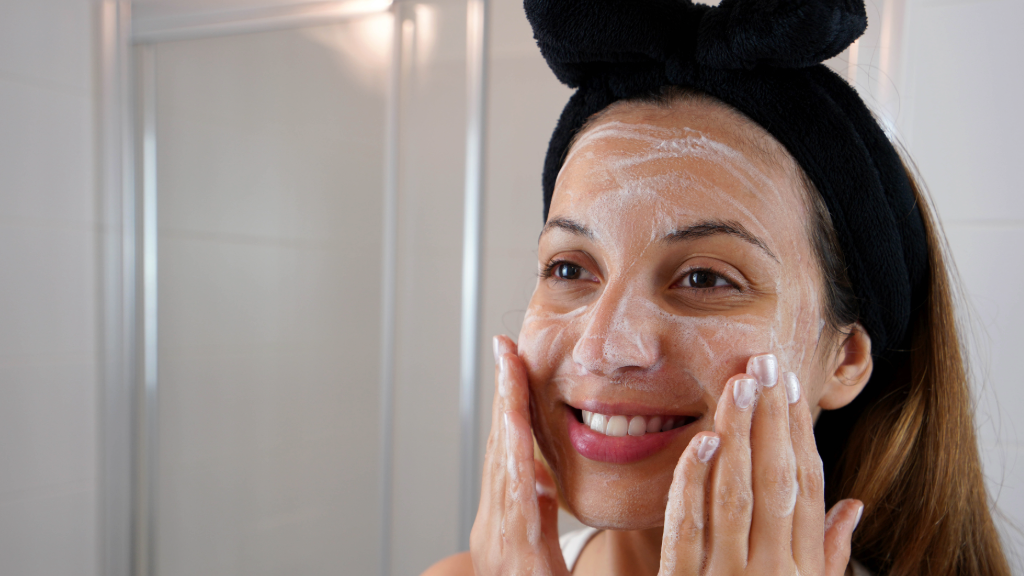
Beauty is increasingly bringing clinical performance and sensory experience together, translating actives into experiences felt on the skin and within. Cooling gels, transforming textures, mood-shifting fragrances and neurocosmetic cues are becoming integral to formulations, connecting efficacy with emotion and identity.
Sensory design is moving into the centre of brand strategy, with Mintel’s 2026 Global Beauty and Personal Care Predictions identifying “Sensorial Synergy”[1]as one of the key drivers impacting beauty through to 2030, as consumers seek emotional wellbeing alongside functional results.
The opportunity is particularly relevant in Asia, which accounted for over 30% of the global beauty and personal care market in 2025[2], giving brands and suppliers a vast and diverse consumer landscape in which sensory expectations are being shaped by climate, culture and established beauty rituals.
When consumers become part of the efficacy story
For ingredient suppliers, the challenge is translating molecular science into something a consumer can understand and apply.
Bloomage Biotechnology says the answer is to make efficacy perceptible. “Multi-sensory beauty means translating scientific efficacy into perceivable experience,” says Ruby Chen, Product Manager, Global Technical Solutions Department, Skin & Nutritional Science Materials BU at Bloomage.
In Bloomage’s SAHA Pore-Smoothing Cooling Aqua Overnight Mask, this philosophy is evident as the jelly-like appearance signals what is to come, while a cooling, fluid texture produces an immediate tactile response, with the formulation designed to connect those sensory signals to longer-term skin benefits. As Chen puts it: “texture is not a container for efficacy, it is the language of efficacy.”
Research suggests that the relationship between sensation and perceived performance is already well established, Mintel reports[3] that 76% of beauty and personal care users in China say how a product feels impacts their experience, while 75% link texture with perceived efficacy. Research published in the International Journal of Cosmetic Science[4] suggests that emotional responses to skincare ingredients and textures can be studied systematically rather than left to personal preference.
The opportunity is to let science establish the benefit while sensory design makes it tangible.
The new role of surprise
“Novelty alone is not enough,” says Juan Cebrian, PhD, Technical Fellow at Lubrizol
A sensory surprise can create attention and memorability, but the experience still needs to feel intuitive, effortless and supported by performance.
Lubrizol’s Oilkemia™ 7S polymer offers one example, allowing oil-based formulations to move beyond conventional liquid formats into gel-like and solid structures, creating a moment of unexpected transformation while retaining the characteristic sensory qualities of oil.
In a market of increasingly similar claims, a distinctive physical experience can make a product memorable. But sensory surprise must serve a purpose as inconvenient textures or transformations unrelated to a product’s benefits risk becoming gimmicks.
Seeing results, feeling results
Shin-Etsu Silicones focuses on the relationship between what consumers feel and see. According to Mr Tomoya Hachisuka, Senior Sales & Marketing Manager at Shin-Etsu Silicones (Thailand) Limited, its approach combines tactile benefits (softness, smoothness and a powdery after-feel) with visual effects such as soft-focus blurring. The result connects tactile and visual perception, as the skin feels smoother and the complexion appears smoother.
Fragrance is the sense that can turn a product into a memory
If touch helps consumers understand a product in the moment, fragrance can give that experience a longer life.
Yves Dombowsky, Official Fragrance Zone Advisor to in-cosmetics Asia, sees fragrance design as closely tied to a product’s mood and purpose. The question is not simply whether a cream should smell “nice”, but why that particular scent belongs in that particular formulation.
Creative intent has to work within practical constraints: low-pH treatments may require fragrance adaptations for stability, surfactant-based body washes behave differently, and white creams may need to avoid ingredients such as vanillin to prevent unwanted colouration. Multisensory beauty design is more interesting than simply adding more sensory elements, it’s about making them work cohesively.
Presented at in-cosmetics Global 2025, a study of more than 4,000 US personal care consumers found that 99% agreed fragrance impacts mood, while 96% associated fragrance with strong emotional connections or memories[5].
The senses have to agree with one another
A fragrance and cooling texture can reinforce calm, while a fresh scent and lightweight finish can create a bright visual identity. Texture and fragrance can also help a rich cream convey comfort before consumers consider its ingredients.
This is also where Tanapatr Barameesangpet, Beauty & Wellbeing Thailand R&D Lead at Unilever, sees the next step. Ahead of his Marketing Trends Theatre session on 3rd November, “Multisensory: Designing Beauty Experiences Consumers Feel, Remember and Love,” he describes multisensory beauty as the orchestration of touch, scent, appearance and application ritual.
Consumers seek both familiarity and surprise: familiar cues create trust, while surprise initiates memorability; the challenge therefore is to create distinctive experiences without becoming theatrical, and intuitive without becoming forgettable.
From sensory feature to formulation brief
For the personal care community, multisensory beauty is a cross-disciplinary challenge, spanning chemistry, formulation, neuroscience, fragrance, design and psychology. Sensory experience is increasingly being considered earlier in development, asking not just how a product should feel, but what consumers should feel and how science can make that experience meaningful.
This conversation continues at in-cosmetics Asia 2026, where multisensory innovation will span ingredients, formulation, fragrance and consumer trends. To find out more information and to register to attend, visit the in-cosmetics Asia website here.
[1] https://www.mintel.com/press-centre/mintel-announces-2026-global-beauty-and-personal-care-predictions/
[2] https://www.euromonitor.com/article/2025-asia-pacific-beauty-whats-driving-growth-in-china-japan-and-south-korea
[3] https://beautymatter.com/articles/2026-predictions-beauty-personal-care-food-home-and-more
[4] https://onlinelibrary.wiley.com/doi/full/10.1111/ics.12928
[5] https://benchmarkingcompany.com/news/next-in-beauty-magazine-fragrance-can-transform-emotional-well-being/